WHAT MARIANNE ERASED
Ruth told Claire the story two days later.
Not at the wedding.
That night belonged to Claire and Noah, and Ruth was old enough to understand that truth, however urgent it felt, did not always improve an evening by arriving immediately.
The wedding continued.
Marianne returned after nearly forty minutes wearing repaired makeup and the expression of a woman determined to treat disaster as a breach of etiquette.
Noah did not speak to her.
Claire barely looked at her.
Elena remained at the family table beside Ruth.
The first dance happened.
Dinner was served.
When it was time for speeches, Tessa quietly asked Claire whether she wanted to skip them altogether.
Claire looked at her mother.
“No.”
Elena shook her head immediately.
“Oh, absolutely not.”
“Mom.”
“I did not prepare anything.”
“You wrote something.”
Elena stared at her.
Claire smiled.
“You keep everything in that purse.”
Elena’s eyes narrowed.
“You have been going through my purse since you were six.”
“And yet you never changed the hiding place.”
The room laughed when Elena stood, mostly because they could sense permission to breathe again.
She unfolded a sheet of paper.
Then she stopped.
“No,” she said.
She folded it again.
“I wrote this speech three weeks ago, and I spent most of it trying very hard not to embarrass Claire.”
Claire covered her face.
Guests laughed.
Elena smiled.
“But I think we’ve had enough pretending tonight.”
The laughter faded.
She looked at her daughter.
“When Claire was little, she believed I could fix anything because I could sew. Torn coat? Fix it. Stuffed rabbit missing an ear? Fix it. Graduation dress bought two sizes too big because it was seventy percent off? Apparently also fixable.”
More laughter.
“She got older, and I had to admit there were things I couldn’t repair. Broken hearts. Rejections. People who underestimated her. Choices she had to make herself.”
Then Elena looked at Noah.
“And then she met you.”
Noah smiled.
“I like you,” Elena said.
The room laughed again.
“More importantly, I trust who she becomes around you. She gets louder, not quieter. Braver, not smaller. That is what I hope marriage keeps doing for both of you. Not making you match. Making enough room for each other to remain fully yourselves.”
Claire cried before Elena finished.
Later Ruth gave no formal toast.
She simply lifted her glass and said, “To making room.”
Everyone understood.
Marianne did not touch her champagne.
Two mornings later, Claire and Noah went to Ruth’s townhouse for breakfast.
Ruth lived alone in a narrow brick home on Commonwealth Avenue that Noah’s grandfather had purchased in 1968. The place was full of books, framed photographs, old silver, and furniture that had been repaired rather than replaced because Ruth believed throwing away good wood was a moral failing.
She served coffee herself.
Claire offered to help.
“No,” Ruth said. “Sit. If I allow guests to be useful, they begin expecting it.”
Noah grinned.
“This is what she thinks hospitality is.”
“I am eighty-two. I have earned reinterpretation.”
They sat at a small round table by the windows.
Ruth began without ceremony.
“Marianne’s mother was named Joanne Keller.”
Noah leaned back.
“I’ve never heard that name.”
“I know.”
Claire said nothing.
“Joanne worked at a diner outside Pittsburgh for nearly thirty years. Marianne’s father left when she was eleven. There was very little money. Joanne cleaned houses in the mornings before the diner opened and took in ironing during the winters.”
Claire thought of Elena at her sewing table after midnight.
Ruth continued.
“Marianne was clever, ambitious, and painfully aware of every room where other children had more than she did. She earned a scholarship. Went to Georgetown. Met Charles during graduate school.”
Noah looked toward the hallway as though his father might appear.
“Dad told me Mom’s family had money in Pennsylvania.”
“That is the version Marianne preferred.”
“And Dad went along with it?”
“Eventually.”
Ruth's voice sharpened.
“Not initially.”
Claire looked at her.
“When Charles brought her home, Marianne was terrified of me. She believed I would object to her background.”
“Did you?”
“No.”
Ruth's mouth twitched.
“I objected to her smoking in my bathroom and pretending she hadn’t.”
Noah laughed despite himself.
“I liked Joanne enormously. She had a terrible laugh. You could hear it through walls.”
“What happened to her?” Claire asked.
“She died twenty-six years ago.”
“Did Marianne stay close to her?”
Ruth was quiet.
“Not toward the end.”
Claire understood.
Ruth looked into her coffee.
“Success gave Marianne what she had always wanted. No one could make her feel poor again unless she allowed them to know she had ever been poor.”
Noah’s expression hardened.
“So she erased Grandma Joanne.”
“Yes.”
“And now she treats Elena like this because—what? She reminds her of where she came from?”
“In part.”
Ruth looked at Claire.
“Shame is a strange thing. Some people survive humiliation and become kinder because they recognize it in others. Some survive it and become obsessed with ensuring they are never standing on the wrong side of the room again.”
Claire thought of the family table.
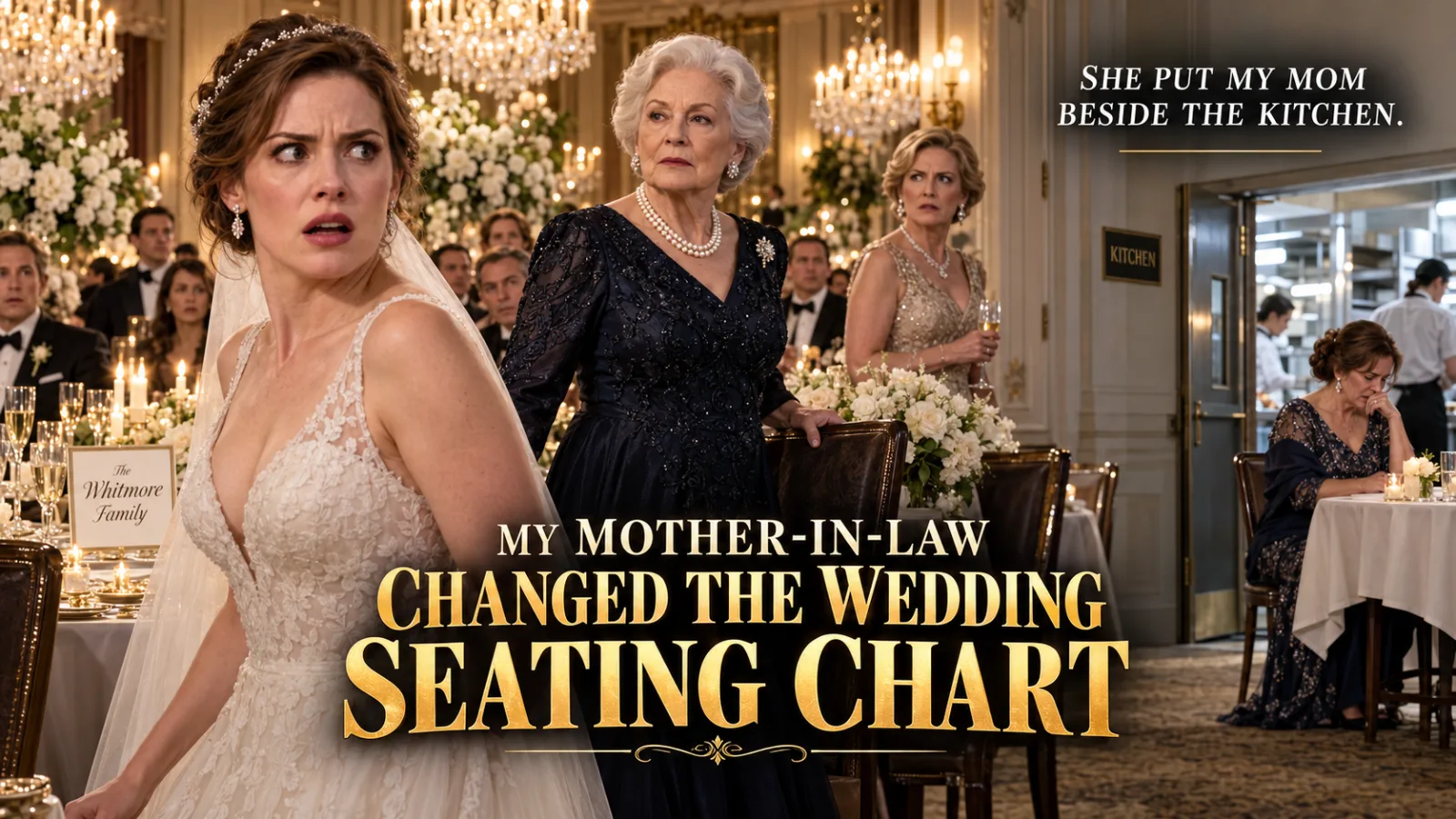
The little table beside the kitchen.
Marianne had recreated the very hierarchy she had spent her life escaping.
Only now she controlled the seating chart.
“That doesn’t excuse anything,” Claire said.
Ruth's eyes sharpened.
“Of course not.”
“I need to know you’re not telling me this so I’ll forgive her.”
“I am telling you because understanding someone’s wound prevents you from confusing it with your responsibility.”
Claire sat back.
That sentence landed.
Noah looked tired.
“Why didn’t you ever tell me?”
“Because it was your mother’s history to tell.”
“She lied about it.”
“Yes.”
“So everyone just protected the lie?”
Ruth considered him.
“There is a difference between privacy and deception. We became too comfortable pretending not to notice when she crossed it.”
The words included herself.
Claire respected that.
Noah stood and walked toward the window.
“I used to think Mom was just particular.”
Ruth snorted.
“Particular is how wealthy families describe controlling women they have no intention of confronting.”
Claire nearly choked on her coffee.
Even Noah laughed.
Then his face sobered.
“What do we do now?”
Ruth looked surprised.
“We?”
“She’s my mother.”
“Yes.”
“I need to fix this.”
“No.”
Noah turned.
Ruth's tone changed.
“You need to decide what access she gets to your marriage. You do not need to repair a woman who has spent sixty years designing herself.”
That afternoon Noah called Marianne.
Claire did not listen at first.
He went into the hotel suite’s sitting room and closed the door.
Twenty minutes later he opened it again.
“Can you come in?”
Claire joined him.
Marianne was on speakerphone.
Her voice sounded cool.
“I have already apologized for the disruption.”
Claire sat.
“You apologized for the disruption?”
“I regret that the seating adjustment embarrassed Elena.”
There it was.
Not what I did.
What happened around it.
Noah closed his eyes.
“Mom, did you instruct the planner to remove Elena from the family entrance?”
Silence.
“Did you remove her speech?”
“I was trying to streamline the reception.”
“Did you use my name?”
“I knew you would understand once the pressure of the weekend was over.”
“You told a professional I approved something I never saw.”
“I was protecting you from unnecessary conflict.”
“You created the conflict.”
Marianne exhaled.
“Claire’s mother was making the event socially awkward.”
Claire felt her heartbeat quicken.
“How?”
Marianne did not answer her directly.
“There were foundation trustees there. There were photographers. It was a very visible night.”
“And my mother existing was the problem?”
“No one said that.”
“You seated her beside a kitchen.”
“That table was perfectly respectable.”
Claire laughed once.
It was not kind.
Noah leaned forward.
“Mom. Say the real thing.”
Marianne was silent.
“Say it.”
When she finally spoke, the polish was gone.
“She does not fit.”
Claire felt something in her become very still.
Noah answered.
“She fits with Claire.”
“That is not what I mean.”
“It’s the only thing that matters.”
“You are being naïve.”
“No.”
Noah looked at Claire.
Then back toward the phone.
“I spent my whole childhood watching you evaluate people by whether they knew which fork to use and which club they belonged to. I thought it was annoying. I didn’t understand how cruel it became when someone failed your test.”
Marianne’s voice sharpened.
“You have no understanding of what it took for me to build a life in this family.”
Ruth’s story hung in the room.
Noah did not expose it.
Instead he said, “Maybe I don’t. But whatever happened to you does not give you permission to do it to Elena.”
Marianne said nothing.
“We won’t be seeing you for a while.”
Claire looked at him.
Marianne’s voice changed immediately.
“Noah.”
“I mean it.”
“You just got married.”
“Yes.”
“That’s precisely why.”
He disconnected.
The room became quiet.
Claire sat beside him.
“You okay?”
“No.”
“Me neither.”
He took her hand.
After a while, he said, “I hate that the first decision I’m making as your husband is to step away from my mother.”
Claire rested her head on his shoulder.
“No.”
He looked at her.
“The first decision you made as my husband was walking across that ballroom.”
He squeezed her hand.
Neither of them felt victorious.
That mattered.
Because boundaries were not revenge.
Sometimes they were simply the first honest seating chart a family had ever made.