THE REPORTS
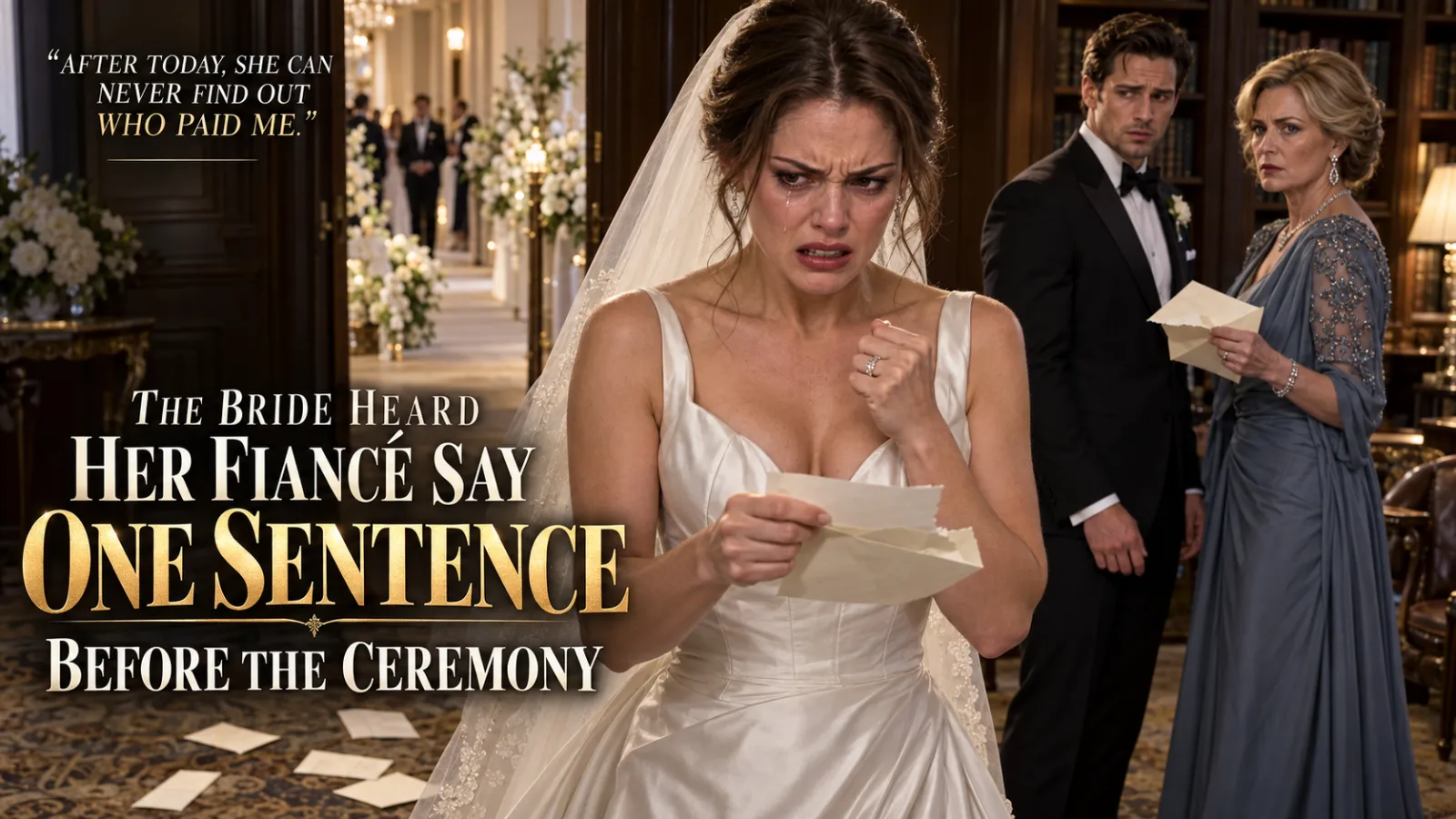
Diane did not answer the question on the phone.
She did what she had always done when Nora forced a conversation into territory she disliked: she widened the frame until the original issue could be blamed on circumstances.
“You were being followed,” she said. “You weren’t sleeping. You were making decisions from fear.”
“So you called a potential employer.”
“I spoke to Caroline because I knew her.”
“You told her relocation was clinically unwise.”
“I said I was concerned.”
“You made me sound unstable.”
“I made you sound vulnerable.”
“To a woman deciding whether to hire me.”
Diane went silent.
Nora’s anger became almost calm.
“What else?”
“Nothing.”
It arrived too quickly.
Nora had learned enough in twenty-four hours to know that her mother’s quickest answers were often the least complete.
“I’m going to ask you again.”
“Nora, I cannot account for every decision I made while trying to keep you safe.”
“That is not what I asked.”
Diane’s voice sharpened. “And I am not going to be interrogated like a criminal because your fiancé chose the worst possible moment to expose something that should have remained private.”
Nora nearly laughed.
“Private.”
“Yes.”
“You mean hidden.”
“I mean between adults who were handling a dangerous situation.”
“I was the dangerous situation.”
“You were the person in danger.”
“Then why was I the only adult who wasn’t allowed to know?”
Diane had no answer.
Nora ended the call.
For the next three days she did almost nothing except read.
Lucas had sent more than the North Bridge file. He had included his own emails, the original engagement with Diane, his resignation notice, the second offer, his refusal, and a memorandum he wrote to himself after discovering the Chicago interference.
Nora hated the memorandum most.
It was dated two years earlier.
If I tell Nora now, I lose her. If I do not tell her, I am deciding that keeping her is more important than letting her know what happened.
There is no version of silence that becomes more ethical because time passes.
She read those lines at midnight in Tessa’s spare bedroom and threw the pages across the floor.
He had known.
Not vaguely.
Not in the defensive way people sometimes realized harm only after being confronted.
He had named the exact wrong and continued doing it.
Tessa found Nora sitting amid scattered papers.
“What happened?”
“He wrote himself a confession.”
“That sounds dramatic.”
“He wrote it two years ago.”
Tessa picked up the page.
“Oh.”
“Exactly.”
Nora covered her face with both hands.
“I want him to be stupid.”
“What?”
“I want him to have been too stupid to understand. I want to be able to say he made one bad choice and then didn’t know how to get out.”
Tessa sat beside her.
“But he knew.”
“Yes.”
“And stayed quiet.”
“Yes.”
Tessa gave the page back.
“That’s worse.”
Nora laughed without humor. “Thank you.”
“You asked me to stop agreeing.”
“I changed my mind.”
The reports themselves became harder to read as time passed, not easier. At first they were records. Then they began leaking back into memory.
Lucas noted that Nora always checked the rearview mirror twice before pulling away from the curb. Months later, when they were dating, he had gently teased her about being the only person he knew who drove like she expected a convoy.
He noted that she bought coffee from the same shop three mornings a week. On their second date, he suggested that shop.
He noted that she left the office late on Thursdays. He had once “happened” to be working near her building on a Thursday and offered to walk her home.
Every coincidence became contaminated.
Nora knew intellectually that Lucas had not fabricated every interaction after the contract ended. She knew he had not been paid to remember she hated fennel or to sit beside her in the emergency room when Tessa broke her wrist. She knew no one had paid him to build the bookshelf in her living room and curse for three hours because the wall was not square.
But the problem was not whether each moment had been purchased.
The problem was that he had entered the relationship holding a map of her fears while she believed they were both learning each other in real time.
That imbalance was intimate in a way surveillance law could never measure.
On Friday morning, Nora drove to the offices of North Bridge Protective Services.
The company occupied two rooms above an accounting firm in Cambridge. The sign on the door was discreet enough to be missed if you were not looking for it.
A man named Gabriel Shaw met her in the conference room.
He had supervised Lucas at North Bridge, and his name appeared throughout the old surveillance file.
“You knew about me,” Nora said.
“Yes.”
“Before Lucas and I ever had a first date.”
“Yes.”
“Did my mother tell him to meet me?”
“No.”
“Did she tell him to date me?”
“No.”
“Then explain the wedding.”
Gabriel folded his hands.
“Your mother contacted me two weeks before it.”
“Why?”
“She learned Lucas had requested a certified copy of the original file.”
Nora frowned.
“Why did he want it?”
“He said he was finally going to tell you.”
“Before the ceremony?”
“That was his plan.”
Nora almost laughed.
“Three years late and five minutes early.”
“I told him something similar.”
“What did my mother do?”
“She asked me to destroy the file.”
Nora went still.
“We don’t destroy client records outside the retention schedule,” Gabriel continued. “I refused.”
“The check I saw?”
“She brought twenty-five thousand dollars to the hotel that morning. She called it a consulting fee.”
“What did you call it?”
“A bribe.”
The word entered the room cleanly.
“Did you take it?”
“No.”
“Did Lucas?”
“No.”
“Then why was it in that room?”
“Your mother brought it to Lucas after I refused her. She was trying to convince him there was no reason to reopen the past. He had the file. She had the check. They argued.”
Nora stared at him.
“And then I heard him say I could never find out who paid him.”
Gabriel’s expression tightened.
“He panicked.”
“That’s convenient.”
“No. It was cowardly.”
That answer surprised her.
Gabriel leaned back.
“Lucas had spent weeks telling me he had to tell you. Then your mother said exactly what he was already afraid of—that once you knew how you met, you would believe every day afterward had been purchased too. He lost his nerve.”
“He changed his mind five minutes before my wedding.”
“Yes.”
“He was going to marry me anyway.”
“Yes.”
Nora looked toward the window.
“I’m not here for a character reference.”
“I know.”
“Did my mother ever pay him after the surveillance contract?”
“No.”
“Did she try?”
“Yes.”
Nora nodded slowly.
“Did he ever report on me after we started dating?”
“No.”
Gabriel opened a drawer and placed a slim file on the table.
“This is the termination certification. Signed by me and Lucas. The last paid day is there.”
Nora looked.
It matched the folder.
Seventy-two days.
Eleven days later, coffee.
“Why wait eleven days?”
Gabriel gave a tired smile.
“Because Lucas asked me how long would make it ethical.”
Nora almost smiled despite herself.
“What did you say?”
“I told him no number would.”
The smile disappeared.
“Good answer.”
“I thought so.”
“Did he tell me?”
“No.”
“Then it didn’t help.”
“No.”
Gabriel studied her.
“Do you want to know what happened with Julian after the contract ended?”
Nora hesitated.
“Yes.”
“Lucas later gave evidence in the criminal proceeding involving the woman whose restraining order Julian violated. He did it without billing your mother.”
Nora looked up.
“Why?”
“Because he had evidence.”
“Why didn’t I know?”
“Your name was kept out of that proceeding. The other woman had enough on her own.”
Nora absorbed that.
Julian’s disappearance from her life had never been random.
The world had not simply become safer.
Other people had acted.
Some of them without her consent.
Some perhaps for good reasons.
The distinction no longer felt simple enough to save anyone.
Before Nora left, Gabriel gave her one more document.
A copy of Diane’s initial email requesting surveillance.
The final paragraph was different from what Nora expected.
My older daughter died because I let her walk away angry and believed distance would teach us both something. I will not make that mistake again. Nora is stubborn in the same way Leah was. If she refuses protection, protect her anyway.
Nora read it twice.
Leah.
Her sister had been dead for nine years.
No one in the family spoke about the fight before the accident anymore. Diane said Leah had moved to Denver for a job and died six months later when a drunk driver crossed the center line. That was the official grief, clean enough to repeat.
But Nora remembered the last Christmas before Leah left.
Her sister shouting in the kitchen.
Diane shouting back.
A broken wineglass.
Leah saying, “You don’t love people, Mom. You manage them.”
Nora had been twenty-two.
She had thought it was cruelty spoken in anger.
Now the sentence returned with new weight.
On the drive home, Nora pulled over because she could not see through tears.
She was not crying for Lucas.
Not exactly.
She was crying because the secret at the center of her wedding had begun opening into an older family wound, and she could suddenly see how many decisions had been made in its shadow.
When she reached Tessa’s apartment, there was another package waiting.
Not from Lucas.
From Diane.
Inside was a single envelope containing a handwritten letter.
Nora did not open it.
Instead she called her mother and said, “I know about Leah.”
The silence on the other end lasted long enough to become an answer.
“What do you know?”
“That you hired Lucas because you thought protecting me without my consent was better than risking me leaving like she did.”
Diane’s voice dropped.
“It wasn’t that simple.”
“Then make it simple.”
“Nora—”
“Did Leah die because she left?”
“Of course not.”
“Then why have you lived like she did?”
The question broke something.
Diane inhaled sharply.
For the first time in Nora’s life, her mother sounded afraid instead of controlling.
“She died six months after telling me she never wanted to see me again.”
“That is not the same thing.”
“I know.”
“Do you?”
Silence.
Nora looked at the unopened letter.
“Because you have been punishing me for surviving her.”
Diane began to cry.
Nora closed her eyes.
She wanted the sound to soften her.
It did.
That did not mean it changed the truth.
“I’m not coming home,” Nora said.
“I didn’t ask you to.”
“You were about to.”
Another silence.
Then, very quietly, Diane said, “Yes.”
Nora ended the call.
For the first time, her mother had admitted the instinct before acting on it.
It was not enough.
But it was the first thing that felt like a beginning rather than another arrangement.