THE LETTERS HE BURIED
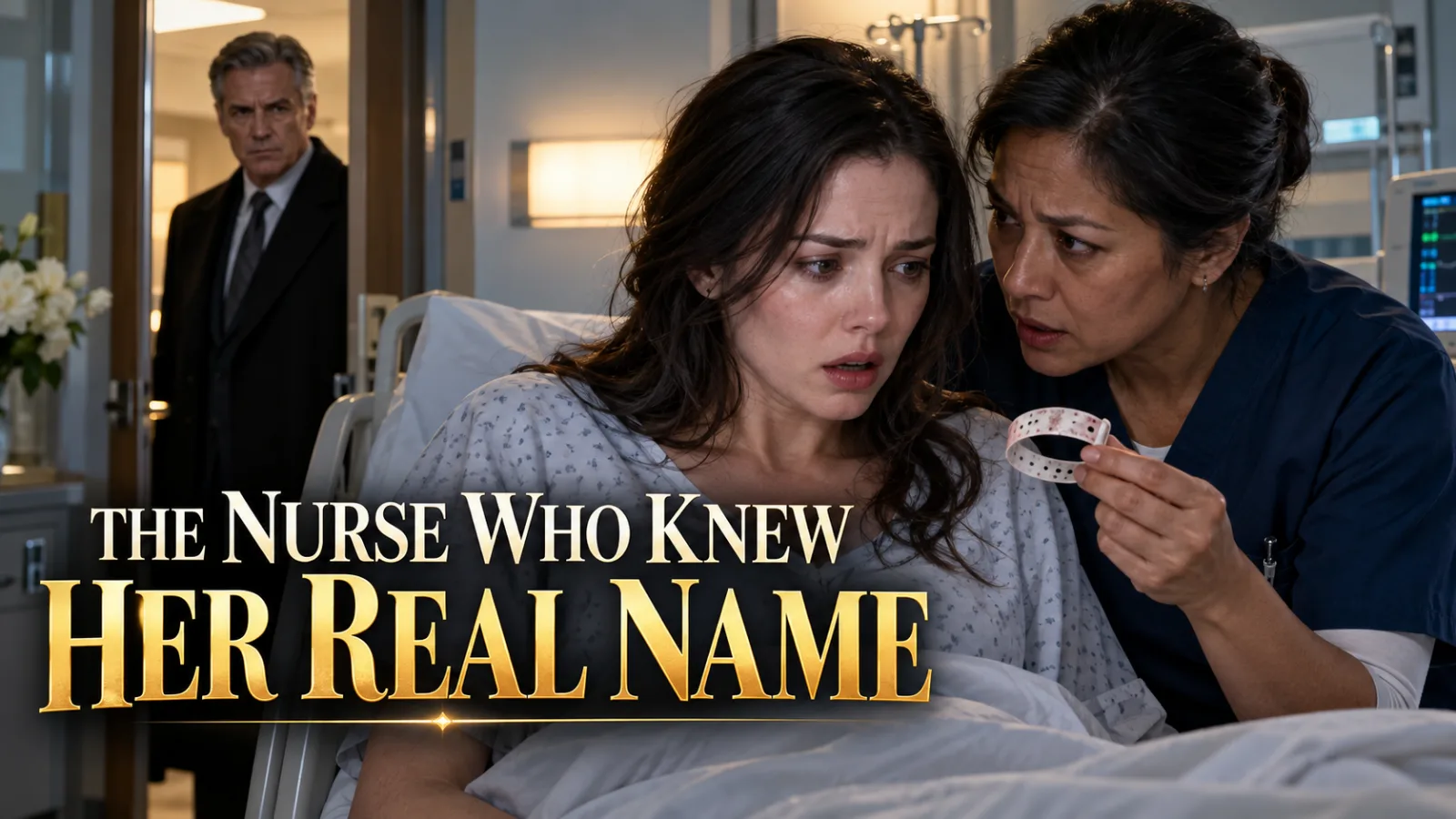
Malcolm did not shout.
That was one of the things Claire would remember most afterward.
A different man might have raged at Lydia, threatened Naomi, demanded hospital security, or physically tried to take Claire upstairs. Malcolm Bennett simply stood in the consultation room and behaved as though everyone else had become temporarily unreasonable.
“You are recovering from anesthesia,” he told Claire. “This is not the time.”
“The time for what?”
“For reopening something you don’t understand.”
Claire stared at him.
“My mother is alive.”
“Yes.”
The simplicity of the answer nearly knocked the breath out of her.
No denial.
No hesitation.
Just yes.
Claire laughed once, a broken sound.
“You told me she died.”
“I told an eight-year-old what she needed in order to feel safe.”
“She needed her mother.”
Lydia’s voice came from behind him.
Malcolm ignored her.
Claire watched that too.
The erasure was practiced.
“You convinced me she was dead for twenty-three years.”
“She was dangerous.”
“To who?”
“To herself. To me. Eventually, potentially, to you.”
Lydia stepped forward.
“You used a panic attack and two hospitalizations to erase me from my child.”
Malcolm finally turned.
“You drove us through a guardrail.”
“I lost control because you grabbed the wheel.”
Claire’s head snapped toward him.
Malcolm’s face hardened.
“That is not what happened.”
Lydia laughed bitterly.
“Of course not. Your version survived.”
Claire looked between them.
For the first time she understood that memory was not going to save her. Every person in the room possessed a story. Love did not make any one of those stories automatically true.
Evidence might.
“I want to see the court records.”
Malcolm looked back at her.
“Claire.”
“All of them.”
“You’re exhausted.”
“And the company records.”
Something shifted.
Tiny.
But Claire saw it.
Lydia did too.
“What company records?” Malcolm asked.
“The ones showing how Bennett Health became yours.”
The air changed.
Malcolm’s eyes moved to Lydia.
“What have you been telling her?”
“Less than you did.”
Claire felt anger rise so fast it made her surgical pain irrelevant.
“Stop talking around me.”
Both parents fell silent.
It was the first command Claire had ever given them together.
She pointed toward the door.
“I’m going back upstairs. Naomi stays involved in my care. Lydia does not leave the building until I decide whether I want to speak to her again.”
Malcolm started to object.
Claire cut him off.
“And you are not taking me home.”
His face went still.
“Where exactly do you intend to go?”
“My apartment.”
“You’ll need help.”
“Then I’ll hire it.”
“With what?”
Claire stared at him.
He had meant the question practically. He controlled the family office that paid many of her larger expenses and had always presented that arrangement as convenience.
For the first time, it sounded like leverage.
“I have my own money.”
“You have money because—”
“Finish that sentence.”
Malcolm stopped.
Naomi opened the door.
Claire looked directly at her father.
“Go.”
He did.
That was the first time she ever made him.
Two days later, Claire left St. Anne’s in a rideshare while Malcolm’s car waited unused at the private entrance.
Lydia had given Claire the letters but asked for nothing else.
“I’ll answer if you call,” she said.
Claire had nodded.
She did not hug her.
Lydia looked devastated but accepted it.
That restraint mattered.
Malcolm sent twenty-three messages before Claire reached home.
She answered none.
Her apartment occupied the seventh floor of a restored building overlooking Bellchester’s old courthouse district. Malcolm had helped her buy it four years earlier. Suddenly every wall looked suspiciously like something he had chosen.
Claire slept for six hours.
Then she opened the letters.
Age nine.
Dear Claire,
I don’t know whether you’ll receive this, but today I saw the first strawberries at the market and remembered you calling them redberries. I hope you still eat them with too much sugar.
Age ten.
Your birthday is Thursday. I bought you a book about horses because you used to draw them everywhere, including one memorable blue horse on the dining room wall.
Claire remembered the blue horse.
Her father had always told her she drew it after her mother died.
Age twelve.
I heard through my attorney that you fractured your wrist. I am so sorry I cannot be there. I know you hate hospitals. You always have.
Claire stopped reading.
At fourteen, Lydia wrote about an upcoming hearing.
At sixteen, she wrote:
Your father’s attorney says you do not wish to see me. If that is truly your decision, I will respect it. I only need you to know the door remains open. You never have to protect me from the truth about how you feel.
Claire pressed the letter flat against the table.
She had never been asked.
Not once.
By midnight, grief had transformed into method.
Claire was a corporate communications consultant, not an investigator, but she knew how institutions hid uncomfortable things: dispersed records, changed names, confidential settlements, vague public language.
She began with Hale Medical Holdings.
The company had existed for seventy-one years before vanishing into Bennett Health Partners through a restructuring completed the year after Lake Briar.
Public filings showed Lydia Hale owned forty-one percent at the time of the crash.
A later filing showed zero.
Claire searched further.
There had been a settlement.
Confidential.
Then a competency dispute.
Then a trust administrator appointed temporarily over Lydia’s holdings during hospitalization.
The administrator’s attorney had worked for Malcolm’s firm.
Claire stared at the screen.
At three in the morning she called Lydia.
Her mother answered before the first full ring.
“Claire?”
“I want the whole story.”
A breath.
“All right.”
“No soft version.”
“All right.”
“No protecting me.”
“I won’t.”
The story took two hours.
Malcolm had married into Hale Medical Holdings as an ambitious financial executive. Lydia’s father trusted him. Lydia loved him. After her parents died within three years of each other, Lydia inherited the controlling family block.
Malcolm expanded aggressively.
Some investments succeeded.
Others did not.
By the time their marriage began failing, Malcolm had tied so much company debt and personal prestige to the expansion that Lydia’s threat to remove him from leadership could have ended everything.
Then came Lake Briar.
Hospitalization.
Custody battle.
Lydia’s depression.
A temporary trust arrangement she barely understood while medicated and grieving.
Then documents she signed after being told they were necessary to maintain Claire’s financial stability.
“I gave up control,” Lydia said.
“Why?”
“Because Malcolm’s attorney told me he would support supervised contact if I stopped fighting the company transfer.”
Claire closed her eyes.
“Did he?”
“No.”
The answer was almost inaudible.
Claire felt sick.
“Do you have proof?”
“Some.”
“Enough?”
“I never knew.”
The next morning Claire contacted an attorney who had no connection to Bennett Health.
By afternoon, the attorney had found something Lydia never had.
A storage index from the dissolved trust administrator.
The original files still existed.
Three days later, Claire and her attorney sat in a records facility opening boxes that had not been touched in more than a decade.
Inside were psychiatric evaluations that did not say what Malcolm had always claimed.
Lydia had been depressed and traumatized.
She had not been diagnosed as violent.
There was no finding that she intentionally caused the crash.
There were also letters from a custody evaluator recommending gradual supervised reunification between mother and daughter.
Malcolm’s attorneys had opposed every recommendation.
Then Claire found the document that changed everything.
A private investigator invoice.
Commissioned by Malcolm Bennett.
Subject: LYDIA HALE.
For eighteen years, Malcolm had paid someone to track Lydia’s addresses, employment, legal filings, and attempts to locate Claire.
Not protect Claire from a dangerous woman.
Track a mother.
And move first.
Claire photographed the invoice.
Then she called her father.
He answered immediately.
“Thank God.”
“Don’t.”
Silence.
Claire looked down at eighteen years of surveillance reports.
“You always said you couldn’t find her.”
Malcolm said nothing.
“You knew where she was every year.”
“Claire—”
“You knew.”
“I knew enough to protect you.”
“No.”
Claire’s voice surprised even herself.
It was not loud.
It was finished.
“You knew enough to keep us apart.”
Malcolm exhaled.
“You have no idea what she was like.”
“I know what you were like.”
“After everything I gave you?”
There it was.
The bill.
Twenty-three years of love, finally presented for collection.
Claire closed her eyes.
“You gave me a childhood with a grave in the middle of it.”
“That woman would have destroyed your life.”
“You didn’t let me decide.”
“I was your father.”
“And she was my mother.”
Malcolm’s voice hardened.
“I will not apologize for choosing you.”
Claire looked at the invoice again.
“You didn’t choose me.”
She swallowed.
“You used me to make sure she surrendered.”
Malcolm did not answer.
That silence became the first confession Claire believed.