LINDEN STREET
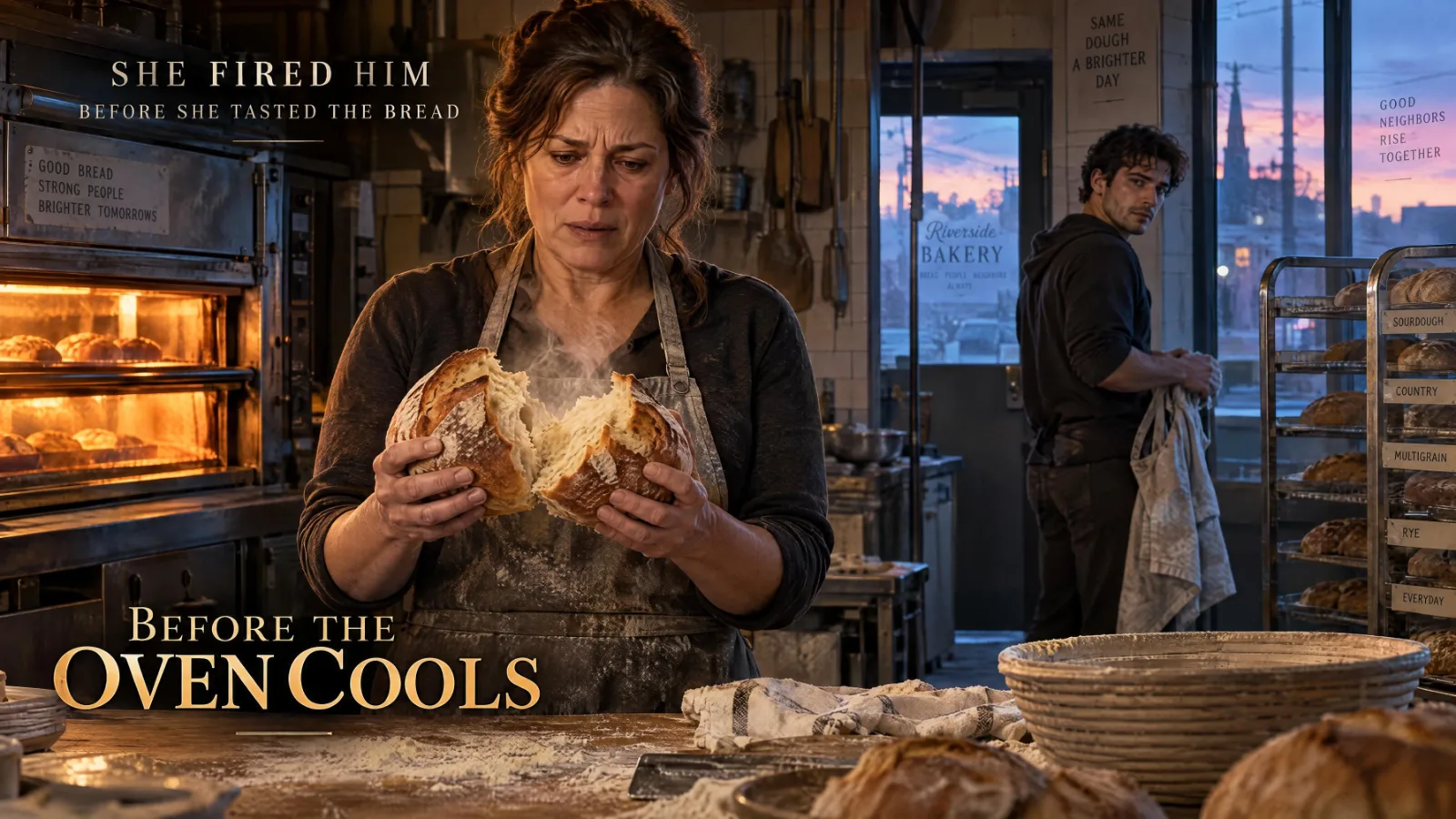
Theo did not answer Mara's first call.
Or the second.
On the third, he texted.
If this is about the check, Tuesday is fine.
Mara wrote:
It's not about the check.
Three dots appeared.
Disappeared.
Appeared again.
Then:
I'm busy.
She stared at the screen.
She deserved that.
Where are you?
No answer.
Mara waited ten minutes.
Then:
I shouldn't have fired you like that.
Theo replied almost immediately.
You fired me because I ignored your instructions.
That was accurate enough to be annoying.
Mara typed:
I still need to understand what you said about my father.
His answer took longer.
Linden Street community kitchen. Noon.
The building that had once housed the Linden Street Family Center was now a public library branch on the first floor and community classrooms upstairs.
Mara had not entered it in years.
Theo was waiting in the lobby with a paper cup of coffee.
“You came.”
“You told me to.”
“I asked.”
“You don't sound like someone who asks.”
“Are you always like this after being fired?”
“First time I've been fired before breakfast.”
They went upstairs.
A community kitchen occupied the rear room.
New appliances.
New cabinets.
But the old brick wall remained.
Theo walked toward it.
“This room used to be twice as big.”
“You remember?”
“I lived here nine months.”
Mara stopped.
Theo looked at the floor.
“My mother and I.”
“Sofia?”
His eyes lifted.
“How do you know her name?”
“My mother found a note.”
Understanding moved across his face.
“Oh.”
“What?”
Theo set down his coffee.
“Nothing.”
“No. You made a face.”
“I just understand something I didn't before.”
“What?”
“Why Arthur never wanted Sofia writing thank-you notes.”
Mara stared at him.
“You knew about that?”
“No. I knew he hated being thanked.”
“That doesn't answer me.”
Theo leaned against the counter.
“My mother lost our apartment after the restaurant she worked at closed. We spent six weeks in her car before someone got us into Linden.”
Mara said nothing.
“Your father started showing up a month later.”
“To volunteer?”
“I guess.”
“You guess?”
“I was twelve. Adults didn't exactly hand me their schedules.”
“What did he do?”
“At first? Bread.”
“Just bread?”
“Mostly.”
Theo looked around the renovated kitchen.
“He'd come after the bakery closed. Bags of flour. Dough sometimes. Day-old loaves. Stuff that would've been thrown out.”
Mara felt something uncomfortable.
“The bakery wasn't doing well then.”
“I know.”
“How?”
“He complained constantly.”
She almost laughed.
Theo smiled once.
“He said customers wanted three-dollar coffee and grocery-store bread, then got offended when the bakery couldn't survive on compliments.”
“That sounds like him.”
“He was cranky.”
“He was always cranky.”
“He was good to us.”
The statement landed without decoration.
Mara looked away.
“What did he teach you?”
“Not me specifically.”
“But you learned.”
“I stayed in the kitchen.”
“Why?”
“Because the bedrooms were loud.”
Theo shrugged.
“Kids crying. Couples fighting. People coming in late. The kitchen was quiet after dinner.”
“And Dad let a twelve-year-old stay up all night baking?”
“He told me to go to bed constantly.”
“You ignored him.”
“Apparently I have a pattern.”
Mara almost smiled again.
Theo walked toward an old section of butcher-block counter preserved near the wall.
“He'd make dough here.”
“How often?”
“Two nights most weeks. Sometimes three.”
Two nights.
Exactly.
“What else did he bring?”
“Whatever was left.”
“Ingredients?”
“Yeah.”
“Flour?”
“Yes.”
“Sugar?”
“Sometimes.”
“Butter?”
Theo looked at her.
“Are you doing inventory twenty years late?”
“My mother thought he was stealing from the bakery.”
“He probably was.”
Mara blinked.
Theo continued.
“I mean, technically.”
“You're defending him badly.”
“I'm not defending him.”
That stopped her.
“He didn't ask permission, did he?” Theo said.
“No.”
“He should have.”
“Yes.”
“But we ate.”
Both could be true.
Mara had not prepared for that.
“What about Sofia?”
“My mother?”
“Yes.”
Theo's expression changed slightly.
“What do you want to know?”
“Was she close to my father?”
“She liked him.”
Mara waited.
Theo understood.
“Oh. No.”
“You're sure?”
“Yes.”
“You were twelve.”
“I was twelve, not unconscious.”
Mara looked embarrassed.
Theo spared her by continuing.
“My mother was twenty-nine. Exhausted. Embarrassed about where we lived. Your father treated her like she still knew how to do things.”
“What does that mean?”
“He put her to work.”
Mara frowned.
“In a shelter?”
“Kitchen needed help.”
Theo smiled faintly.
“She'd worked prep in restaurants for years. He started bringing enough dough that she could run the ovens before breakfast.”
“And the note?”
“What note?”
“Thank you. The boys ate everything.”
Theo thought.
“Probably me and Luis.”
“Who's Luis?”
“A kid whose family was there.”
Mara leaned both hands against the counter.
Twenty years of family history shifted several inches sideways.
Not enough to become something else.
Enough to make everything unstable.
“Why didn't Dad tell us?”
Theo shook his head.
“I don't know.”
“You never asked?”
“I was twelve.”
“Later.”
“I saw him after we left Linden.”
“How often?”
“Every few months. Then less.”
“And he never mentioned his family?”
“All the time.”
Mara looked at him.
“What did he say?”
Theo hesitated.
“That you were better at bread than you thought.”
Mara's throat tightened unexpectedly.
“He said you fought with him about everything.”
“That part is accurate.”
“He liked that.”
“I doubt it.”
“He did.”
“What else?”
Theo's gaze went to the butcher block.
“He said his family thought he was somewhere else.”
Mara became very still.
“When?”
“One night.”
“What exactly did he say?”
“I don't remember exactly.”
“Try.”
Theo looked uncomfortable now.
“He said he'd made a mess at home.”
“How?”
“He didn't tell me.”
“Did he say why he wouldn't explain?”
Theo looked at her.
“Yes.”
Mara waited.
“He said because once you let someone believe the worst thing about you, pride makes it harder to correct them every day after.”
That sounded infuriatingly like Arthur.
Not wise.
Not noble.
Stubborn enough to ruin his own life rather than admit he had been hurt.
Mara looked around the kitchen.
“So my mother was wrong.”
Theo shook his head.
“I didn't say that.”
“She thought he was having an affair.”
“She was wrong about that.”
“Then—”
“But he disappeared. Took bakery supplies. Hid where he was going. Let your family think whatever they thought.”
Theo picked up his coffee.
“That part was real.”
Mara looked at him.
It was the first thing anybody had said about Arthur that day that felt entirely honest.