MY MOTHER'S VERSION
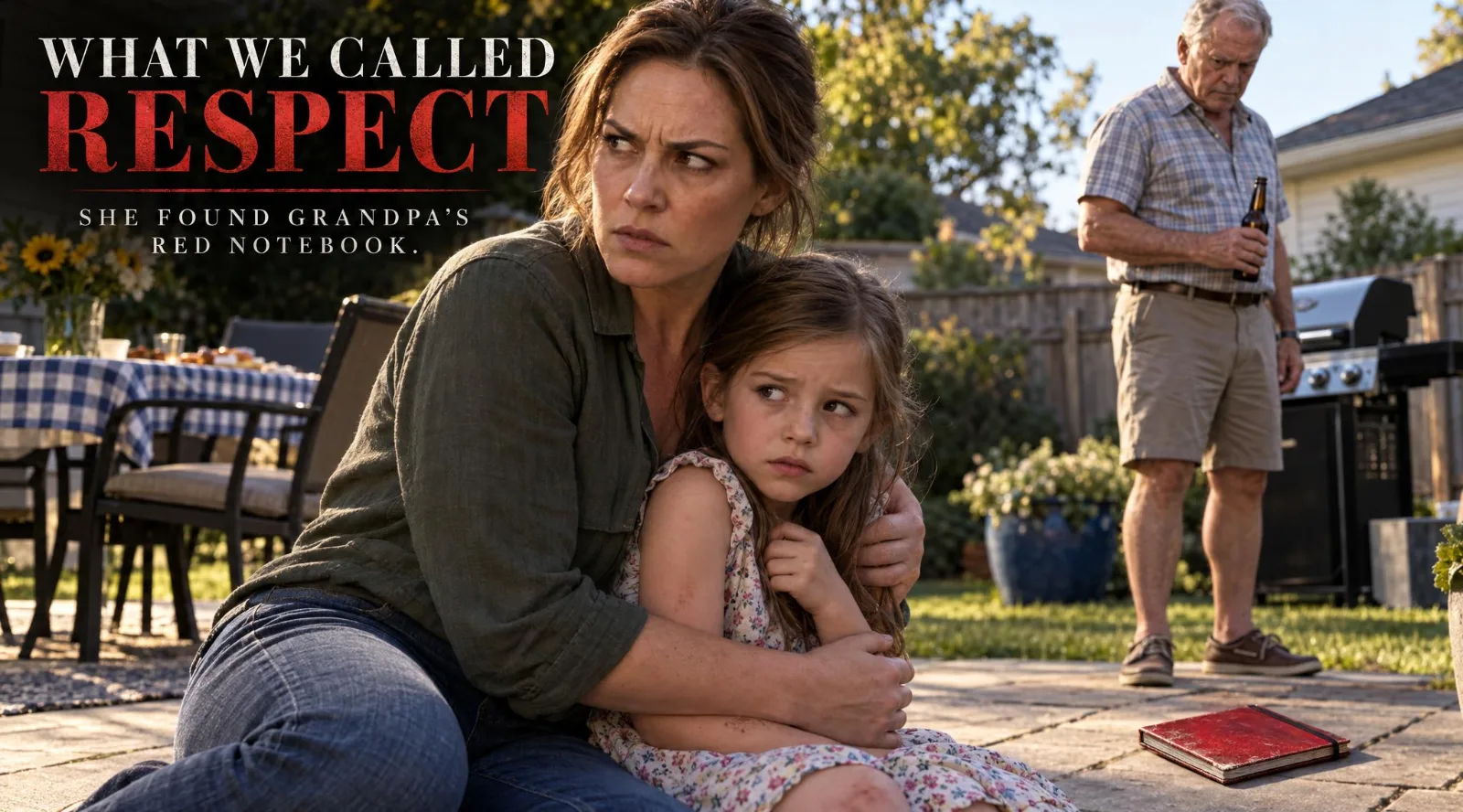
My mother sat at the kitchen table where she had served breakfast for most of my childhood.
I remained standing.
That was deliberate.
If I sat, some old part of me might become a daughter asking permission to speak.
“I was going to tell you,” Nora said.
“When?”
Her eyes filled.
“Claire.”
“When, Mom?”
She rubbed the heel of one hand across her forehead.
“After Ava was born, I thought about it.”
“That was seven years ago.”
“I know.”
“Then you had seven years.”
She looked down.
There was an ugly kind of satisfaction in watching her run out of places to hide.
I did not enjoy it.
But I did not rescue her either.
She told me what happened in pieces.
I had gone into the garage looking for my bicycle pump.
Grant had been inside with the red notebook open on his workbench.
I picked it up.
He told me to put it down.
I asked why Mr. Keller’s name was written inside.
I did not remember that.
My mother did.
“He grabbed it from you,” she said.
“And?”
“You yelled at him.”
I almost laughed.
At seven?
Apparently.
“You told him he was mean.”
My throat tightened.
“What did he do?”
“He shoved you away from the workbench.”
“Into the heater.”
She nodded.
My scar burned though there was nothing physically wrong with it.
“You told the school nurse.”
“Yes.”
“What did Dad do?”
“Grant said you were confused.”
“What did you say?”
My mother's face broke then.
Not beautifully.
There was no cinematic collapse.
Her nose ran. She wiped it with the back of her hand and stared at the table.
“I said you had been climbing on things in the garage.”
I waited.
“That you slipped.”
“Why?”
“He said they could take you and Evan.”
“Evan was four.”
“Yes.”
“He said child services would split you up. He said I had no money. He said the house belonged to his company. The truck belonged to his company. Everything belonged to him.”
“That explains why you were scared.”
She looked up hopefully.
I hated the hope.
“It does not explain why you let me believe I did it to myself.”
Her face changed.
“I know.”
“No. I don't think you do.”
She cried silently.
I paced to the sink and back.
“What about Keller?”
She stopped wiping her face.
“Grant knew everybody back then.”
“That isn't an answer.”
“Tom Keller came over.”
“When?”
“Two nights later.”
“To the house?”
She nodded.
“Dad's notebook says he graded Keller's back lot without invoicing him.”
My mother closed her eyes.
That was answer enough.
“What did you hear?”
“Grant told him he appreciated him ‘keeping nonsense from becoming a problem.’”
My skin went cold.
“Those exact words?”
“Close to it.”
“And Keller?”
“He told Grant the school nurse had overreacted. He said the file would go nowhere if everybody gave the same explanation.”
I sat down finally.
Not because I was finished being angry.
Because my legs would no longer hold me.
“Mom.”
“I was afraid.”
“I know.”
“I didn't know what else to do.”
“You tell someone.”
“I tried once.”
“When?”
She looked toward the hallway as if Grant might somehow still be listening from another room.
“Before that. Not after.”
“What happened?”
“I told your aunt I wanted to leave. Grant found out. He took my bank card. He cancelled the insurance on my car. He told me if I took you two, he would report me for kidnapping.”
“He lied.”
“I know that now.”
“You could have learned then.”
She flinched.
For thirty-five years my mother had been the soft parent.
The frightened one.
The parent we protected in our memories because admitting that she had also failed us felt too cruel.
I could see both things now.
She had been controlled.
She had also abandoned me to his version of reality.
Both were true.
“Why did he keep the notebook?”
“I don't know.”
“I think I do.”
I pictured my father writing every favor down.
Every person who owed him.
Every problem he had handled.
For most people, the red notebook would have looked like evidence of compromise.
To Grant, it may have looked like proof of competence.
A record of the world operating correctly.
Problems occurred.
Grant solved them.
People resisted.
Grant corrected them.
Children spoke.
Adults closed ranks.
Fear became respect.
Silence became loyalty.
And eventually everybody in the house learned to rename whatever he had done.
I stood.
“Where are you going?” my mother asked.
“Home.”
“Claire.”
I stopped at the door.
She looked small at that table.
I had spent years mistaking smallness for innocence.
“Are you going to tell the police what you just told me?”
She stared at me.
I waited.
Then she nodded.
“Yes.”
“If you change it later because Dad scares you—”
“I won't.”
“You don't know that.”
That hurt her.
It needed to.
“You don't get credit for being afraid anymore, Mom. Ava doesn't pay the price for your fear.”
I left before she could answer.