THE SIGNATURE
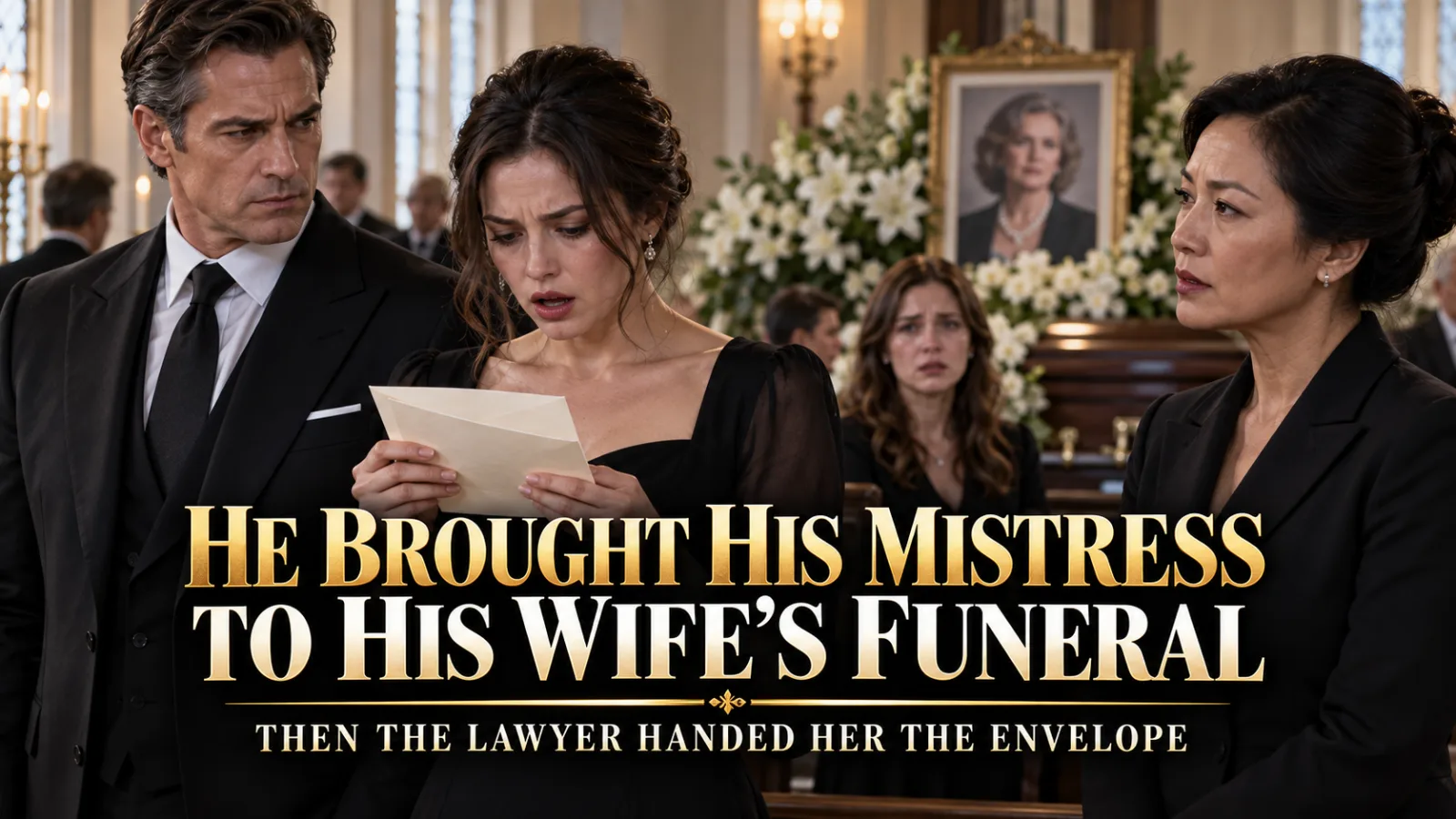
Eleanor discovered the missing money because a florist called the wrong person.
Three months before her death, she was lying in bed reviewing photographs for a hotel renovation she no longer had the strength to visit when her assistant mentioned that the floral contractor for the Charleston property had requested confirmation on an overdue payment.
The amount was small by Mercer Vale standards.
Forty-eight thousand dollars.
Eleanor remembered approving twenty-nine.
She asked for the invoice.
That decision opened a door Grant had spent nearly a year keeping closed.
The forty-eight-thousand-dollar payment had not gone directly to the floral company. It had moved through a consulting vendor called Avery Strategy before being split between several service categories.
Eleanor recognized the name.
She had seen Sloane Avery in photographs with Grant.
At that point, the affair did not surprise her.
She had been married long enough to know the exact texture of his lies.
What surprised her was that Sloane’s company appeared in finance records.
Eleanor called Naomi.
Naomi called an independent forensic accountant.
They did not use Mercer Vale’s internal audit team because Grant, as chief executive, saw too much of what moved through the company.
Over six weeks, the pattern became visible.
Payments had been routed through legitimate consulting work, inflated with services that were difficult to quantify: transition strategy, brand licensing, executive positioning, regional advisory fees. Some money returned to entities Grant controlled indirectly.
More disturbing were the documents attached to those movements.
Eleanor’s electronic signature appeared on temporary delegations she had never approved.
A voting proxy extended Grant’s authority over decisions connected to two flagship properties.
A licensing transfer gave him temporary control of creative assets that Eleanor personally owned.
And a financing resolution pledged future hotel revenue against a private borrowing facility she had never seen.
Her illness made the fraud easier.
People expected her to forget things.
People accepted that Grant handled paperwork.
People hesitated to bother a woman between chemotherapy cycles with questions about authorization codes.
Grant had discovered the ugliest benefit of having a dying wife.
Everyone mistook absence for consent.
Mara wanted to confront him immediately.
Eleanor refused.
“You confront him now, he cleans everything.”
“Then we freeze him out.”
“With what proof?”
“You have proof.”
“I have anomalies.”
“You have forged signatures.”
“I have copies of documents containing signatures I say are forged. That distinction matters.”
Mara paced the bedroom.
“You sound like Naomi.”
“That’s because Naomi is usually right when she is being unbearable.”
Naomi, seated near the fireplace, did not look up from her notes.
“I accept the compliment.”
Mara glared at both of them.
Eleanor smiled.
Then the smile disappeared.
“I need originals. Emails. Signing history. Access logs. And I need to know what Sloane knows.”
“You think she helped him?”
“I think Grant chose her for a reason.”
Mara stopped pacing.
“What reason?”
“She has her own company. She is emotionally invested in him. She wants to believe his version of our marriage. And unlike Grant’s senior executives, she does not have twenty years of experience recognizing financial traps.”
Mara stared.
“He used his mistress as a pass-through company?”
“I think he used the person least likely to question why he needed favors.”
The possibility was so contemptible Mara almost preferred the affair.
Eleanor did not.
By then, infidelity was old pain.
This was different.
Grant had taken the thing Eleanor loved most about their marriage—the company they built from a single failing seaside hotel—and begun treating her approaching death as a corporate transition opportunity.
Mercer Vale had not begun with billions.
It began with peeling wallpaper, debt and a condemned ballroom in Rhode Island.
Eleanor designed the rooms.
Grant negotiated with lenders.
She made people want to stay.
He made the numbers work.
For fifteen years, their differences fit together.
Then success taught Grant that every relationship had a control point.
Employees wanted promotion.
Investors wanted return.
Journalists wanted access.
Partners wanted affection.
He learned to find the desire and place himself between the person and the thing they wanted.
Eleanor had once mistaken that instinct for leadership.
By the time she understood what it really was, he had already used it on her.
The cancer accelerated everything.
She did not have years to fight him.
She had weeks.
So Eleanor stopped trying to win the marriage.
She focused on preserving evidence.
The forensic accountant traced six transactions through Avery Strategy. Naomi located three original paper documents in the corporate archive. One of them showed obvious discrepancies in execution timing.
Eleanor had supposedly signed it at 9:40 p.m. on March 18.
Hospital records showed she had been sedated for a procedure from 7:15 that evening until after midnight.
The witness initials belonged to Sloane.
That was when Eleanor asked to meet her.
After the meeting, Mara was furious.
“You let her sit in your room?”
“Yes.”
“You gave her an envelope?”
“Yes.”
“She slept with your husband.”
“I’m aware.”
“She came into your home while you’re dying and you decided to protect her?”
Eleanor's eyes hardened.
“I did not protect her from consequences.”
“Then what are you doing?”
“Giving her a chance to stop participating once she knows.”
Mara folded her arms.
“I don’t understand you.”
“You think because Grant betrayed me, everyone near him becomes equally guilty.”
“She knew he was married.”
“Yes.”
“She kept seeing him.”
“Yes.”
“So why are we pretending she’s innocent?”
“We aren’t.”
Eleanor shifted painfully against the pillows.
“Mara, guilt is not a light switch. Sloane made selfish choices. Grant may also have used those choices to make her part of something she did not understand. Both things can be true.”
Mara looked away.
Eleanor reached for her hand.
“I need you to promise me something.”
“No.”
“You don’t even know what it is.”
“If it involves being nice to his girlfriend at your funeral, absolutely not.”
Eleanor almost laughed.
“It involves not letting anger make decisions for you.”
“That sounds worse.”
“Grant depends on people becoming emotional around him. When they do, he becomes the reasonable one.”
Mara knew it was true.
She hated that it was true.
“So what do you want me to do?”
“Nothing.”
“That’s impossible.”
“It will feel impossible.”
Eleanor squeezed her fingers.
“Let Naomi speak.”
“And if he brings Sloane?”
“Especially then.”
Mara understood later that the envelope was not Eleanor’s revenge.
It was a test of Grant’s arrogance.
Eleanor had already revoked his remaining authority through properly witnessed documents held outside company systems. Naomi had already notified two independent directors that governance questions would arise after the funeral. The forensic accountant already had secured copies of the relevant records.
Grant could have delayed his own exposure simply by behaving with basic restraint.
Instead he brought Sloane to the chapel.
He believed Eleanor’s death meant nobody remained who could contradict him.
That was the mistake.
The dead did not need to speak when they had prepared the living.