WHAT HE MADE HER SIGN
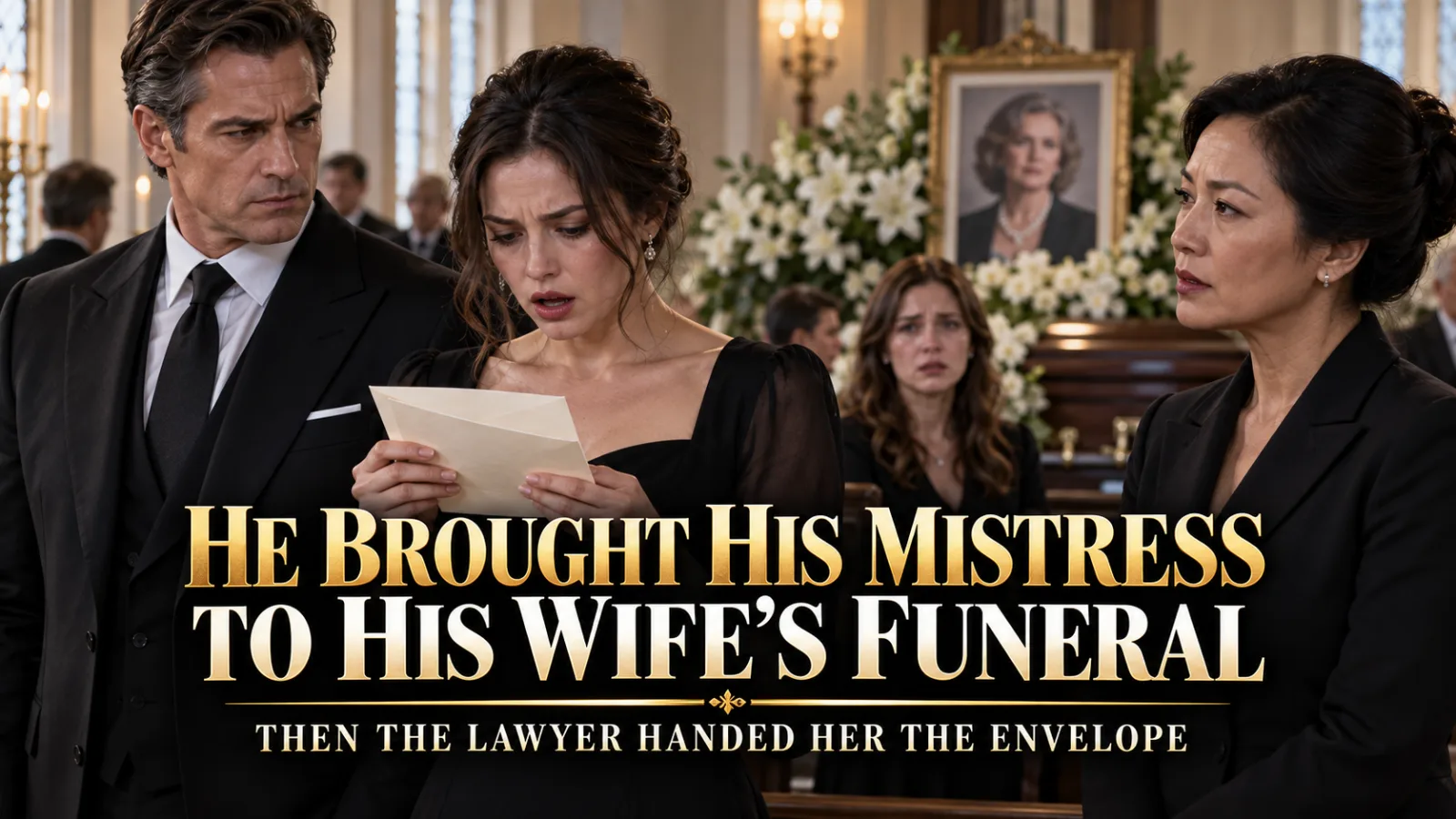
Grant did not attend the burial.
He told people the scene in the chapel had made it impossible.
The truth was that Naomi asked two company security officers to remain near him until the family left, and Grant understood that walking toward Sloane again would create witnesses he could not control.
Sloane rode away in Naomi’s car.
She did not speak for the first ten minutes.
The envelope lay open on her lap.
Her entire relationship with Grant had changed shape in fifteen seconds.
Not disappeared.
Changed.
That was worse.
If Grant had simply been lying about his marriage, Sloane could place herself into a familiar story. She had been selfish. He had been dishonest. Eleanor had suffered. There were names for all of that.
The documents created a different possibility.
Maybe Grant had not only wanted her.
Maybe he had selected her.
Her company.
Her signature.
Her access.
Her willingness not to ask questions that might threaten the future he kept promising.
Naomi drove them to her office.
Mara was already there.
Sloane nearly turned around when she saw her.
Mara remained seated.
“I’m not going to hit you.”
“I wasn’t worried you would.”
“You should have been.”
Naomi removed her coat.
“Mara.”
“I said I wasn’t going to.”
Sloane sat across from them.
For several seconds nobody spoke.
Then Sloane said, “I’m sorry.”
Mara laughed once.
It had no humor in it.
“That’s not useful yet.”
Sloane nodded.
She deserved that.
Naomi placed a legal pad between them.
“I need facts. Apologies can happen later.”
For the next three hours Sloane reconstructed eighteen months of paperwork.
Grant had asked her to form Avery Strategy.
He had recommended the incorporation attorney.
He had arranged the first major contract.
He routinely sent her documents outside normal business hours, often after dinners or while they traveled together.
Sometimes he described them as vendor acknowledgments.
Sometimes temporary permissions.
Sometimes merely proof that her company had delivered services.
Sloane had signed almost all of them without independent review.
“Because you trusted him?” Naomi asked.
Sloane looked down.
“Because I wanted him to trust me.”
Mara’s face tightened.
That answer, at least, was honest.
They found the crucial email at 4:17 in the afternoon.
Grant had sent it nine months earlier.
Need your witness initials on E’s authorization before finance closes tomorrow. She’s asleep and I don’t want staff bothering her again. Same authority we discussed. Sign highlighted sections and send PDF back. Love you.
Attached was the document Eleanor supposedly signed during the hospital procedure.
Sloane remembered receiving it.
She remembered feeling important.
Grant trusted her with sensitive family business.
Or so she had told herself.
Naomi forwarded a preserved copy directly to the forensic team.
“Do not alter anything on your laptop,” she said. “Do not delete messages. Do not contact Grant from your devices.”
Sloane swallowed.
“Am I in trouble?”
“You may be.”
Mara looked toward Naomi.
Naomi continued.
“I am not your attorney. You need independent counsel immediately. But if what you’ve told me is accurate, there is an important distinction between knowingly participating in fraud and signing documents because someone materially misrepresented what they were.”
Sloane rubbed her palms against her knees.
“He told me Eleanor approved everything.”
“Yes.”
“He told me she couldn’t sign sometimes because treatment made her hands shake.”
Naomi’s expression hardened.
“Keep remembering.”
Grant began calling before sunset.
Sloane ignored the first three calls.
Then a message arrived.
Do not let Naomi frighten you. Eleanor planned this because she hated that I chose you. Come to the apartment. We fix this together.
Mara read it over Sloane’s shoulder.
“He still thinks this is about who he chose.”
Sloane felt something inside her settle.
“He never chose me.”
Mara looked at her.
Sloane stared at the message.
“He chose whatever I was useful for.”
That was the first moment Mara’s anger toward her changed.
Not vanished.
Changed.
An hour later another email arrived from Grant.
Attached were three retroactive consulting agreements.
Each described work Avery Strategy had supposedly performed months earlier.
Each included indemnification language.
Each required Sloane’s signature.
Naomi read them once.
Then again.
“He is trying to paper the transactions after the fact.”
Sloane stared.
“He wants me to sign these tonight.”
“Yes.”
“What happens if I do?”
“You should ask your own attorney that.”
“What do you think happens?”
Naomi met her eyes.
“I think Grant becomes safer and you become less safe.”
Sloane did not sign.
The next morning, Mercer Vale’s independent directors convened an emergency session.
Grant arrived expecting a family dispute.
Instead he found a forensic accountant, outside counsel, Naomi, two board members he had assumed were loyal to him and an empty chair where Eleanor used to sit.
Mara attended only because Eleanor’s trust gave her temporary authority over a portion of the voting shares until governance review concluded.
Sloane was not invited.
She did not need to be.
Her records were.
Grant spent the first hour dismissing the investigation as grief weaponized by a vindictive family.
Then the accountant showed the access logs.
Eleanor’s credential had been used to authorize documents from Grant’s home office on nights Eleanor was in the hospital.
The network logs contradicted the metadata Grant’s team had preserved.
Two signatures were inconsistent with Eleanor’s known writing.
One document had Sloane’s witness initials.
The email showed Grant instructing her to add them after falsely claiming Eleanor had already approved the authority.
Then came the transfers.
Six payments routed through Avery Strategy.
Three legitimate consulting invoices had been inflated.
Two reimbursements had no corresponding work product.
One licensing payment ultimately moved into a holding entity connected to property Grant had quietly purchased.
Grant stopped calling it grief.
He began calling it accounting complexity.
That defense lasted less than thirty minutes.
The board suspended him before lunch.
He did not leave quietly.
“You think Eleanor built this company alone?” he demanded.
Mara looked at him across the table.
“No.”
“She needed me.”
“Yes.”
“I saved this business when your family was drowning in debt.”
“Yes.”
His voice rose.
“And now because your sister got sick and paranoid, you’re handing the company to lawyers?”
Mara waited.
There it was again.
The word.
Sick.
As though illness had canceled Eleanor’s mind before it stopped her heart.
Mara stood.
“My sister spent her last month documenting the things you hoped everyone would blame on her cancer.”
Grant looked toward the empty chair.
For the first time, his confidence faltered.
Mara continued.
“You kept waiting for her to become too weak to stop you.”
She picked up Eleanor’s copy of the forged authorization.
“She stopped you after she died.”
The board voted.
Grant was removed from executive authority pending investigation.
The decision did not send police charging into the room.
No one put him in handcuffs beneath dramatic lights.
Real consequences moved slower.
Outside counsel notified insurers and lenders.
The board commissioned a complete forensic audit.
Grant’s access to company systems was revoked.
Documents were preserved.
The irregular transactions were referred to federal and state authorities once the audit established sufficient evidence.
Weeks became months.
Additional transfers appeared.
A former finance employee came forward.
Then another.
Grant’s problem grew not because of one spectacular piece of evidence but because Eleanor had preserved the first thread carefully enough for professionals to keep pulling.
Sloane cooperated through her own lawyer.
She lost clients.
Her name appeared in articles.
Some people called her a victim.
Others called her exactly what she had been: a woman who knowingly slept with a married man whose wife was dying.
Sloane refused both simplifications.
She had betrayed Eleanor.
Grant had also used her.
One truth did not erase the other.
That was why, when prosecutors eventually declined to charge Sloane after concluding she had not knowingly participated in the fraudulent scheme and had provided substantial evidence once informed, she did not celebrate.
She went home.
Opened the copy of Eleanor’s envelope.
And read the final paragraph again.
You will want to believe that learning the truth makes you innocent.
It doesn’t.
It only gives you the first honest choice you’ve had in a while.
Make a better one.