THE DIAGNOSIS THAT WASN'T THERE
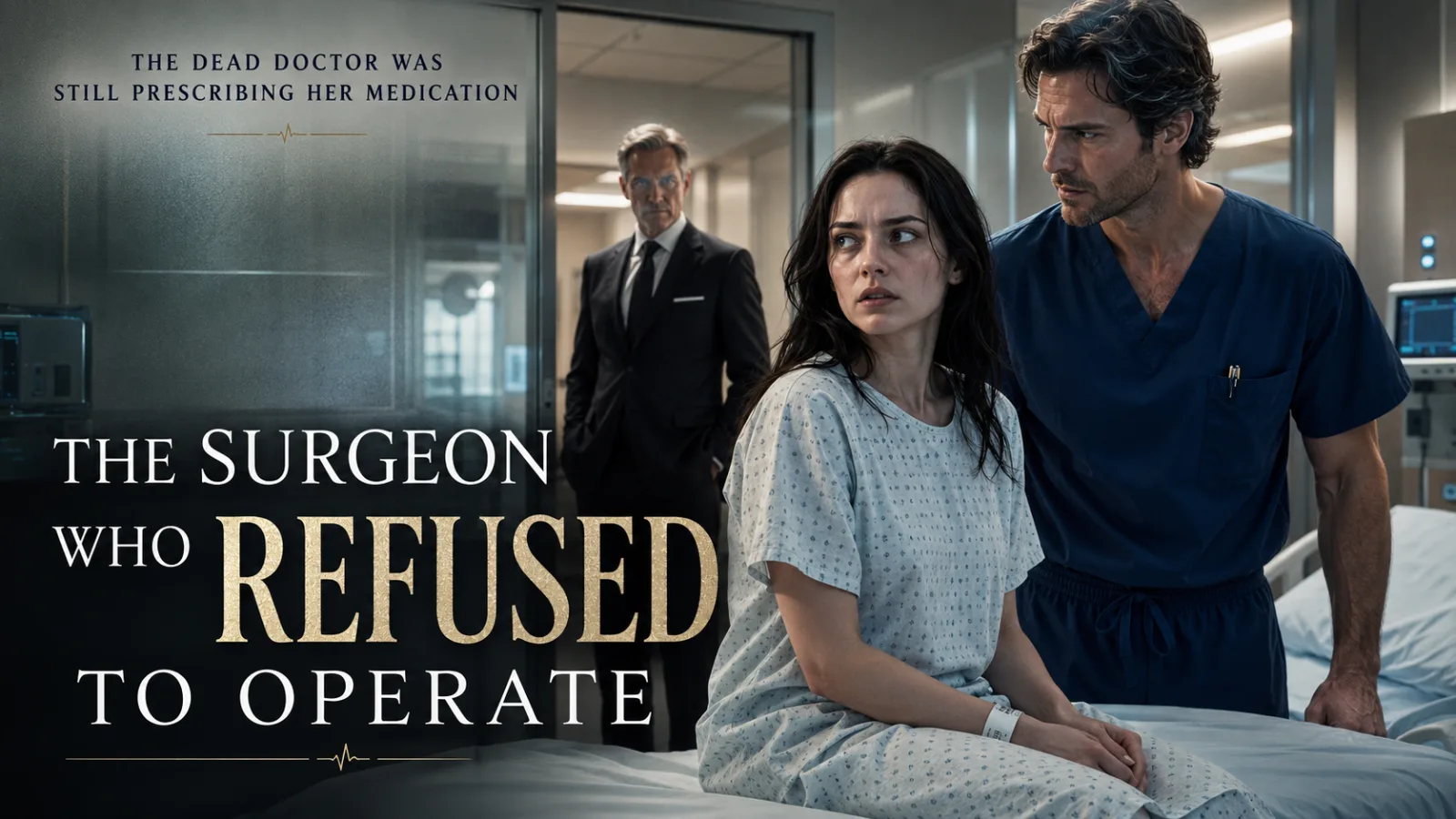
Evelyn did not need surgery that night.
That fact should have relieved her.
Instead, it frightened her more than the operating room had.
Mercer and a hematology team stabilized the bleeding while reversing the effects of the medication that had made it worse. The source turned out to be a small ovarian cyst that might ordinarily have caused pain and little else. Under Evelyn’s drug regimen, it had become an emergency.
By morning her blood pressure had improved.
Richard had been escorted from the surgical floor.
He was not arrested.
There was not yet enough to arrest him for.
Security simply prevented him from returning until the hospital understood what had happened.
Evelyn lay in a private room with the blinds half open and watched sunlight collect along the edge of the window.
She had called her father nine times.
He had not answered.
That was unusual enough to frighten her on its own.
Richard always answered.
When she was eighteen and called him from a university bathroom because her hands were shaking, he had left a board meeting.
When she was twenty and woke with bruises along her thigh, he sent a driver before she finished describing them.
When she was twenty-three and tried living alone for the first time, he called every morning at seven and every evening at nine.
Dependency had arrived so gradually that Evelyn had mistaken it for closeness.
Talia entered with coffee she knew Evelyn was not supposed to drink yet and placed it deliberately out of reach.
“For later.”
“That’s cruel.”
“Motivation.”
Evelyn almost smiled.
Talia sat beside the bed.
“Dr. Mercer asked if I could talk to you about your medical history.”
“My father has everything.”
Talia’s expression remained gentle.
“That’s part of what we need to talk about.”
A discomfort deeper than physical pain moved through Evelyn.
“What do you mean?”
“Do you personally have copies of the tests that diagnosed Veylan syndrome?”
“My father does.”
“Have you ever seen the genetic report?”
“I’ve seen summaries.”
“Original report?”
“No.”
“Have you met Dr. Armitage?”
Evelyn opened her mouth.
Then stopped.
She could remember his voice.
At least she thought she could.
A low, patient voice telling her not to worry.
But when she tried to build the rest of the memory, nothing came.
No office.
No waiting room.
No face across a desk.
“I spoke with him.”
“When?”
“My father arranged calls.”
“Video?”
“No. Phone.”
“Did he introduce himself?”
Evelyn looked at Talia.
“That’s a strange question.”
“I know.”
“You think I never spoke to him.”
“I don’t know who you spoke to.”
A pulse began behind Evelyn’s eyes.
“My father wouldn’t fake a doctor.”
Talia did not answer.
That silence felt worse than disagreement.
Mercer entered twenty minutes later carrying no chart.
He pulled a chair close to the bed.
“I want to tell you what we know, and I want to be careful not to tell you more than we know.”
Evelyn appreciated that immediately.
Her father never spoke that way.
Richard knew.
Always.
Mercer continued.
“The medication you were taking could explain several symptoms you’ve been attributing to your disease—bruising, weakness, occasional dizziness, prolonged bleeding.”
“That doesn’t mean I don’t have it.”
“Correct.”
“My mother had it.”
“We haven’t established that either.”
Evelyn stared.
“My mother died from it.”
“Who told you?”
“My father.”
“Did you ever see her medical records?”
“No.”
Mercer nodded.
“We requested your diagnostic records from the clinic listed in the material your father provided. The clinic sent us what they still have.”
“And?”
“There is a genetic panel from nine years ago.”
Her stomach tightened.
“It was positive.”
Mercer waited.
“No,” he said.
The word did not feel dramatic.
It felt impossible.
Evelyn shook her head.
“That can’t be right.”
“The report says no pathogenic mutation associated with the syndrome was identified.”
“You have the wrong test.”
“We verified your date of birth and specimen number.”
“My father told me they repeated it.”
“We’re looking for another one.”
“They must have repeated it.”
“Maybe.”
“You think he lied.”
“I think I have one original laboratory report and several later summaries that describe its result differently.”
Evelyn closed her eyes.
The room seemed to tilt even though she was lying still.
Nine years.
Medication organizers.
Emergency cards.
Canceled travel.
Private nurses.
A father standing in her apartment kitchen saying, We can’t take risks with your heart.
She opened her eyes.
“What do the later summaries say?”
“That your diagnosis was genetically confirmed.”
“Signed by Dr. Armitage?”
“Some of them.”
“After he died?”
Mercer did not soften the answer.
“Yes.”
Evelyn turned toward the window.
For a while neither Mercer nor Talia spoke.
Eventually Evelyn said, “Maybe his office kept using his template.”
“It’s possible.”
“You don’t sound like you believe that.”
“I’m trying not to believe anything before the records prove it.”
The phrase lodged in her mind.
Before the records prove it.
Evelyn had lived the opposite way for years.
Believe first.
Arrange life around the belief.
Never examine the paperwork because someone more capable had already done it.
“Where did the medicine come from?”
Mercer said, “A private compounding pharmacy contracted through Halden Family Office.”
“My father’s company.”
“Yes.”
“Is that illegal?”
“Not by itself.”
“Were there prescriptions?”
“We’re investigating.”
Evelyn looked at Talia.
“You said you knew Dr. Armitage.”
“I did.”
“What was he like?”
Talia smiled faintly.
“Brilliant. Impatient. Terrible handwriting even after the hospital went electronic. He also hated treating a diagnosis without seeing the patient himself.”
Evelyn felt something inside her tighten.
“I spoke to someone.”
“I believe you.”
“Maybe it was another specialist.”
“Maybe.”
“Stop saying maybe.”
Talia leaned forward.
“What would you like me to say?”
“I want you to tell me there is a normal explanation.”
Talia’s face changed.
“I can’t promise you that.”
Evelyn began crying then, quietly and angrily.
She hated herself for it.
Not because crying was weakness, but because even now her first instinct was to call Richard and ask him to explain the adults in the room.
Talia handed her tissues.
Evelyn took one.
“What happens now?”
Mercer answered.
“You recover. We stop all medication that isn’t medically justified. We independently evaluate whether you have any vascular disorder. And nobody gets access to your records without your permission.”
“My father has power of attorney.”
“Medical?”
“Yes.”
“Do you want him to continue having it?”
The question startled her more than anything else had.
Want.
Nobody had asked what Evelyn wanted medically in years.
She had become accustomed to decisions arriving completed.
“I don’t know.”
Mercer nodded.
“That is an acceptable answer.”
He stood.
“There’s also a hospital patient advocate coming to speak with you. Not because we’ve concluded your father committed a crime. Because you deserve someone whose only job is to represent you.”
After they left, Evelyn stared at her phone.
Richard had finally sent a message.
Please don’t let strangers turn you against the only person who has kept you alive.
Evelyn read it three times.
A week earlier it would have comforted her.
Now she noticed something else.
He did not say the hospital was wrong.
He did not explain Dr. Armitage.
He did not explain the medication.
He reminded her that she needed him.
Evelyn pressed the call button.
Richard answered immediately.
“Evie.”
“Who prescribed my medicine?”
Silence.
Then his voice softened.
“You’re upset.”
“That isn’t an answer.”
“You almost died last night.”
“Who prescribed it?”
“The treatment plan was developed years ago.”
“By a dead doctor?”
“Don’t talk like that.”
“Like what?”
“Like people who don’t understand your case.”
Evelyn gripped the blanket.
“Do I have Veylan syndrome?”
A longer silence.
“Of course you do.”
“Then send me the positive genetic test.”
“Your records are complicated.”
“Send it.”
“Evelyn—”
“Send me the report.”
“You need to rest.”
For years those words had ended arguments.
This time they made her angry.
“No. You need to answer me.”
Richard’s voice cooled.
“I have spent nine years keeping you alive.”
“And I’m asking you for one piece of paper.”
“You don’t understand what you’re doing.”
Evelyn looked toward the window.
“Then help me understand.”
Richard said nothing.
“Dad?”
“You’re emotional.”
She ended the call.
Her hand shook afterward.
But she did not call him back.
That was the first decision she made without Richard Halden’s approval.
It would not be the last.