THE LIFE SHE WASN'T SUPPOSED TO HAVE
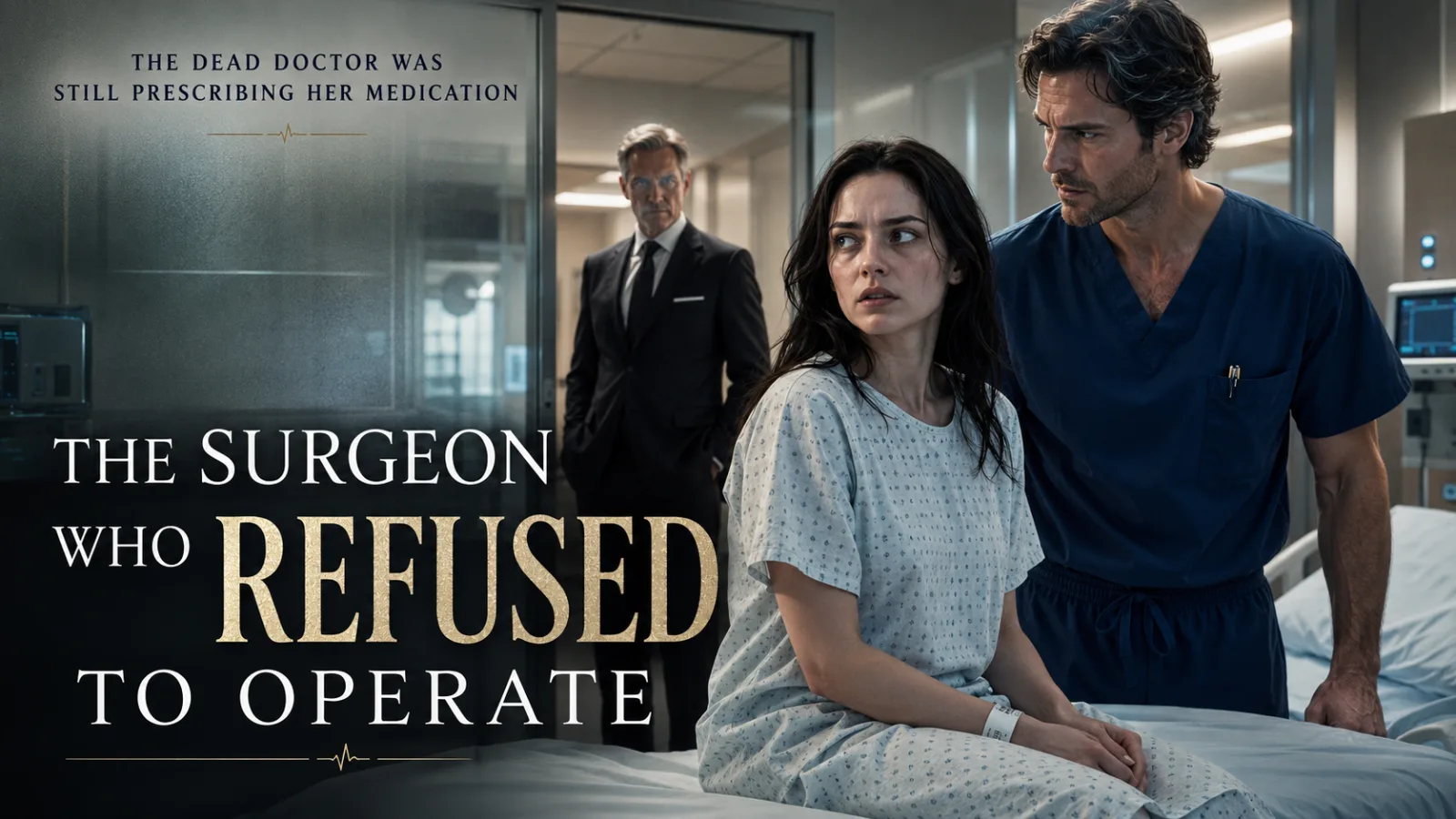
The conservatorship hearing lasted three days.
Richard’s attorneys tried to make it about Evelyn’s emotions.
Miriam made it about documents.
The judge reviewed the original negative genetic test.
Samuel Armitage’s consultation note.
Northline’s posthumous “continuity” summaries.
Dr. Bexler’s medication renewals.
Invoices paid by Halden Family Office.
Richard’s correspondence about preserving treatment authority.
The Lydia Trust.
The company’s voting structure.
The petition Richard filed less than a week after Evelyn began questioning her diagnosis.
Then Mercer testified.
Richard’s attorney asked whether he could prove Evelyn had never suffered from a genuine illness.
“No.”
“Can you prove every medication she received was medically unnecessary?”
“No.”
“Can you prove Mr. Halden intended to harm his daughter?”
“No.”
Richard’s attorney looked pleased.
Mercer continued before he could sit down.
“What I can prove is that my patient arrived with a dangerous treatment effect, that her father identified a dead physician as the prescribing specialist, that the primary genetic test in the available record did not support the diagnosis she had been given, and that her original specialist advised against the long-term treatment later attributed to him.”
The attorney’s smile disappeared.
Talia testified about Armitage.
Simone testified about the family office.
Miriam introduced Lydia’s estate correspondence.
Evelyn testified last.
She expected to be terrified.
Instead she felt tired.
Richard sat twenty feet away.
She did not avoid looking at him.
The opposing attorney was careful.
“Ms. Halden, you acknowledge that your father cared for you through years of genuine symptoms?”
“Yes.”
“He attended appointments?”
“Yes.”
“He paid for treatment?”
“Yes.”
“He responded during medical emergencies?”
“Yes.”
“He arranged specialists?”
“Yes.”
“So you agree he demonstrated substantial concern for your health.”
“I agree he was involved in every part of it.”
The attorney paused.
“Would you describe your father as abusive?”
Miriam objected.
The judge allowed Evelyn to answer if she wished.
Evelyn thought about it.
“No.”
Richard looked up.
The attorney seemed surprised.
“No?”
“I would describe him as controlling.”
“Those aren’t the same thing.”
“No.”
“So you reject the suggestion that your father deliberately harmed you.”
“I didn’t say that either.”
The attorney frowned.
Evelyn continued.
“My father does not wake up thinking, How can I hurt my daughter today? He wakes up thinking, I know what is best. Then he arranges the world until nobody can disagree with him.”
The courtroom was silent.
“He lied to me about my diagnosis because he believed fear would make me careful. He kept medical information from me because he believed knowledge would make me difficult. He kept me away from the trust because he believed ownership would make me dangerous to the company. Every time I became more dependent on him, he called that proof that I needed him.”
The attorney said, “That is your interpretation.”
“Yes.”
“You are angry.”
“Yes.”
“Emotionally distressed.”
“Yes.”
“Recovering from a serious hospitalization.”
“Yes.”
“Then why should this court conclude you are presently capable of managing an estate worth hundreds of millions of dollars?”
Evelyn smiled faintly.
“Because being angry at the man trying to take away my legal rights is not a medical diagnosis.”
Someone behind Miriam coughed to hide a laugh.
The judge did not.
But her eyes softened.
The petition was denied.
Richard was removed as acting trustee pending a separate fiduciary investigation.
Evelyn’s medical power of attorney had already been revoked.
The court appointed an independent administrator to supervise the trust transition until her twenty-seventh birthday.
Six months later, the shares transferred.
Evelyn did not immediately take over Halden Maritime.
That surprised almost everyone.
She appointed an independent board committee, retained experienced management and spent her first year learning what she had inherited.
She discovered that having authority did not require pretending to know everything.
Richard had never learned that.
Criminal investigations followed.
Northline Clinical Services lost several contracts and became the subject of a healthcare-fraud inquiry. Dr. Bexler surrendered his medical license after investigators proved he had renewed treatment without adequate independent evaluation and relied on records he knew were being maintained under a dead physician’s authority.
Richard faced charges involving falsified medical documentation and misuse of trust resources.
The case never produced the spectacular courtroom collapse tabloids wanted.
There was no screaming confession.
No dramatic handcuffs in front of cameras.
The truth was more ordinary.
Emails.
Invoices.
Authorizations.
Depositions.
People admitting they had known something was wrong but assumed someone else was responsible.
Richard eventually pleaded guilty to two financial offenses connected to the trust and entered a civil settlement concerning Evelyn’s medical records. He avoided a long prison term.
Evelyn did not consider that justice.
She eventually stopped needing to.
Justice, she discovered, was not the same thing as seeing someone suffer as much as you had.
Sometimes it was simply making sure they could never put you back where they found you.
Her recovery took longer than the investigation.
For months Evelyn woke at night convinced something catastrophic was happening inside her body.
A headache felt like a warning.
A bruise became evidence.
A skipped heartbeat sent adrenaline through her chest.
The disease had been unconfirmed.
The fear had been completely real.
Mercer referred her to an independent primary-care physician who had no relationship with Halden money.
At their first appointment, the doctor handed Evelyn her own chart.
“Keep it.”
Evelyn stared.
“The whole thing?”
“It belongs to you.”
She cried in the parking garage.
Not because anything terrible happened.
Because no one had ever said those words to her before.
It belongs to you.
She returned to graduate school the following fall.
Not because the degree mattered to the trust.
Because she had wanted it before her life became organized around appointments.
She traveled alone for the first time at twenty-eight.
Miriam tried to convince her to choose somewhere relaxing.
Evelyn chose Florence.
The trip her father had canceled nearly a decade earlier.
On her second morning there she climbed the steps to Piazzale Michelangelo before sunrise. Halfway up, her heart began beating hard.
For one terrible second, old panic returned.
Sit down.
Call Dad.
Find the medication.
Something is wrong.
Evelyn stopped on the stone steps.
She put one hand against the wall.
Breathed.
Waited.
Her heart slowed.
Nothing happened.
A woman carrying a small dog passed her and smiled.
Evelyn laughed quietly at herself and continued climbing.
At the top, Florence opened beneath her in pale morning light.
No driver.
No nurse.
No emergency folder.
No scheduled call home.
Just a city she had once been told was too dangerous for someone like her.
She stayed there until the sun cleared the rooftops.
Richard wrote to her occasionally.
At first the letters defended him.
Then they explained.
Eventually they became shorter.
One arrived nearly two years after the hearing.
I thought keeping you safe was the same thing as being a good father. By the time I understood the difference, I had made you afraid of living without me. I do not expect forgiveness. I am sorry.
Evelyn read it twice.
She did not call him.
She did not tear it up either.
Months later, she agreed to meet him in a public restaurant.
There was no reconciliation scene worthy of a novel.
He was thinner.
She was different.
They spoke about her mother.
Richard apologized without asking to be forgiven.
Evelyn listened without promising anything.
When lunch ended, he asked if he could call her the following week.
“I’ll call you when I want to talk.”
The old Richard might have argued.
This one nodded.
It was not enough to restore what they had lost.
But it was the first boundary he had ever accepted without negotiating.
Years after the emergency at St. Catherine, Evelyn returned to the hospital for the opening of a patient-rights center funded anonymously through the Lydia Halden Trust.
Talia recognized her before Mercer did.
“You look annoyingly healthy.”
Evelyn hugged her.
“I work at it.”
Mercer joined them.
“You know surgeons prefer dramatic gratitude.”
“I sent you a card.”
“It said, ‘Thanks for not operating.’”
“That seemed specific.”
He laughed.
They stood together near the entrance while hospital staff gathered for the opening.
On one wall was a simple sentence Evelyn had insisted remain larger than the donor plaque:
THE PATIENT HAS THE RIGHT TO KNOW.
Mercer read it.
“Subtle.”
“I’ve changed.”
“No, you haven’t.”
Evelyn smiled.
He was right.
She had not become fearless.
She had become informed.
There was a difference.
Before leaving, she walked past the corridor leading toward the operating suites.
For a moment she remembered the night clearly: the lights, her father’s voice, Mercer refusing to move, Talia going still after hearing Dr. Armitage’s name.
One sentence had broken the world Evelyn understood.
That specialist died three years ago.
At the time, it had sounded like the beginning of disaster.
Years later, Evelyn understood it differently.
It had been the first true thing anyone had said about her medical life in a very long time.
And sometimes one true thing, spoken in the right room by someone willing to say it aloud, was enough to give a person her life back.
Chapters · 6 of 6
Don't stop now.
Choose another Veyra story and keep reading.
More Secrets & Lies
One ending should lead naturally into another beginning.