WHAT HER FATHER CALLED LOVE
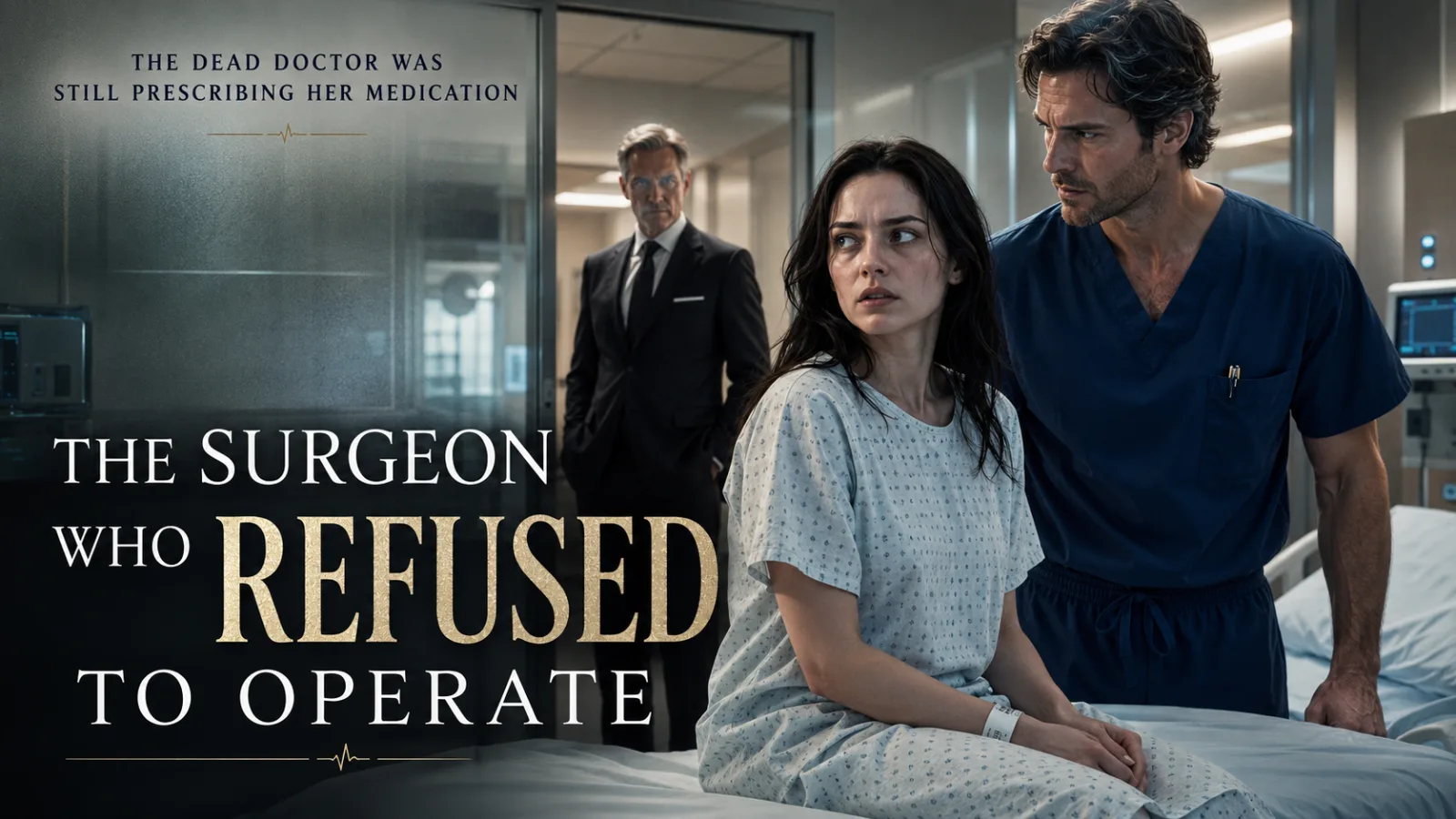
Richard requested a private meeting the night before the conservatorship hearing.
Miriam advised against it.
Evelyn agreed to meet him anyway.
Not alone.
They used a conference room at St. Catherine. Miriam sat near the door. Mercer had no legal reason to attend and did not. Talia was working upstairs.
For the first time in Evelyn’s life, Richard entered a room where she had decided the conditions.
He looked tired.
His hair had grayed noticeably at the temples over the previous week. He carried no briefcase.
Evelyn did not stand when he arrived.
Richard sat across from her.
“Are you feeling better?”
The question almost broke something in her.
It was so ordinary.
“Yes.”
“I’ve been worried.”
“You filed to take away my legal independence.”
“I filed to protect you from people exploiting you while you’re frightened.”
“Who?”
“Lawyers. Hospital administrators. Anyone who sees the Halden name and smells money.”
“Miriam worked for Mom.”
“That doesn’t mean she works for you.”
“She’s the first person who showed me the trust.”
Richard’s jaw tightened.
“You weren’t ready.”
“I’m twenty-six.”
“You have been seriously ill since seventeen.”
“No. I have been seriously treated since seventeen.”
He looked away.
Evelyn leaned forward.
“Do I have Veylan syndrome?”
“You have symptoms.”
“That isn’t what I asked.”
“Medicine is not as simple as Mercer is pretending.”
“Do I have it?”
Richard’s voice rose slightly.
“I watched you collapse.”
“Do I have it?”
“I watched you wake up covered in bruises.”
“Because of medication.”
“We didn’t know that.”
“Dr. Armitage did.”
Silence.
Evelyn continued.
“His original note said not to put me on long-term anticoagulation.”
“He was one doctor.”
“Then why did you keep using his name?”
Richard looked at Miriam.
Evelyn snapped, “Look at me.”
He did.
“Why did medical summaries signed with his name keep appearing after he died?”
“They weren’t signed by him.”
“They were written as if his treatment plan was still active.”
“Because changing everything every time a consultant died would have destabilized your care.”
“He told you not to give me the treatment.”
Richard’s face tightened.
“You were sick.”
“Then find me the test.”
“You think because one genetic panel was negative—”
“The only genetic panel.”
“We had clinical evidence.”
“From symptoms the drugs were causing.”
“You don’t know that.”
“Neither did you.”
The words landed.
For the first time Richard had no immediate response.
Evelyn pulled Lydia’s letter from her bag.
“Mom knew you did this.”
Richard stared at the paper.
“She knew you were turning my health into another thing you controlled.”
“Your mother was angry with me when she wrote that.”
“She said you thought fear kept people careful.”
His face changed.
Evelyn saw recognition.
“You remember saying it.”
Richard lowered his eyes.
“I was trying to keep both of you safe.”
“From what?”
“Everything.”
The answer was so sincere that Evelyn almost hated it more than a lie.
Richard rubbed his hands together.
“Your mother made decisions as if consequences were something other people handled. She wanted to pull money out of the company during the worst year we ever had. Thousands of employees depended on us.”
“It was her money.”
“It was holding the company together.”
“She changed the trust because she didn’t trust you.”
“She changed the trust because she was furious.”
“And after she died, you used me to keep the shares.”
Richard stood.
“That is not what happened.”
“Sit down.”
He stared at her.
Evelyn had never told her father to sit down.
Slowly, he did.
She continued.
“Why did you tell me Mom died from Veylan syndrome?”
“Because vascular rupture killed her.”
“After a car crash.”
“You were sixteen.”
“So you lied.”
“I simplified something horrific for a child.”
“And when I fainted the next year?”
“I panicked.”
“You decided I had the same disease.”
“I thought you might.”
“Armitage said I didn’t.”
“He said the test was negative. He did not say there was zero risk.”
“So you kept treating me.”
“You were improving.”
“I stopped leaving the house.”
“You stopped collapsing as often.”
“I left school.”
“You were overwhelmed.”
“I stopped traveling.”
“You were safer.”
“I stopped knowing the names of my own medication.”
“I handled it for you.”
Evelyn stared at him.
There it was.
Not one enormous crime in his mind.
A thousand small acts of management.
Each defensible alone.
Together they had consumed nearly a decade.
“Did you know the medication was making me sick?”
“No.”
She watched his face.
“Did you know there was no confirmed diagnosis?”
Richard took too long.
Evelyn’s throat tightened.
“Say it.”
“I believed the risk was real.”
“That is not the same thing.”
“No.”
“Did you know?”
“Yes.”
The word was almost inaudible.
Miriam did not move.
Evelyn felt strangely calm.
“And the trust?”
Richard closed his eyes.
“When you turned twenty-seven, control of the voting shares would transfer.”
“You didn’t want that.”
“The company could not survive an inexperienced controlling shareholder making decisions during medical episodes.”
“I have never made one decision about the company because you never told me I owned it.”
“You weren’t prepared.”
“You made sure I wasn’t.”
“That isn’t fair.”
Evelyn laughed once.
“No. It isn’t.”
Richard looked suddenly older.
“I love you.”
She believed him.
That was the worst part.
“I know.”
His eyes filled.
“I buried your mother.”
“So did I.”
“I almost lost you after that.”
“You did lose me.”
“Evelyn—”
“You just didn’t notice because I was still sitting where you put me.”
Richard lowered his head.
For several seconds the only sound was the building’s ventilation.
When he looked up again, the executive voice was gone.
“What do you want me to do?”
Evelyn thought about the question.
A month earlier she might have said explain.
A week earlier she might have said admit it.
Now she understood that neither would give her back what she actually needed.
“Withdraw the conservatorship petition.”
Richard looked at Miriam.
Evelyn said, “Me. Look at me.”
He did.
“Withdraw it.”
“I can’t let you take control of the company while you’re angry.”
“That sentence is why we’re going to court.”
His expression hardened again.
There he was.
The part of Richard that could confuse resistance with danger.
“I will not let you destroy everything your mother and I built because a trauma surgeon made you suspicious.”
Evelyn felt something inside her settle.
She had needed to know whether there was still a version of the conversation where he chose her autonomy over his control.
There wasn’t.
She stood.
“Then tomorrow you can explain to a judge why a dead specialist kept appearing in my medical records.”
Richard stood too.
“Evie.”
She walked toward the door.
“Evelyn.”
She stopped.
He had rarely used her full name when pleading with her.
“I did keep you alive.”
Evelyn looked back.
“No, Dad.”
Her voice did not shake.
“You kept me afraid.”
Then she left.