THE SAMPLE THAT SHOULD NOT EXIST
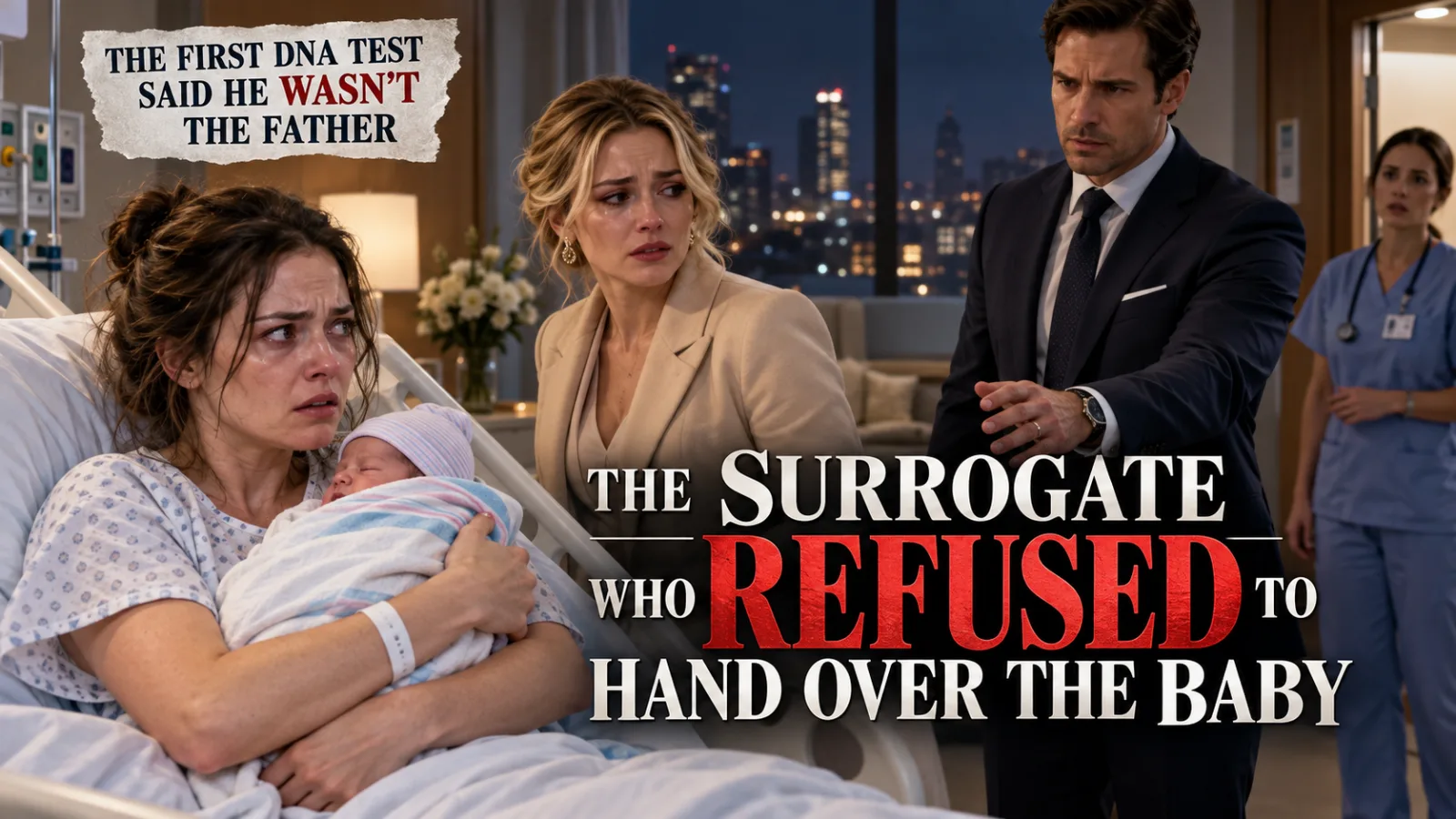
Nathan Whitmore had been dead for three years.
Claire knew that before Hannah ever showed her the name.
He had been Graham’s younger brother by fourteen months, the family member everyone described with the same affectionate list of contradictions.
Brilliant but reckless.
Generous but impossible.
A better sailor than businessman.
The brother who could walk into a room full of people angry with him and leave with three dinner invitations.
Claire had loved him.
Not romantically.
Nathan had treated her like family long before Graham’s mother did.
When Claire and Graham married, Nathan had given a speech about his brother finally finding someone immune to his “pathological need to win every argument.”
Graham laughed harder than anyone.
Two years later Nathan was diagnosed with lymphoma.
Before chemotherapy, his oncologist recommended fertility preservation.
Nathan banked sperm.
The cancer responded.
For nearly eighteen months, everyone believed he had beaten it.
Then came an infection.
Three days in intensive care.
Death at thirty-five.
Claire remembered Graham after the funeral.
Silent.
Controlled.
Working.
He handled Nathan’s estate because Nathan had named him executor.
“Why would Nathan’s name be anywhere near our fertility records?” Claire asked.
It was six hours after the hospital stopped the discharge.
Hannah sat across from her in a consultation room while a family-law attorney named Priya Shah reviewed the documents.
“It isn’t,” Priya said.
“Then why are we talking about him?”
“Because of this.”
She turned her laptop around.
Hospital counsel had obtained the court file connected to the Whitmore surrogacy arrangement. It contained declarations from Graham, Claire, Hannah and the clinic.
Graham’s declaration stated that he was the intended genetic father.
Claire’s declaration said the same.
The clinic confirmed that the embryo consisted of Claire Whitmore’s oocyte and Graham Whitmore’s sperm.
Nothing mentioned Nathan.
Priya opened another document.
“This came from the laboratory’s compliance department.”
It was not a paternity report.
It was a technical comparison generated after the discrepancy was escalated.
The first paternal reference sample did not match the fetus as a father.
But the report noted significant familial similarity.
“Meaning?” Claire asked.
Priya was careful.
“It means the biological father was likely a close relative of Graham’s.”
Claire went completely still.
Hannah said nothing.
Claire looked at the screen again.
“His father?”
“Possible by relatedness alone, but unlikely given the full markers.”
“His brother.”
“That became the lab’s concern.”
Claire stood.
She walked to the wall, then back.
“Graham’s brother is dead.”
“Yes.”
“He was dead before our embryo was created.”
“Yes.”
“So either this is impossible or somebody used—”
She stopped herself.
Priya finished gently.
“Stored genetic material.”
Claire sat down again.
“No.”
It came out flat.
Then louder.
“No.”
Hannah understood why.
The secret was not merely about paternity.
It reached backward into Claire’s marriage.
Someone had made a reproductive decision using a dead man’s genetic material and a living woman’s egg.
And Claire had consented to neither the substitution nor the identity of the biological father.
“We need the storage records,” Priya said.
Claire laughed without humor.
“Graham controls the clinic.”
Hannah looked at her.
“What?”
“He doesn’t own it.”
Claire rubbed her forehead.
“Whitmore Health Foundation donated the building. Graham sits on the board.”
That explained more than Hannah wanted it to.
Dr. Leonard Voss arrived at the hospital shortly after ten that morning.
He did not come voluntarily.
Hospital counsel requested his presence after the judge temporarily suspended the existing parentage order pending an emergency hearing.
Voss was sixty-one, silver-haired and polished in the way expensive physicians often became after years of speaking to frightened wealthy people.
He asked to meet Claire privately.
She refused.
“Hannah stays.”
Voss glanced at the surrogate.
“This involves confidential genetic information.”
“It involves her pregnancy.”
“Hannah is not the intended parent.”
Hannah felt Claire stiffen.
Claire said, “She is the reason I know anything is wrong.”
Voss sat.
He began exactly where Graham had.
“An error occurred at the laboratory.”
Priya placed the compliance letter on the table.
“No.”
Voss looked at it.
“The situation is more complicated.”
Claire leaned forward.
“Was my embryo created with Graham’s sperm?”
Voss paused.
Hannah watched his eyes.
He did not look confused.
He looked trapped.
“Doctor.”
“I cannot answer that accurately without reviewing the embryology file.”
“You created the embryo.”
“I supervise a large program.”
Claire’s voice sharpened.
“Was Graham the genetic father?”
“I need the records.”
Priya said, “Those records are being preserved under court order now.”
That changed Voss.
Only slightly.
But enough.
Claire saw it.
“What are you afraid they’ll find?”
Voss stood.
“I’m not going to participate in an accusation-driven conversation.”
Claire stood too.
“My son was born eight hours ago, and I just discovered my husband may not be his father. Sit down.”
Voss stared at her.
Then did.
For the first time Hannah understood why Graham had married Claire.
They were more alike than either probably wanted to admit.
Claire did not raise her voice again.
“Was Nathan Whitmore’s sperm stored at your facility?”
Voss said nothing.
Priya answered from the records already obtained.
“Yes.”
Claire closed her eyes.
“Was it destroyed after his death?”
Voss looked toward the attorney.
Priya said, “That is exactly what we are going to determine.”
The answer arrived sooner than anyone expected.
Nathan had signed a disposition directive when he banked the sample.
In the event of death:
DESTROY ALL REMAINING SPECIMENS.
No posthumous reproductive use.
No transfer to family.
No executor discretion.
The instruction could not have been clearer.
Yet the storage inventory showed that one vial remained active for almost two years after his death.
Then it disappeared.
The status field read:
TRANSFERRED FOR AUTHORIZED CLINICAL USE.
The authorization form was missing.
Claire stared at the line.
“Who could approve that?”
Voss did not answer.
Priya did.
“The patient while alive. Or someone with valid authority if the directive permitted it.”
“It didn’t.”
“No.”
Claire looked at Voss.
“Then who took it?”
The doctor’s face had lost color.
He folded his hands.
“I need counsel.”
That was the first honest thing he said.
By afternoon the clinic’s attorneys were involved.
By evening the court ordered preservation of every embryology record connected to Claire and Graham’s treatment.
Then someone tried to delete them.
The attempt came at 7:14 p.m.
A clinic employee used administrator credentials to access the archived cycle file.
The system blocked deletion because the legal hold had already been activated.
A forensic copy recorded the account.
Leonard Voss.
When Priya told Claire, she was sitting beside the newborn in the hospital nursery.
The baby had Claire’s mouth.
Everyone kept saying it.
Hannah had noticed too.
“What happens to him now?” Claire asked.
“The court will deal with parentage.”
“That’s not what I meant.”
Priya understood.
“He stays safe.”
Claire touched one finger to the baby’s tiny hand.
“I spent four years trying to have him.”
“I know.”
“I don’t care whose brother his father is.”
Priya said nothing.
Claire looked up.
“But someone cared enough to lie.”
That was the right question.
The answer had less to do with fertility than any of them expected.
It was hidden in the Whitmore family trust.