WHAT GRAHAM WANTED
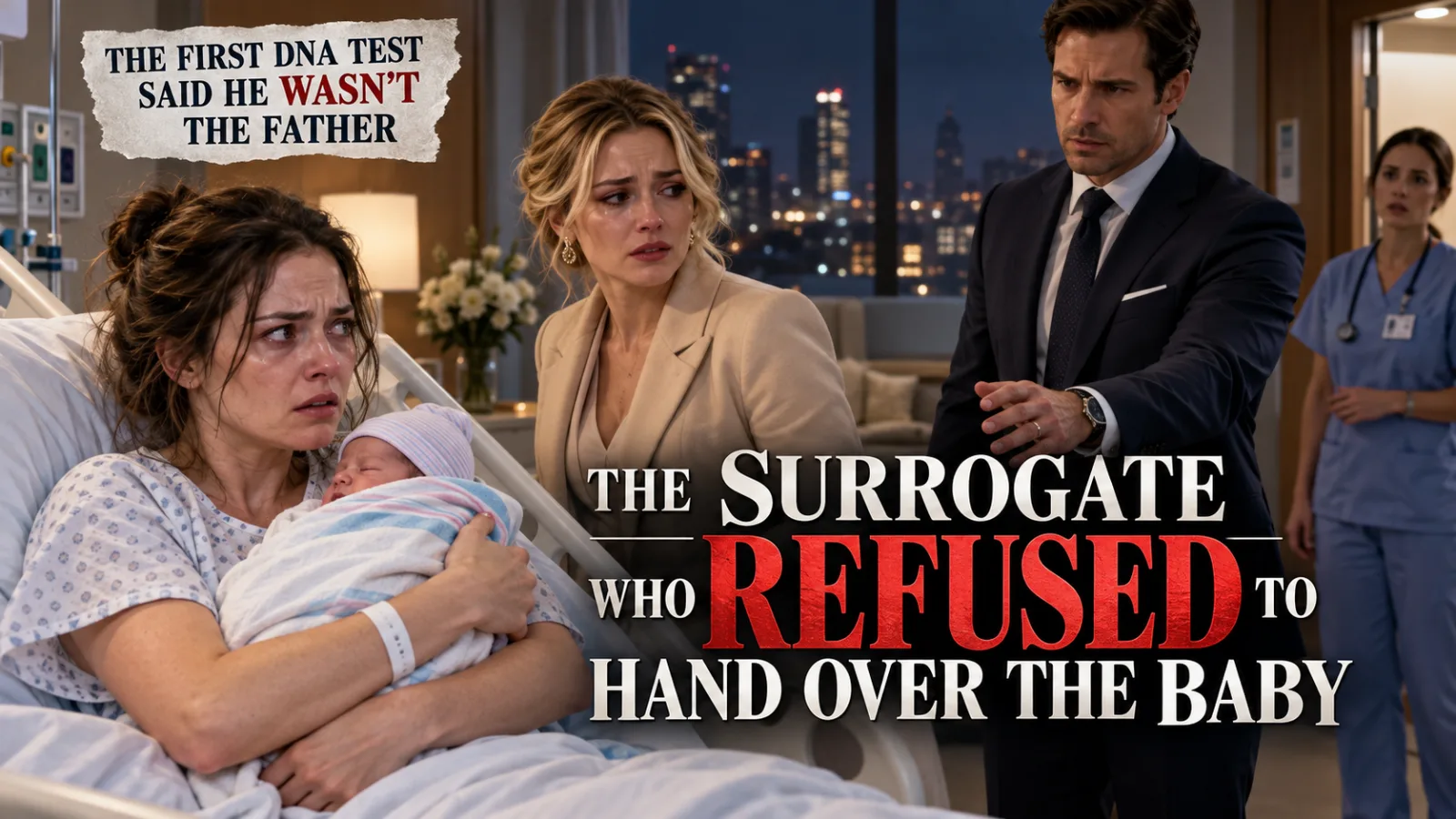
The explanation was not one thing.
That disappointed the reporters.
They wanted a clean motive.
Money.
Inheritance.
Infertility.
Jealousy.
Grief.
Control.
The truth was all of them braided together.
Graham had learned he was infertile two years before he married Claire.
A childhood infection had left him with non-obstructive azoospermia.
He never told her.
He told himself it did not matter until they wanted children.
Then Claire began fertility treatment.
Doctors focused on her first because she had endometriosis.
Two failed retrievals.
One miscarriage.
Months of injections.
Graham let her believe the problem belonged mostly to her.
By the time Claire’s third retrieval produced viable eggs, Graham’s lie had become too large to confess without changing the meaning of everything that came before it.
Dr. Voss knew.
He suggested donor sperm.
Graham refused.
Not because he objected morally.
Because the trust required his biological child.
Then Nathan died.
And Graham became executor.
The vial was there.
Genetically Whitmore.
His brother.
A man he loved.
A man who would never know.
Graham convinced himself that Nathan would have wanted Claire to have a child.
He ignored the signed directive saying the opposite.
Voss initially refused.
Then Whitmore Health Foundation approved a seven-million-dollar expansion grant to the fertility center.
Three weeks later, Nathan’s specimen was released.
Claire’s egg was fertilized.
The embryo became the boy now sleeping in a bassinet beside her bed.
When the pregnancy succeeded, Graham believed the difficult part was over.
Then Margaret Ellison informed him that the trust required independent paternity verification.
Not family-line verification.
Not proof of Whitmore descent.
Graham himself.
The first DNA result destroyed the plan.
So Graham created a second result.
He did not hack the laboratory.
He did something simpler.
He submitted Nathan’s DNA under his own identity.
The laboratory tested fetus against biological father.
The result was accurate.
The name was false.
Graham’s fraud worked because the science did exactly what it was supposed to do.
He relied on nobody examining the chain of custody closely enough to notice.
Hannah noticed.
The financial investigation that followed revealed why Graham was desperate.
Without the trust shares, he would lose effective control of Whitmore Maritime at the next annual vote.
His cousin Rebecca had organized institutional investors against him after two disastrous acquisitions.
Graham needed the forty-two percent block.
The child had become his deadline.
The birth date fell four months before his forty-fifth birthday.
Claire listened to all of this in Priya’s office.
At the end she asked one question.
“Would he have used Nathan if there were no trust?”
Nobody could answer.
Graham eventually did.
Months later.
Not in court.
In a deposition.
His attorney asked for a recess.
Graham refused.
“I don’t know.”
Claire read the transcript afterward.
The answer hurt more than if he had said yes.
Because it was probably true.
Graham had wanted a child.
He had wanted Claire happy.
He had wanted to preserve his brother’s bloodline.
He had wanted his company.
He had wanted to avoid admitting infertility.
He had wanted to remain the person who solved every problem.
At each decision point, he chose the version of reality that required nobody else’s consent.
His marriage ended.
Claire filed for divorce before the criminal investigation concluded.
The fertility clinic lost its accreditation during the inquiry.
Voss surrendered his medical license and later pleaded guilty to falsifying medical records and conspiracy-related charges under the fictional state statutes governing reproductive tissue.
Crane was disbarred after investigators proved he prepared false declarations for the parentage proceeding and coordinated the mislabeled DNA submission.
Graham faced charges for fraud, falsification of evidence, unlawful use of reproductive tissue and trust-related offenses.
The company removed him as chief executive before trial.
He lost the voting control he had built the entire scheme to obtain.
The trust clause was never satisfied.
The forty-two percent block transferred to the charitable foundation exactly as Charles Whitmore’s instrument required.
Ironically, the child Graham manipulated into existence could not save his control because Graham was not his biological father.
Claire named the baby Owen Nathan Whitmore.
People had opinions about the middle name.
Some thought honoring Nathan was strange considering how his genetic material had been used.
Claire disagreed.
“What Graham did to Nathan is not Nathan’s fault.”
Nathan had not chosen fatherhood.
But neither had he chosen to become a secret.
Claire kept one framed photograph of him in Owen’s room.
Not labeled Father.
Not Uncle.
Just Nathan.
When Owen was old enough, Claire planned to tell him the truth in language appropriate to his age.
No invented story.
No shame.
No secret waiting to explode twenty years later.
Hannah stayed in Claire’s life longer than either expected.
At first because lawyers needed statements.
Then because Claire occasionally sent photographs.
Then because two women who had survived the same deception from different sides discovered that friendship required less explanation than starting over with strangers.
Six months after Owen’s birth, Claire invited Hannah to lunch.
Hannah arrived with her children.
Owen slept through most of it.
Near the end, Claire said, “Do you regret doing another surrogacy?”
Hannah thought.
“I regret trusting paperwork because rich people paid expensive lawyers to write it.”
Claire smiled.
“Fair.”
“I don’t regret him.”
Neither looked at Owen.
They did not need to.
Claire said, “I keep thinking about that room.”
“What room?”
“The hospital.”
Hannah laughed.
“There were several.”
“The moment Graham reached for him.”
Hannah remembered perfectly.
“Give me my son.”
Claire stared into her coffee.
“You already knew what you were going to say.”
“For three weeks.”
“Were you scared?”
“Terrified.”
“You didn’t look scared.”
“I had just delivered a human being. My standards for frightening experiences were temporarily high.”
Claire laughed.
Then became serious.
“You saved me.”
Hannah shook her head immediately.
“No.”
“You did.”
“I gave you information.”
“You stopped him from leaving with Owen.”
“The hospital stopped him.”
“Because you spoke.”
Hannah leaned back.
“Then say that.”
Claire waited.
“You spoke.”
“Yes.”
“That matters.”
Hannah looked across the restaurant at her children arguing over fries.
For most of her life, she had believed courage was something dramatic people possessed naturally.
It turned out courage often looked like holding one piece of paper long enough to show it to the person everyone else hoped would never see it.