THE MAN WHO SIGNED FOR HIS BROTHER
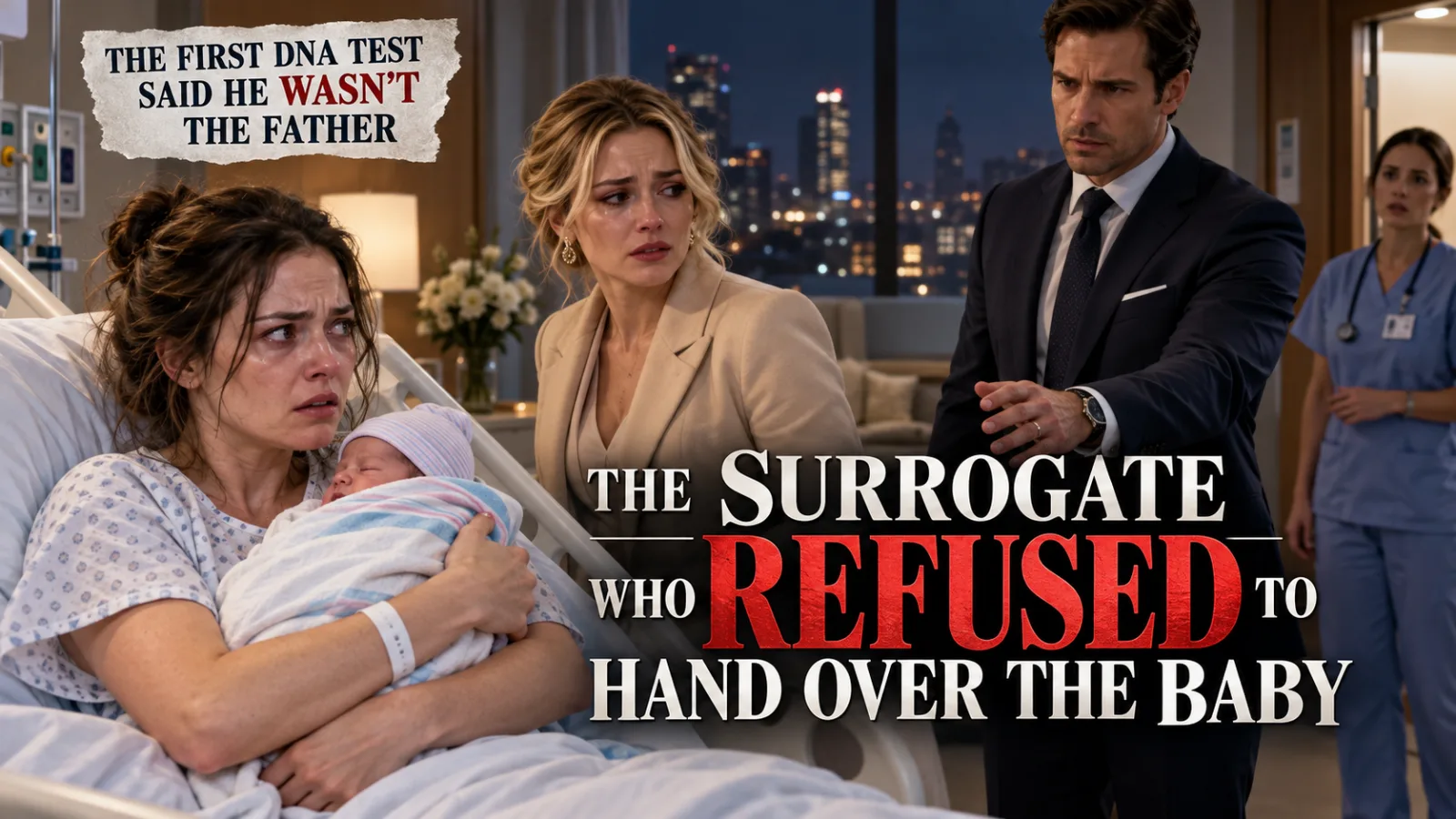
Graham stopped speaking to Claire directly.
His lawyers said it was prudent.
Claire thought it was cowardice.
The emergency hearing took place forty-eight hours after the birth.
Graham entered the courtroom in the same navy suit he had worn to dozens of corporate meetings, hair perfect, expression calm.
Hannah almost admired the discipline required.
Then she remembered the way he had looked at the envelope beside her hospital bed.
The judge, Elena Marquez, was not interested in family theatrics.
She wanted answers.
Was the existing parentage order based on materially false genetic declarations?
Was Graham Whitmore the biological father?
Was Claire Whitmore the biological mother?
Did Hannah Keene have any genetic relationship to the child?
Who had authorized the use of Nathan Whitmore’s stored specimen?
And what arrangement protected the newborn while those questions were answered?
The independent DNA test resolved two of them quickly.
Claire was the biological mother.
Hannah was not genetically related to the child.
Graham was excluded as biological father.
The paternal profile was consistent with Nathan Whitmore.
Claire cried when she heard it.
Not because she loved the baby less.
Because it transformed Nathan from a memory into someone whose body had been used after death.
Graham’s attorneys objected to describing it that way.
Judge Marquez asked a simpler question.
“Did Nathan Whitmore consent to posthumous reproductive use?”
“No,” Priya said.
She submitted the directive.
DESTROY ALL REMAINING SPECIMENS.
Graham’s attorney argued that the sample had been released under an executor authorization signed before staff located the disposition directive.
The judge looked at Graham.
“You were the executor?”
“Yes.”
“You signed the release?”
He hesitated.
“Yes.”
Claire closed her eyes.
There was the first direct admission.
Graham continued.
“I believed I had authority.”
“Did you know your brother had elected destruction upon death?”
“I did not remember that provision.”
Priya stood.
“We have an email showing his attorney sent him the signed directive eleven days before the sample transfer.”
The courtroom changed.
Crane’s records had finally arrived after the judge threatened sanctions.
The email was short.
Nathan’s fertility directive is unambiguous. Remaining specimens must be destroyed. No third-party reproductive authorization survives him.
Graham had replied:
Understood.
Eleven days later he authorized the vial’s release.
Judge Marquez read the exchange twice.
Then she looked at Graham.
“You understood.”
Graham’s lawyer rose.
“Your Honor—”
“Sit down.”
He did.
Claire watched her husband.
She had never seen anyone tell him to sit down and succeed so quickly.
The judge continued.
“Mr. Whitmore, did your wife know the embryo was created using your deceased brother’s genetic material?”
“No.”
“Did the gestational carrier?”
“No.”
“Did you tell the court when seeking the parentage order?”
“No.”
“Why?”
Graham’s face tightened.
“My wife had endured years of failed fertility treatment.”
Claire stared.
He continued.
“Nathan was family. The embryo was genetically connected to both sides. I believed—”
“You believed what?”
“That Claire would have the child she wanted.”
Claire stood before Priya could stop her.
“I wanted your child.”
The judge looked at her.
“Mrs. Whitmore—”
“I’m sorry.”
She sat again.
Graham finally looked at her.
There was grief in his face.
Real grief.
That made none of it better.
“I couldn’t give you one.”
Claire said nothing.
“You wanted a family.”
“You could have told me.”
“I knew what you would say.”
“Exactly.”
His mouth closed.
“You knew I would say no, so you removed the part where I got to say anything.”
Graham looked away.
That sentence followed him through the rest of the hearing.
The lab manipulation was harder for him to explain.
His lawyers initially claimed he did not know the second reference sample came from Nathan.
Then courier records showed the package originated from a storage archive controlled by Nathan’s estate.
The release authorization bore Graham’s signature.
A message from Crane to Voss said:
G.W. profile cannot satisfy test. Use retained family reference for confirmation and amend administrative identity.
Administrative identity.
A dead man’s name replaced with Graham’s.
Hannah testified about the two reports.
Graham’s attorney tried to make her sound unstable.
“Ms. Keene, you were pregnant, under considerable stress and not trained in genetics.”
“No.”
“You initially believed a laboratory error had occurred.”
“I hoped one had.”
“You concealed the first report from the intended parents for weeks.”
“From Graham.”
“You did not tell Claire.”
“No.”
“Why?”
“Because every person I asked about it reported back to her husband.”
The attorney paused.
“How could you know that?”
“Because every time I asked a question, Graham called me before Claire did.”
That landed.
Hannah continued.
“When the first test vanished from my portal, he called within twenty minutes and told me to stop upsetting myself over paperwork.”
“Perhaps he was concerned about your pregnancy.”
“Maybe.”
The attorney looked relieved.
Hannah finished.
“Then the lab compliance officer called and told me someone had replaced the paternal reference sample.”
The relief disappeared.
“What did you do?”
“I waited.”
“Why?”
“Because the safest place to expose it was the hospital, after the baby was born, with nurses, lawyers and witnesses everywhere.”
Graham stared at her.
For the first time since she met him, Hannah saw something close to respect.
Or perhaps simply recognition that she had outmaneuvered him.
The court invalidated the original parentage order as to Graham.
Claire’s legal maternity was provisionally recognized based on her genetic relationship and undisputed reproductive intent.
Graham’s parental status would require separate determination.
The child remained with Claire under temporary orders.
Hannah signed no claim of parentage.
She never wanted one.
Before leaving the courthouse, Claire found her alone near the elevators.
“You could have walked away.”
Hannah looked at her.
“No.”
“You could.”
“I could have pretended I never saw the first test.”
Claire began crying.
Hannah hugged her.
“I almost did.”
“Why didn’t you?”
Hannah thought of Graham standing beside the hospital bed saying Give me my son.
“Because once I knew somebody had lied about who made that child, handing him over without saying anything would have made me part of the lie.”
The elevator arrived.
Claire wiped her face.
“What happens now?”
Hannah looked at the courthouse doors.
“Now he has to explain why.”