THE STORY MARCUS NEEDED
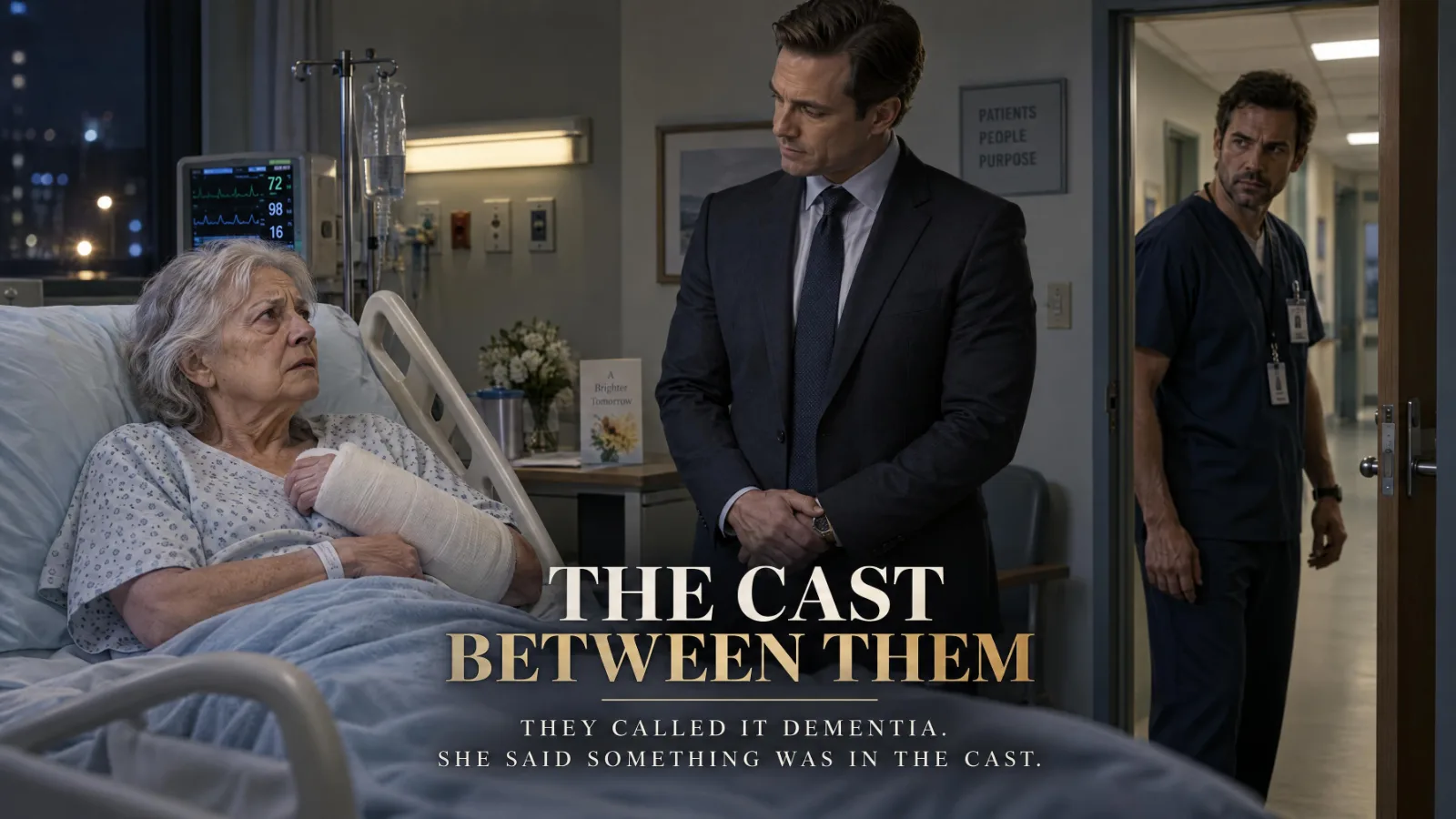
Danielle had spent fourteen years mistaking Marcus's calm for honesty.
He rarely raised his voice.
He never slammed doors.
When arguments became emotional, Marcus became reasonable.
That quality had once attracted her.
Danielle had grown up in a house where Eleanor and Harold argued loudly and forgave loudly. Her parents could quarrel over grocery receipts as if appearing before the Supreme Court, then drink coffee together twenty minutes later.
Marcus was different.
Marcus slowed things down.
He chose words carefully.
He made lists.
He remembered dates.
When Danielle became angry, Marcus waited until she finished and asked, “Do you want a solution, or do you need me to listen?”
For years she had considered that kindness.
Sitting alone in the hospital cafeteria at eight in the morning, Danielle began wondering whether she had simply never been the person he needed to convince.
Her phone contained the first useful record.
Not because Marcus had confessed anything in writing.
He was not stupid.
But Danielle and Marcus shared a family calendar.
Eleanor's orthopedic follow-up had originally been scheduled twelve days after the fracture.
Canceled.
The replacement appointment had been scheduled four days later.
Canceled again.
Danielle stared at the entries.
She remembered asking Marcus about the second cancellation.
Your mom said she's too nauseated to go.
At the time it sounded plausible.
Danielle called the orthopedic office.
They could not disclose Eleanor's medical information without authorization, but Danielle did not ask for it.
“I only need to know who canceled her appointment.”
The receptionist hesitated.
Danielle gave her mother's date of birth and explained that a hospital investigator might be contacting the office.
The receptionist put her on hold.
When she returned, her voice had changed.
“The first appointment was canceled from the patient's listed home number.”
Eleanor's landline.
Danielle's stomach tightened.
“The second?”
“A male caller.”
“Did he give his name?”
“Yes.”
“Marcus Vale?”
A pause.
“No. Marcus Wynn.”
Her husband's name.
Danielle closed her eyes.
“Thank you.”
The notary took longer.
Danielle searched her email because Marcus occasionally forwarded household receipts. Nothing.
Then she remembered the printer.
Marcus printed almost everything.
Airline confirmations.
Insurance forms.
Restaurant reservations.
He distrusted important information that existed only on a screen.
At ten thirty, Danielle drove home.
Marcus was not there.
The detective had told him not to return to Eleanor's house while the initial investigation was underway, and he had apparently decided the safest place to be was their own home across town.
Danielle went directly to his office.
For the first time in their marriage, she opened every drawer.
She felt ashamed.
Then she found the folder.
It was beneath a stack of tax returns.
The label read:
E. VALE PLANNING.
Inside were printed pages from an elder-law website.
Notes about durable power of attorney.
Guardianship.
Capacity evaluations.
Home equity.
Property transfer.
Danielle read each line twice.
Marcus had highlighted a paragraph explaining that a durable power of attorney required the principal to possess sufficient capacity at signing.
Below it, in his handwriting, were four words:
May already be too late.
Danielle sat down.
Her knees felt unreliable.
The next page contained a real estate estimate for Eleanor's house.
$642,000.
Another sheet showed the remaining mortgage balance.
Zero.
Behind that sat something worse.
Their own financial statements.
Danielle knew Marcus's consulting company had struggled.
She did not know how badly.
Credit-card balances.
A business line of credit.
Two delinquent vendor accounts.
A letter from their mortgage lender regarding missed payments that Marcus had told her were a bank processing error.
The total debt was large enough that Danielle stopped adding.
She heard the garage door.
For one foolish second she shoved the papers together like a child caught snooping.
Then she remembered Eleanor's arm.
She left them spread across the desk.
Marcus entered the house calling her name.
“Danielle?”
She did not answer.
His footsteps approached.
He appeared in the office doorway.
He saw the papers.
His face changed.
Not dramatically.
Marcus did very little dramatically.
He leaned against the doorframe.
“You went through my files.”
Danielle almost laughed.
“That is what you're starting with?”
“You don't understand what you're looking at.”
“I understand overdue debt.”
“Business debt.”
“I understand the mortgage letter.”
“I handled it.”
“You told me it was a processing mistake.”
“It was complicated.”
Danielle lifted Eleanor's planning folder.
“And this?”
Marcus's mouth tightened.
“Responsible estate planning.”
“For someone you keep telling everyone has dementia?”
“That is exactly why planning matters.”
“She refused.”
“She refuses everything.”
“She refused because you hid her glasses.”
His eyes flickered.
Tiny.
But Danielle saw it.
“I did not hide her glasses.”
“She says she couldn't find them when the notary came.”
“Your mother loses things.”
Danielle stood.
“Stop.”
Marcus stared at her.
It was the first time in years that Danielle had interrupted him before he finished constructing the explanation.
“Do not tell me another thing my mother supposedly forgot.”
He pushed away from the doorframe.
“I am trying to keep this family from collapsing.”
“Our family?”
“Yes.”
“You put something under her cast.”
“No.”
“Then who did?”
“I don't know.”
“You adjusted that cast the night before she started feeling it.”
Marcus stared at her.
“She told you that?”
“The police know.”
“This is insane.”
“Is it?”
“Yes.”
His composure finally cracked.
Not into fear.
Into irritation.
“You are letting an old woman who is obviously declining destroy your marriage because some caregiver wants to play detective.”
Danielle looked at him.
The phrase old woman seemed to hang between them.
Not her mother.
Not Eleanor.
An old woman.
Marcus saw the mistake.
He tried to correct course.
“I'm sorry. I'm angry.”
“You should be terrified.”
“Of what?”
“That she was right.”
“She isn't.”
Danielle's eyes moved to the papers.
“Then explain those.”
Marcus breathed through his nose.
“You want the truth?”
“Yes.”
“Your mother's house is sitting there completely paid off while we are drowning.”
Danielle felt something inside her go very quiet.
Marcus continued.
“Your father left her secure. Fine. Good for him. But what exactly is she protecting now? Six empty rooms? A backyard she can't maintain?”
“That house is hers.”
“I know.”
“Do you?”
“I was trying to create options.”
“With a notary she didn't ask for?”
“She needs help.”
“With paperwork she couldn't read?”
“She needs help, Danielle.”
The repetition made Danielle sick.
It was the sentence he used about everything.
The groceries.
The bills.
The appointments.
The thermostat.
The keys.
The cast.
She suddenly understood what Marcus had built.
Not a lie.
A vocabulary.
A set of words that made every act of control sound like care.
“She needs help.”
“She's declining.”
“She's confused.”
“It's safer.”
“It's easier.”
“It's time.”
Each phrase harmless alone.
Together they formed a cage.
Danielle pointed toward the door.
“Leave.”
Marcus stared at her.
“You're serious.”
“Yes.”
“You have no idea what you're doing.”
“Probably.”
“Danielle.”
“For once, Marcus, I would rather not know what I'm doing than let you explain it to me.”
His jaw tightened.
“You think that man at the hospital cares about your mother more than I do?”
“This isn't about Evan.”
“You don't even know him.”
“I know he listened when I didn't.”
That landed.
Marcus picked up his coat.
At the doorway he stopped.
“Your mother has always hated me.”
Danielle shook her head.
“No.”
“She has.”
“She distrusted you.”
“Same thing.”
“No.”
Danielle looked at the folder on the desk.
“I think I'm finally learning the difference.”