THE THINGS ELEANOR REMEMBERED
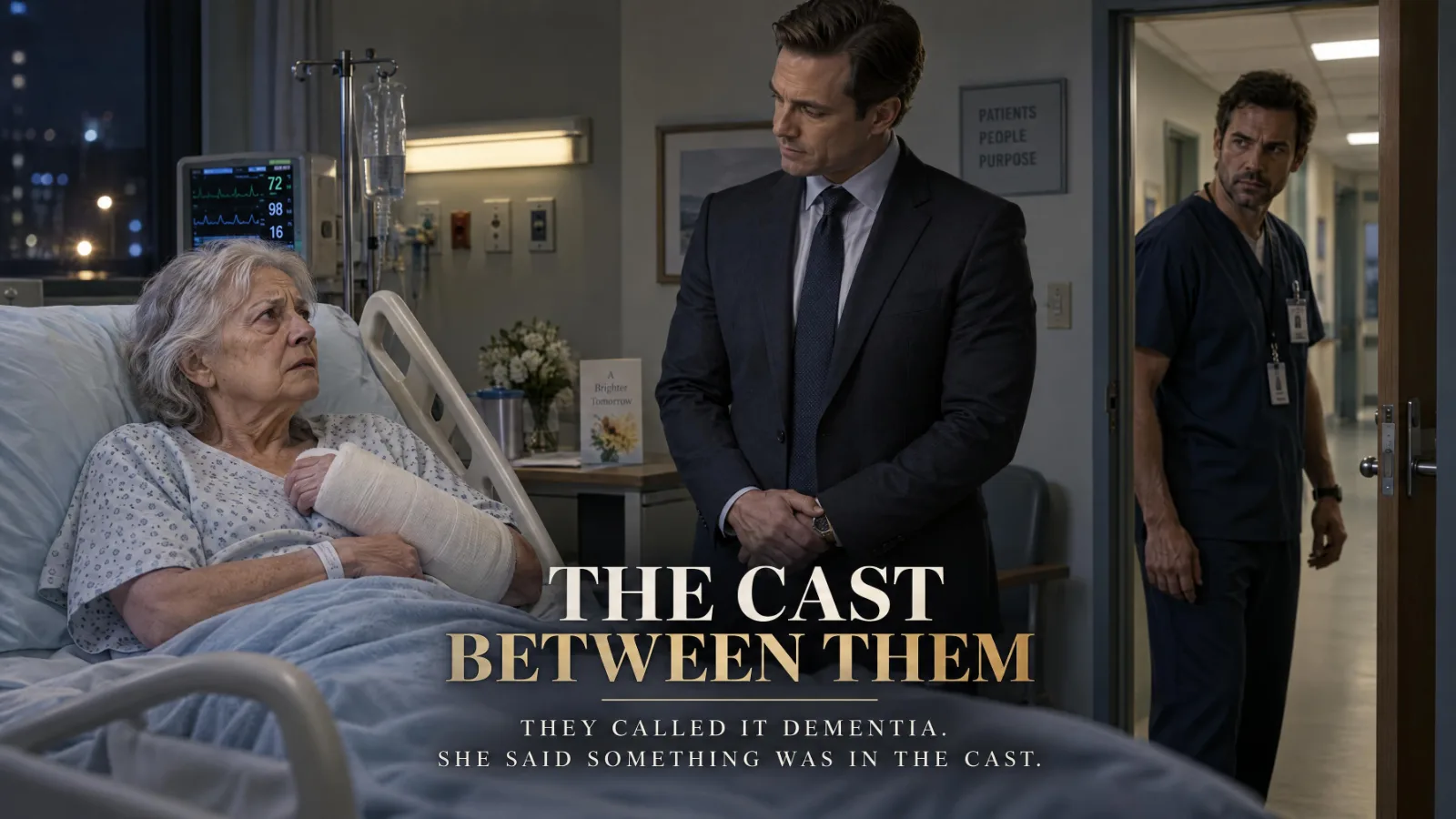
Adult Protective Services interviewed Eleanor two days later.
The interview lasted nearly three hours because Eleanor insisted on correcting details.
The investigator called the street behind her house Willow Lane.
“Willow Court,” Eleanor said.
He wrote that Marcus had begun managing groceries in March.
“Late February.”
He said the notary came on Thursday.
“Tuesday. Tuesday is when the recycling trucks come. I watched her step around the bins.”
At one point Eleanor stopped herself.
“I'm sorry.”
“For what?”
“I sound defensive.”
The investigator smiled.
“You sound precise.”
The distinction nearly made her cry.
They reconstructed the previous four months.
It began before the broken wrist.
That mattered.
Eleanor had assumed everything started with the cast because the cast was when she became afraid.
The investigator was more interested in what changed before fear became visible.
Marcus had begun visiting more often after his company lost a major contract.
He offered to repair things.
The loose kitchen hinge.
A leaking outdoor spigot.
The porch light.
Then he suggested Eleanor stop driving at night.
Reasonable.
She had cataracts beginning in one eye.
Then he suggested she stop driving in rain.
Also reasonable.
Then he borrowed her car one afternoon because his was in the shop and returned it with almost no gas.
When Eleanor complained, he joked to Danielle that she had forgotten giving him permission.
Eleanor had not forgotten.
But Danielle laughed.
Small things.
Always small enough to sound petty when repeated.
A missing utility bill.
A canceled lunch.
A checkbook moved from the desk to the kitchen drawer.
A contractor Eleanor did not remember hiring.
Her spare house key disappearing for a week and then turning up in the ceramic bowl beside the front door.
“You see what happens?” Marcus had told her.
“You put things somewhere and then accuse everybody else.”
The investigator asked, “Did you ever question your own memory?”
Eleanor looked at him.
“Yes.”
That answer seemed to matter more than the others.
“When?”
“After a while.”
“What did you do?”
“Tests.”
“What kind?”
“I would pick five things before bed and write them down.”
“What things?”
“The weather. What I ate. Who called. Where I left my glasses. A number from the newspaper.”
“You wrote these down?”
“Yes.”
“Do you still have the notebook?”
Eleanor almost smiled.
“Marcus doesn't know about it.”
The notebook was in the linen closet inside an old sewing tin that once belonged to Eleanor's mother.
Evan retrieved it with police permission.
The entries were painfully ordinary.
April 14. Rain after 3. Soup for lunch. Danny called 7:20. Glasses on piano. Number: 418.
April 15. Glasses still on piano in morning. Marcus says they were on kitchen table yesterday. They were not.
Another entry:
May 2. Thermostat set 68 before bed. Woke cold. Thermostat 61. Marcus says I must have changed it. I did not.
And another:
May 19. Spare key missing again. Do not ask yet.
The notebook did not prove Marcus had moved anything.
But it proved something Eleanor desperately needed proven.
She had noticed.
She had checked.
She had created a system because she knew someone might eventually tell her she had imagined the pattern.
Danielle read the notebook alone.
She cried over the grocery lists more than the accusations.
Her mother had been documenting bananas.
Laundry detergent.
The neighbor's dog barking at 6:15.
Things no manipulator would invent because they were too boring to help.
Reality preserved in small handwriting.
Danielle turned another page.
June 3. Danny looked tired today. Do not tell her yet. She has enough.
Danielle closed the notebook.
Evan found her at the kitchen table.
He had returned to collect Eleanor's clothes and a few books before she moved temporarily to a rehabilitation apartment associated with the home-care agency.
Danielle wiped her face.
“She was protecting me.”
Evan looked at the notebook.
“Probably.”
“While I was telling her she was confused.”
He pulled out a chair but did not sit.
“You're going to want me to tell you that Marcus fooled everybody.”
Danielle looked up.
“Didn't he?”
“Maybe.”
“That sounds like no.”
“It sounds like I wasn't there for the years before this.”
Danielle waited.
Evan leaned one hand on the chair back.
“But I was there for the last two months.”
“And?”
“You kept asking him what happened.”
Danielle looked away.
“If your mother said her medication was missing, you asked Marcus where he put it. If she said an appointment changed, you asked Marcus why it changed. If she said the house was cold, you asked Marcus what the thermostat said.”
He spoke gently.
That made it worse.
“You were checking her reality through him.”
Danielle's face folded.
Evan did not rescue her from the sentence.
After a moment she whispered, “I thought I was being fair.”
“You were trying to reduce conflict.”
“What's wrong with that?”
“Nothing.”
He finally sat.
“Unless the conflict is the evidence.”
Danielle stared at the table.
That phrase stayed with her.
The conflict is the evidence.
She thought of every time Eleanor had become angry after Marcus calmly contradicted her.
Danielle had treated the anger as proof that her mother was unstable.
She had never considered that being repeatedly contradicted about things you knew were true might make anger an entirely rational response.
“What made you believe her?” Danielle asked.
“I didn't.”
She looked at him.
“Not at first.”
“Then why did you—”
“I watched.”
Evan rested his forearms on his knees.
“She got confused sometimes. Most people do when they're exhausted. She forgot whether she had taken her antibiotic once. She told me the same story twice. None of that told me she couldn't understand reality.”
“What did?”
“Nothing.”
“Something made you suspicious.”
“Yes.”
“What?”
“She was only ‘confused’ around him.”
Danielle went still.
Evan continued.
“Not always. But enough that I noticed. She'd be sitting with me doing the crossword. Your husband would come in and ask whether she remembered where she'd put a bill. She'd tense up immediately. Then he'd remind her she had misplaced something the week before.”
“That doesn't prove anything.”
“No.”
“He was helping.”
“Maybe.”
Danielle gave him a sharp look.
Evan did not react.
“That was the point,” he said. “Everything he did had another possible explanation.”
Until the cast.
Danielle did not need him to say it.
Her eyes moved toward the stairs.
“Did you ever see him touch it?”
“The cast?”
“Yes.”
“Once.”
Danielle stopped breathing.
“When?”
“About ten days after I started.”
“What happened?”
“She said the inside was hurting again. He told me he would handle it.”
“What did he do?”
“He took her into the bathroom.”
“Why didn't you stop him?”
“Because he was her son-in-law and told me he was adjusting the sleeve around it.”
“And you believed him.”
“Yes.”
The answer hurt Danielle strangely.
She had expected Evan to have been certain from the beginning.
A hero.
Someone standing outside the failure.
Instead he had been wrong too.
The difference was smaller and more uncomfortable.
He changed his mind when the facts stopped fitting.
Danielle had not.
“What happened after the bathroom?”
“Your mother wouldn't eat dinner.”
“Did you ask why?”
“She said the scratching was worse.”
Danielle stood abruptly.
Evan rose too.
“Where are you going?”
“To the bathroom.”
There was nothing there now.
Of course there wasn't.
But Danielle opened drawers anyway.
Toothpaste.
Bandages.
Soap.
Cotton swabs.
A small sewing kit.
Disposable razors.
At the back of the cabinet lay a package of black industrial cable ties Marcus had used months earlier to secure a loose drainpipe under the sink.
The top of the package was open.
Danielle stared at them.
Wide.
Black.
Heavy plastic.
Along one side of each tie ran raised ratchet teeth.
Her stomach turned.
She did not touch the package.
Instead she backed out of the bathroom and called the detective.