AFTER THE CAST
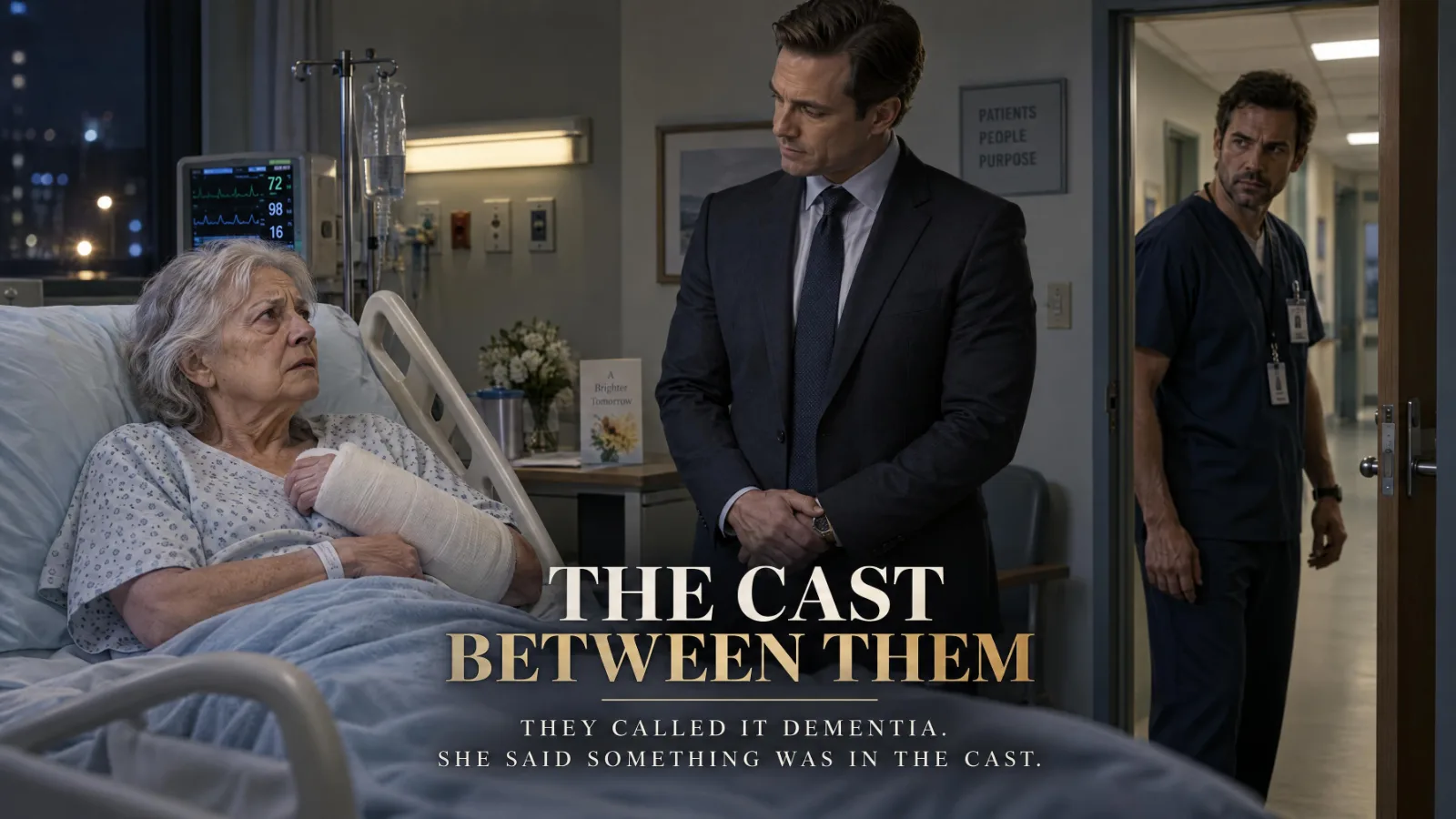
Six months after the hospital, Eleanor returned home.
She almost didn't.
The house had become contaminated by memory.
The kitchen island where Marcus had worked on her cast.
The hallway where she once spent forty minutes searching for keys later found in a place she knew she had checked.
The thermostat.
The bathroom cabinet.
For several weeks Eleanor considered selling.
Not because Marcus had wanted her to.
Because she wasn't sure she could sleep there.
Then she became furious at the idea that he might still choose where she lived.
So she stayed.
She changed the locks.
Not dramatically.
A locksmith came on a Wednesday morning and replaced three cylinders.
Eleanor paid him by check.
She watched him write the receipt.
After he left, she put the spare keys exactly where she wanted them.
One went into the ceramic bowl.
One to her neighbor, Marianne.
One into the small safe.
None to Danielle.
That hurt Danielle.
Eleanor knew it did.
She did it anyway.
Trust, Eleanor had learned, was not the same thing as love.
She loved Danielle immediately.
Trust returned more slowly.
Danielle separated from Marcus before the criminal case ended.
The divorce took longer.
There were debts to unwind, accounts to trace, and financial statements Danielle discovered she had signed without reading carefully because Marcus had always handled “the complicated part.”
That phrase became intolerable to her.
She began reading everything.
Bank statements.
Insurance policies.
Court documents.
Even appliance warranties.
Eleanor teased her about it eventually.
Not at first.
Their first months together were awkward.
Danielle came every Sunday.
Sometimes Eleanor wanted her there.
Sometimes she didn't.
Danielle learned to ask.
“Do you want company?”
Not:
“I'm coming over.”
When Eleanor struggled to open a jar because her wrist remained weak, Danielle waited.
“Want help?”
Sometimes Eleanor said yes.
Sometimes she attacked the lid with a rubber grip until it surrendered.
Danielle learned not to interpret refusal as rejection.
The hardest moment came one afternoon in October.
Eleanor misplaced her wallet.
She checked her purse.
The kitchen counter.
Her bedroom.
The car.
Nothing.
She felt panic rising before she could stop it.
Not because of the wallet.
Because she had forgotten.
She stood in the hallway breathing too fast.
Danielle was visiting.
“What happened?”
“My wallet.”
“We'll find it.”
“I put it on the counter.”
“Okay.”
“It isn't there.”
Danielle started toward the kitchen, then stopped.
Eleanor saw her make a decision.
She did not say Maybe you moved it.
She did not say Are you sure?
She did not tell Eleanor to calm down.
Instead she asked, “What do you remember doing after you put it down?”
Eleanor closed her eyes.
“Brought the groceries in.”
“What did you carry first?”
“The milk.”
“Then?”
“The paper bag.”
“Did you change jackets?”
Eleanor opened her eyes.
“Yes.”
They went to the hall closet.
The wallet was in the pocket of Eleanor's raincoat.
She pulled it out.
For one terrible second neither woman spoke.
Then Eleanor laughed.
Danielle laughed too.
Tears came with it.
“Oh God,” Eleanor said. “I did forget.”
“Yes.”
Danielle's voice shook.
Eleanor held up the wallet.
“What does that mean?”
Danielle understood the question.
Not where is the wallet.
Not what happened.
What does forgetting one thing mean now?
Danielle wiped her eyes.
“It means you forgot where you put your wallet.”
Eleanor nodded.
“That's all?”
“That's all.”
The simplicity nearly undid her.
Evan visited less often after Eleanor recovered enough to live independently.
He had never planned to remain a caregiver permanently.
The hospital experience had reopened a door he thought he had closed.
Years earlier, he left pediatric trauma after a child died during a shift that still visited him in dreams. He had moved into private home care because it allowed him to help people without returning to the fluorescent urgency of a hospital.
Eleanor told him that sounded like fear disguised as career planning.
He told her she had become annoyingly perceptive.
She considered that a compliment.
Eventually Evan returned to nursing, not in trauma but in a hospital-based elder protection program.
On his last official day as Eleanor's caregiver, she made him lunch.
“You're supposed to be taking care of me,” she said when he tried to help.
“My contract ended at noon.”
She looked at the clock.
It was 12:07.
“Sit down.”
He obeyed.
They ate tomato soup and grilled cheese at the kitchen table.
Halfway through the meal, Evan glanced toward her left arm.
The skin had healed.
A thin pale line remained where the deepest abrasion had been.
“Does it still hurt?”
“Sometimes.”
“The wrist?”
Eleanor knew what he meant.
“No.”
She looked toward the window.
“Not the wrist.”
He nodded.
Neither tried to make the answer prettier.
After Marcus's conviction, several people apologized.
The orthopedic office apologized for not following up more aggressively after the canceled appointments.
A neighbor apologized for telling Danielle that Eleanor seemed “different lately.”
Even Marianne apologized for once suggesting Eleanor might benefit from memory care.
Eleanor accepted some apologies.
Others she answered with, “Thank you.”
She discovered those were not the same thing.
The only apology she cared about took Danielle almost a year to say correctly.
They were on the back porch.
Danielle had been helping replace dead plants in two large containers.
Eleanor sat nearby with iced tea.
“I keep wanting to tell you I didn't know,” Danielle said.
Eleanor watched her.
Danielle pressed soil around a rosemary plant.
“But that's not enough.”
“No.”
“I didn't know what Marcus was doing.”
Eleanor waited.
“But I did know you were afraid.”
The yard was quiet.
“I knew you were hurting. And I made whether I believed the explanation more important than the fact that you were hurting.”
Eleanor looked down at her hands.
Danielle continued.
“I made you prove you deserved help.”
That was the sentence.
The true one.
Eleanor's throat tightened.
“I don't expect you to forgive that because I finally understand it.”
“Good.”
Danielle laughed through tears.
Eleanor reached for her tea.
After a while she said, “I already forgive you.”
Danielle looked at her.
“That doesn't mean I trust you with my spare key.”
A startled laugh escaped her.
“I know.”
“Maybe next year.”
“I'll take maybe.”
Eleanor smiled.
That autumn, a geriatric specialist completed the cognitive evaluation Marcus had once used as a threat.
Eleanor agreed to it because she wanted the answer for herself.
The results showed ordinary age-related changes in processing speed and memory, worsened during the period of pain, infection, dehydration, and sleep deprivation.
No dementia diagnosis.
Eleanor read the report once.
Then she put it in a drawer.
For months she had imagined the moment would feel victorious.
It did not.
A medical report could confirm something about her cognition.
It could not restore the nights she had spent interrogating her own mind.
Recovery came from smaller things.
Choosing her own groceries.
Driving again on clear afternoons.
Forgetting someone's name without panic.
Closing her bedroom door and knowing nobody would come in to “check” on her.
Turning the thermostat down because she was genuinely too warm.
Leaving her glasses on the piano.
Finding them there in the morning.
One cold evening, nearly eighteen months after the cast came off, Danielle arrived carrying takeout.
Eleanor opened the door.
“You didn't call.”
“I did.”
Eleanor frowned.
Danielle lifted her phone.
“Ten minutes ago.”
“Oh.”
Eleanor checked her pocket.
Her own phone was on silent.
For a fraction of a second the old fear moved through her.
Danielle saw it.
She did not reassure her too quickly.
She did not tell her she was fine.
She simply stood on the porch holding dinner.
Eleanor looked at her daughter.
Then at the phone.
Then back at Danielle.
“I forgot I muted it.”
“Apparently.”
Eleanor stepped aside.
“What did you bring?”
“Thai.”
“You remembered I hate that sweet noodle thing?”
“Pad see ew.”
“That.”
“I did not order it.”
“Good.”
Danielle walked inside.
As Eleanor closed the door, she noticed the ceramic bowl on the table.
Her spare key lay inside.
Several months earlier, without ceremony, she had given it back to Danielle.
Not because daughters were entitled to keys.
Not because family automatically deserved trust.
Because Danielle had learned what the key meant.
Access was not ownership.
Help was not control.
Concern was not authority.
And love, Eleanor now understood, was not proven by how quickly someone stepped in when you seemed weak.
Sometimes it was proven by whether they still believed you belonged to yourself.
Chapters · 6 of 6
Don't stop now.
Choose another Veyra story and keep reading.
More Family Drama
One ending should lead naturally into another beginning.