WHY HE TOOK THE JOB
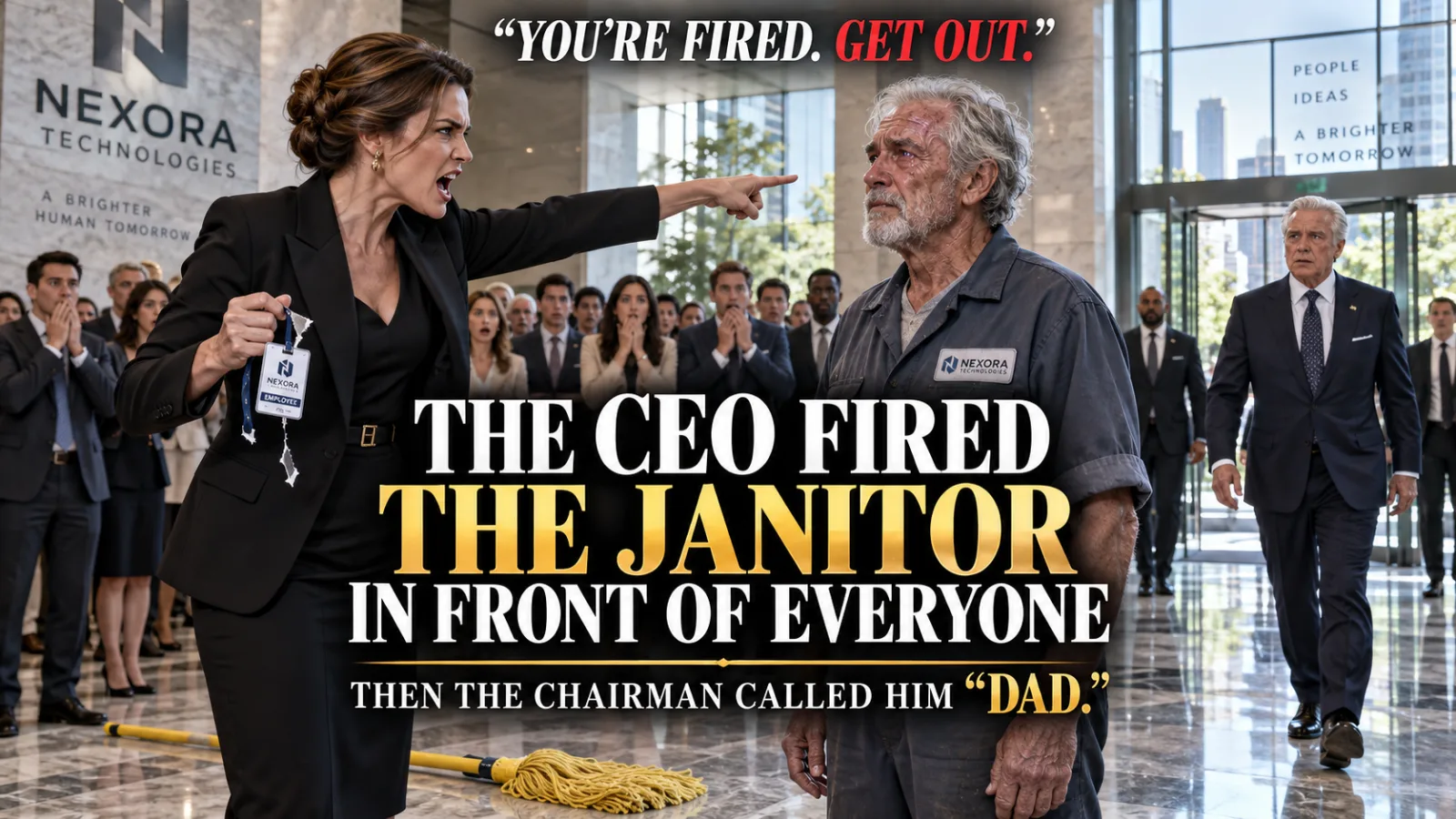
Joe Bell was not Adam Sinclair’s biological father.
He was simply the man who had done everything a father was supposed to do.
Adam’s biological father disappeared when Adam was four. Two years later, Joe met Ellen Sinclair at a community college electrical-safety course where she was taking evening classes in bookkeeping.
Joe fell in love with Ellen first.
Adam made him earn the rest.
The boy hid Joe’s work boots once.
Put salt in his coffee twice.
On Joe’s first birthday after moving into their house, eight-year-old Adam gave him a card that said MR. BELL because he had not yet decided whether Joe belonged.
Three years later, Adam called him Dad while asking for help repairing a bicycle.
Neither of them mentioned the change.
They never needed to.
Adam kept the Sinclair surname.
By sixteen, when Joe once awkwardly offered to begin adoption paperwork, Adam laughed.
“You think a judge needs to explain who my dad is?”
Joe had never asked again.
Now that history sat inside Northstar’s thirty-first-floor boardroom while Adam paced beside the windows and Joe remained stubbornly in his janitor’s uniform.
Mara had been asked to wait in her office.
Independent director Priya Shah had arrived early for the scheduled ten-thirty board session and immediately understood that the morning could no longer proceed normally.
Priya was sixty, a former federal prosecutor and chair of Northstar’s audit and ethics committee.
She looked at Adam.
“You need to stop pacing.”
“My father was physically assaulted in our lobby.”
“Then you definitely need to stop pacing.”
Adam turned.
“She ripped his badge off.”
“I have sixty witnesses.”
“She fired him.”
“She appears to have attempted to remove a contractor from the site.”
“She shoved him.”
Priya’s voice sharpened.
“And if you want anything that happens next to survive scrutiny, you are going to behave like the chairman instead of an angry son.”
Adam looked toward Joe.
Joe nodded.
“She’s right.”
Adam stared at him.
“You are the last person who gets to say that right now.”
“Why?”
“Because you apparently took a janitorial job inside my headquarters and didn’t tell me.”
There it was.
The other explosion.
Priya looked at Joe.
“I confess I’m curious too.”
Joe folded his arms.
“I needed work.”
“You’re retired.”
“I was bored.”
Adam laughed without humor.
“You have enough money.”
“Your money.”
“You know what I mean.”
“Yes. That’s why I didn’t ask for it.”
Adam walked toward the table.
“Eleven weeks.”
Joe said nothing.
“You have been working here for eleven weeks?”
“Yes.”
“In this building.”
“Yes.”
“In a uniform.”
Joe looked down.
“That is generally how janitorial work functions.”
“Dad.”
Joe’s humor disappeared.
“What do you want me to say?”
“The truth would be a strong opening.”
Priya quietly closed the conference-room door.
Joe looked through the glass wall toward the city.
Fourteen months earlier, Ellen had died after two years of ovarian cancer.
Adam had paid for specialists.
Experimental treatment.
A private nurse.
Flights to Houston.
A hospital bed that fit inside Joe and Ellen’s downstairs bedroom.
He had solved every problem money could reach.
The one thing Ellen asked for repeatedly was time.
Adam had struggled with that.
Northstar had been preparing the largest acquisition in its history. Adam was still CEO. Meetings arrived from three continents. Regulators wanted answers. Banks wanted documents.
He visited.
He called.
He paid.
And on Ellen’s final lucid afternoon, he left the hospital for what was supposed to be a ninety-minute board call.
She died the following morning.
Joe had never quite forgiven him.
Worse, he had never admitted that he had not forgiven him.
After the funeral, Adam tried to move Joe into the guesthouse on his property.
Joe refused.
Adam offered to hire someone to help with the house.
Joe refused.
Adam started sending groceries.
Joe canceled the deliveries.
Then Adam stopped asking.
For months, father and son reduced their relationship to Sunday phone calls and carefully neutral conversations about weather, baseball, and whether Joe’s furnace needed servicing.
One morning Joe woke at five-thirty and realized there was no reason to get out of bed.
That frightened him more than grief had.
“I needed somewhere to go,” Joe finally said.
Adam’s anger softened slightly.
“There were a thousand places.”
“I know.”
“Why here?”
Joe looked at him.
“That’s the part you’re not going to like.”
Adam waited.
“Your mother spent the last five years of our marriage competing with this company.”
Adam flinched.
“I wanted to see what was worth it.”
The words hurt both of them immediately.
Priya looked away.
Adam’s face closed.
“You took a janitorial job to spy on me?”
“No.”
“You just said—”
“I wanted to see the place.”
“That is not normal.”
“Neither was sitting alone in a dark house every morning talking to your mother’s coffee cup.”
That stopped him.
Joe continued more quietly.
“I saw a ClearPath advertisement. Northstar headquarters needed morning facilities staff. I applied.”
“You deliberately picked this building?”
“Yes.”
“Did anyone here know who you were?”
“No.”
“Did you use my name?”
“No.”
“Did you contact anyone on the board?”
“No.”
“Did you enter restricted areas?”
“Only areas on my work orders.”
“Did you access documents?”
“No.”
“Did you come here looking for Mara?”
“I had never met Mara Keene.”
Adam rubbed his forehead.
“So what happened?”
Joe reached into the inside pocket of his work jacket.
He removed a small black notebook.
It was cheap.
The corners were worn.
Priya looked at it.
“What is that?”
“Dates.”
“Of what?”
“Things I saw.”
Adam went still.
Joe placed it on the table.
“I spent forty-three years fixing electrical systems. When something keeps failing, you write down where and when.”
Priya opened the notebook.
The first entries were ordinary.
Third-floor emergency light flickering.
Broken latch in west stairwell.
Supply closet missing gloves.
Then the notes changed.
APRIL 17 - Rosa fell carrying both trash carts alone. Staffing cut again. Supervisor told her not to call clinic until shift ended.
APRIL 22 - Young engineer crying in stairwell after meeting with CEO. Said HR told him complaint would “damage trajectory.”
APRIL 29 - Maya in Finance working 1:40 a.m. Third night this week.
MAY 3 - CEO shouted at product manager in lobby. “If you embarrass me in front of the board, I’ll make sure nobody hires you.”
MAY 7 - Ethics report filed regarding Rosa.
MAY 12 - Portal says CLOSED. Nobody interviewed Rosa.
Priya stopped reading.
“You filed an ethics complaint?”
“Yes.”
“Using what identity?”
“My own.”
Adam stared.
“You never told me.”
“It wasn’t your complaint.”
“It was my company.”
Joe looked directly at him.
“That was the problem.”
Adam said nothing.
Joe tapped the notebook.
“At first I thought Mara was just an asshole.”
Priya almost smiled.
Joe did not.
“Then I realized everyone was afraid in the same direction.”
He told them about Rosa Alvarez, a fifty-eight-year-old ClearPath cleaner who injured her knee after facilities staffing was reduced.
About the engineer who resigned three days after meeting HR.
About a procurement manager who suddenly disappeared from the directory after refusing to sign a vendor certification.
About Maya.
Especially Maya.
Three weeks earlier, Joe had found her sitting alone in the cafeteria at 4:30 a.m., crying over a cup of vending-machine coffee.
She had told him too much because exhausted people sometimes mistook kindness for safety.
Northstar’s largest product launch of the year, the Atlas imaging platform, was at least one quarter behind schedule because a critical supplier had failed qualification.
Maya’s forecast showed it.
Mara did not want the board to see it.
“Did Maya tell you Mara ordered her to falsify numbers?” Priya asked.
“No.”
“Be exact.”
“She said Mara kept telling Finance to ‘remove the red’ from the board deck.”
“That is different.”
“I know.”
Priya nodded approvingly.
Joe understood evidence.
That mattered.
“What did you tell Maya?”
“To keep the original reports.”
Adam looked toward the door.
“The papers from downstairs.”
“I think so.”
Priya closed the notebook.
“Anything else?”
Joe hesitated.
“This morning she told me she finally sent something to the audit committee.”
Priya’s eyes sharpened.
“What time?”
“Around eight.”
Priya opened her laptop.
She searched.
Then stopped.
At 7:42 a.m., Maya Chen had sent an email directly to Priya’s committee account.
SUBJECT: REQUEST FOR CONFIDENTIAL REVIEW - ATLAS BOARD FORECAST.
Priya had not seen it because she had been driving to headquarters.
She opened the attachment.
Her expression changed.
Adam stepped toward her.
“What?”
“You don’t get to read it yet.”
“Priya—”
“You have a conflict now.”
“My company may have false board reporting.”
“And your father is a witness in the same matter.”
Adam stopped.
Joe understood before his son did.
The morning had become larger than one public humiliation.
Priya closed the laptop.
“I’m convening the independent directors.”
Mara’s scheduled strategy presentation would be postponed.
The board would preserve documents.
Maya would be interviewed.
ClearPath would be instructed not to terminate or discipline Joe until review.
Adam would participate only where Priya determined his conflict allowed.
Adam looked furious.
Joe felt something else.
Relief.
Not because Mara might lose her job.
Because for eleven weeks he had wondered whether he was imagining what he saw.
Priya stood.
“Mr. Bell.”
“Joe.”
“Joe. I need you to understand something. Being the chairman’s father gives you visibility now. It does not make your observations automatically true.”
“Good.”
She studied him.
“You’re comfortable with that?”
“I’d be worried if you weren’t.”
Adam gave him a frustrated look.
Joe picked up the broken badge from the table.
“Can I go back downstairs?”
Adam stared.
“You were just fired.”
“Apparently she doesn’t employ me.”
Priya smiled for the first time.
“ClearPath still does.”
Adam looked between them.
“You cannot seriously be going back to work.”
Joe clipped the broken badge into his pocket.
“That depends.”
“On what?”
“Whether somebody picked up that mop.”
Adam closed his eyes.
Joe headed toward the door.
Before he reached it, Adam spoke.
“Dad.”
Joe turned.
Adam looked hurt now rather than angry.
“You could have just called me.”
Joe knew what he meant.
Not about the job.
About everything after Ellen.
Joe rested one hand against the door.
“So could you.”
Then he left.