THE PRICE OF SILENCE
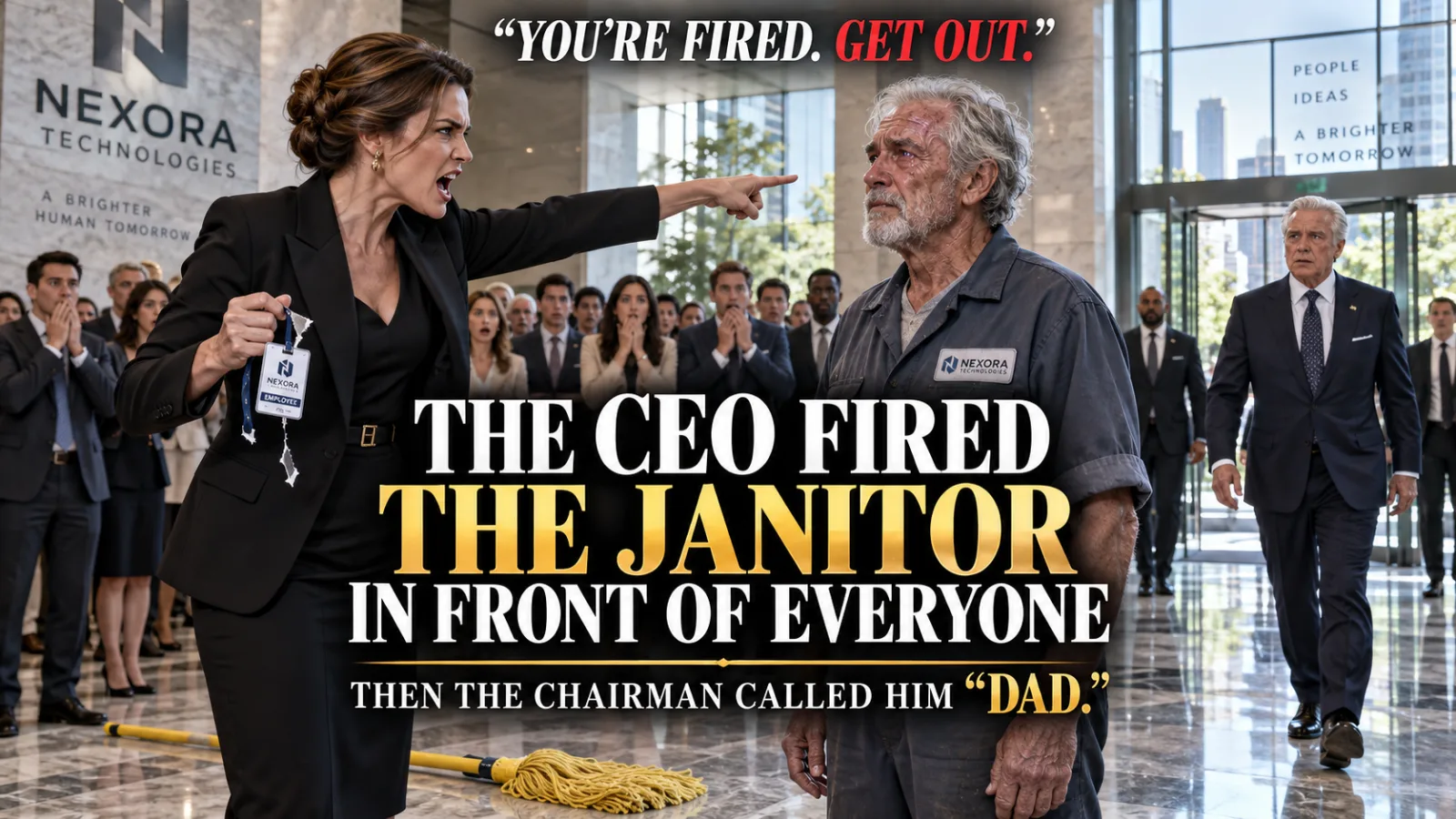
Mara asked to see Joe on Friday.
Priya told him not to go.
Joe went anyway.
The meeting took place in a private conference suite at a downtown law office. Mara’s attorney sat beside her. Joe brought a retired labor lawyer named Samuel Ortiz whom Rosa had recommended through her union contacts.
The room contained six chairs, bottled water, and a folder placed neatly in front of Joe.
Mara looked different outside Northstar.
Less enormous.
That interested him.
Buildings did some of a powerful person’s work for them.
“This is not an admission of wrongdoing,” her attorney began.
Joe opened the folder.
A settlement proposal.
Two million dollars.
ClearPath would classify his separation as voluntary.
Mara would issue a written apology for “the emotionally elevated exchange.”
Joe would state publicly that Adam had no knowledge of his employment and that the lobby confrontation had been misinterpreted in the immediate aftermath.
In return, Joe would release all personal claims and agree not to discuss confidential Northstar matters.
Joe read the number again.
Two million dollars.
Ellen would have laughed until she cried.
Mara watched him.
“That is more than generous.”
Joe looked up.
“Generous.”
“Yes.”
“You ripped my badge off in front of sixty people.”
“I reacted to insubordination.”
Samuel shifted beside Joe.
Mara’s attorney touched her arm.
She ignored him.
“You inserted yourself into a conversation that had nothing to do with you.”
“It had something to do with Maya.”
“It had nothing to do with a janitor.”
Joe closed the folder.
“There it is.”
Mara leaned back.
“What?”
“The thing you keep saying without hearing yourself.”
Her attorney intervened.
“Mr. Bell, the purpose of today—”
Joe looked at Mara.
“Do you know Rosa Alvarez?”
Mara frowned.
“No.”
“She cleaned outside your office for years.”
“I don’t manage contractors individually.”
“Do you know Luis Ortega?”
“No.”
“Maya Chen?”
Her eyes hardened.
“Of course.”
“Because she had a job you could see.”
Mara laughed.
“You think this is some morality play about working people.”
“No.”
“What do you think it is?”
Joe pushed the folder back across the table.
“You thought people were smaller when they couldn’t hurt you.”
The attorney again tried to stop her.
Mara had spent a week being told not to speak freely.
She had reached her limit.
“You want honesty?”
“Yes.”
“You are a fucking janitor whose stepson happens to control a board.”
Samuel turned toward her.
Mara kept going.
“Without Adam Sinclair, nobody would be sitting here. Nobody would care that I raised my voice. Nobody would care that your feelings were hurt.”
Joe felt heat move into his face.
Not shame.
Rage.
Mara saw it and pressed harder.
“You walked into a business you do not understand, listened to frightened employees complain about decisions above their pay grade, and decided you were some kind of working-class detective.”
Joe’s hands tightened.
His lawyer whispered, “Joe.”
He released them.
Mara leaned forward.
“You got lucky.”
Joe stared at her.
“You’re right.”
That stopped her.
“Nobody listened until Adam called me Dad.”
Mara’s expression shifted.
“I hate that.”
She said nothing.
“Rosa got hurt before anybody knew my name. Maya filed a complaint before anybody knew my name. You threatened people before anybody knew my name.”
He tapped the settlement folder.
“And now the only person you want to buy is the one with a chairman for a son.”
Mara’s attorney ended the meeting.
Joe stood.
Mara spoke before he reached the door.
“You walk away from this money, you’re a fool.”
Joe turned.
“Maybe.”
“You think Adam is going to make this company love people like you?”
“People like me?”
She realized too late.
Joe smiled without warmth.
“Thank you.”
“For what?”
“For making it simple.”
He left.
Outside, Samuel exhaled.
“That woman has the self-preservation instincts of a house fire.”
Joe laughed for the first time all week.
Then Samuel became serious.
“You understand she was right about one thing?”
“What?”
“Without your relationship to Adam, this probably never reaches a board.”
Joe looked back at the conference-room door.
“I know.”
“What are you going to do with that?”
Joe answered quietly.
“Make sure they hear everyone else.”
That afternoon, Maya called Priya Shah.
She agreed to a formal interview.
She brought the original Atlas forecast.
Her revised versions.
Her emails.
Her notes.
And one detail Joe had never known.
Two weeks before the lobby confrontation, Mara had summoned Maya and her direct manager into the CEO office.
Mara displayed the Atlas launch slide.
It showed a red status bar.
According to Maya, Mara pointed at it and said, “There will be no red slide in front of the board before compensation review.”
Maya’s manager asked what she wanted changed.
Mara replied, “Change the assumptions.”
Maya said the assumptions were based on confirmed supplier dates.
Mara answered, “Then stop treating supplier dates like commandments.”
Her manager removed the red status.
Maya restored it afterward.
It disappeared again.
The final version prepared for Monday’s board meeting described Atlas as “substantially on schedule.”
It was not.
Priya’s investigators now had more than Maya’s memory.
They had version history.
They had email timestamps.
They had attachments.
They had the supplier’s formal notice showing that Northstar had been informed of the delay three weeks earlier.
Mara’s defense began changing.
First, there had been no attempt to mislead.
Then the delay was immaterial.
Then Finance had independently exercised judgment.
Then Maya had misunderstood executive guidance.
The shifting explanations mattered.
So did another development.
Nolan Price, Northstar’s chief human resources officer, requested his own lawyer.
For six months Nolan had been Mara’s shield.
Complaints arrived.
Nolan converted them into coaching matters.
Employees alleged retaliation.
Nolan documented performance concerns.
A contractor reported Rosa’s injury.
Nolan classified it as a vendor issue.
Joe filed a pattern complaint.
Nolan closed it.
Now Mara’s legal team was arguing that Human Resources had independently handled every complaint without her involvement.
Nolan read the draft defense and understood what was happening.
He was being sacrificed.
Saturday morning, he contacted Priya.
His first interview lasted five hours.
He did not become a hero.
He became useful.
Priya made the distinction clear.
“You closed complaints without proper investigation.”
“Yes.”
“You reclassified retaliation allegations as performance disputes.”
“Yes.”
“You failed to elevate contractor safety reports.”
“Yes.”
“Why?”
Nolan looked exhausted.
“Because Mara told me to.”
“That does not absolve you.”
“I know.”
“Prove it.”
He did.
He produced emails.
Messages.
Meeting notes.
One message from Mara concerned Joe’s second ethics complaint.
WHOEVER THIS IS, CLOSE IT. WE ARE NOT TURNING VENDOR GRIEVANCES INTO BOARD-LEVEL DRAMA.
Another referred to Maya.
SHE NEEDS TO LEARN THE DIFFERENCE BETWEEN SPEAKING UP AND UNDERMINING LEADERSHIP.
A third concerned an engineer who later resigned.
IF HE WANTS A WAR OVER CULTURE, MAKE SURE HE UNDERSTANDS WHAT THAT DOES TO HIS CAREER.
Priya read each one.
The case was no longer about a CEO who lost her temper with a janitor.
It was becoming evidence of a management system.
Joe learned none of this immediately.
He spent Saturday helping Rosa repair a loose fence panel behind her house.
At one point Rosa looked at him.
“You think she’s going to lose her job?”
“I don’t know.”
“You want her to?”
Joe drove a screw into the cedar.
“Yes.”
Rosa smiled.
“At least you’re honest.”
“I’m trying.”
“What if she apologizes?”
Joe stopped.
“To me?”
“To everybody.”
He thought about Mara’s face when she called him a fucking janitor.
“No.”
“No what?”
“I wouldn’t believe her yet.”
Rosa nodded.
“Me neither.”
Then she handed him another screw.
Revenge was still in him.
Joe could feel it.
He wanted Mara to understand what it felt like to stand in a room while everyone watched your authority disappear.
He wanted her badge taken.
He wanted a door pointed out.
He wanted her to feel small.
That frightened him a little.
Because he had spent eleven weeks learning what happened when powerful people decided humiliation was a legitimate management tool.
If Mara lost, Joe did not want to become her.
He drove the next screw carefully.
Straight.
No more force than necessary.