THE WILL AND THE RED LEDGER
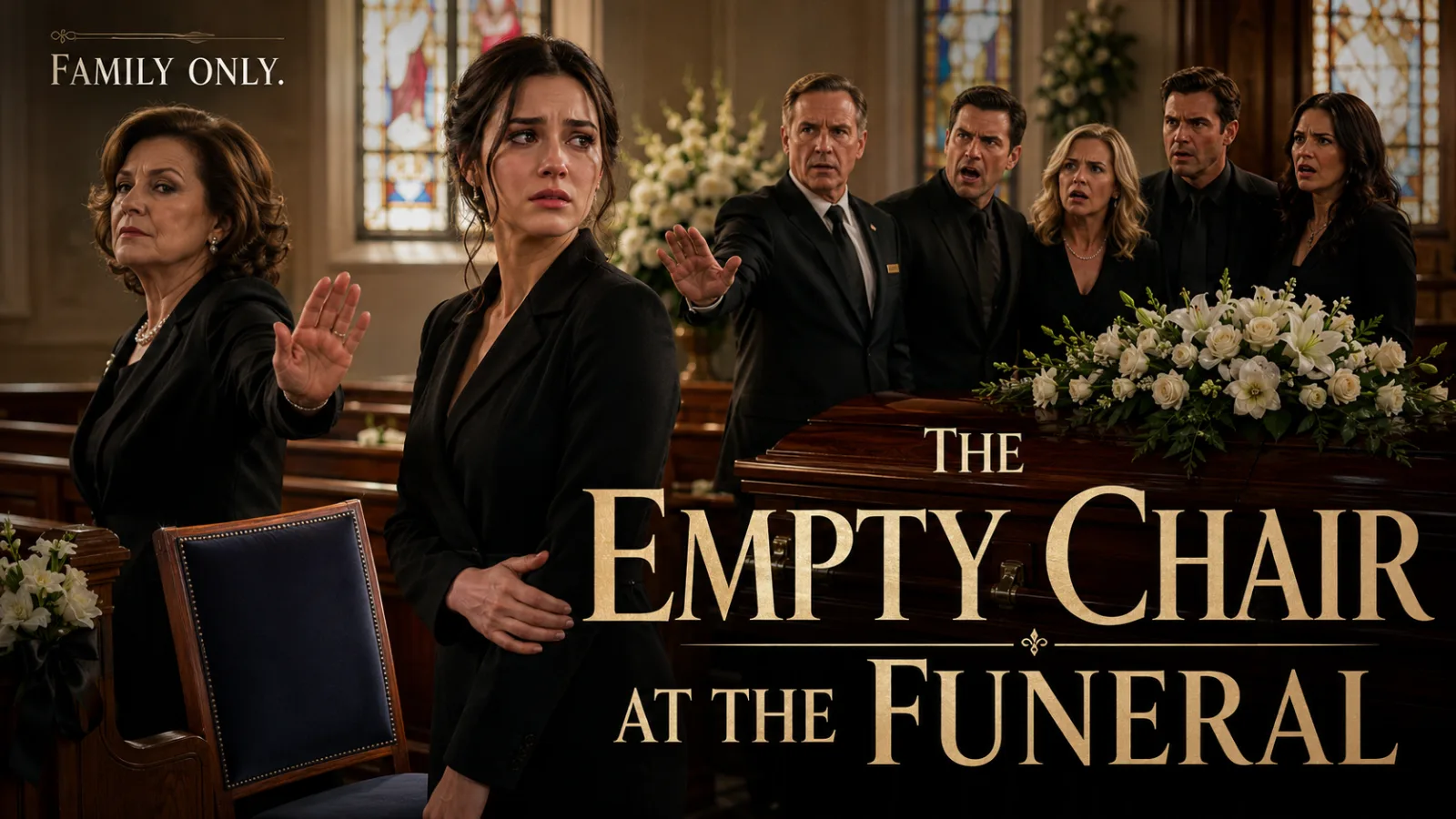
If Evelyn had been the sort of woman who slammed doors, the conference room would have lost its hinges that morning.
Instead she mastered herself through stillness. She listened to the first five minutes of Miles Coley’s explanation with the rigid silence of someone convinced the actual document must eventually correct itself.
It did not.
Thomas’s will was not theatrical in the childish sense. He had not disinherited anyone in favor of a cat, nor left cruel jokes in the margins, nor built puzzles merely to watch his children squirm from beyond the grave. The cruelty—if that was the right word—lay in how deliberate it all was.
There were charitable bequests first: the library, the hospice wing, the scholarship fund for county trade students. Then provisions for household staff, more generous than anyone at the table had expected except Clara, who knew exactly how much Thomas hated seeing loyal people treated as decorative background. After that came individual distributions.
Evelyn was left the use of the west guest cottage for life, together with a fixed income stream sufficient to maintain her lifestyle “without requiring authority over the affairs she has repeatedly mishandled.”
Vanessa actually sucked in air at that line.
Grant received cash, but no controlling interest in the company he had always assumed would be his. Luke’s share was placed in a structured trust with strict conditions. Amelia received a smaller trust and the beach house she loved but had never paid a cent to upkeep.
Then Miles adjusted his glasses and said, “Vale Mercantile voting control, together with full authority over the Daniel Vale Memorial Fund, the main residence known as Vale House, and all personal papers contained therein, passes to my adopted daughter, Clara Elise Vale.”
For a second no one reacted.
The sentence was too large to land all at once.
Vanessa moved first. “I’m sorry—what?”
Grant pushed away from the windows. “Read that again.”
Miles did not. “You heard me.”
Luke let out a low curse. Amelia stared at Clara with something approaching betrayal, as though Clara herself had arranged this by staying awake through years of medication schedules.
Evelyn spoke at last. Her voice was almost soft.
“No.”
Miles folded the will closed. “Mrs. Vale—”
“No.” She placed both hands flat on the table. “Thomas would never leave the house to her.”
“He did.”
“He was not in his right mind.”
Clara sat perfectly still. Perhaps because the room had become too sharp around the edges, she found herself noticing stupid things: the fine tear at the seam of Luke’s cuff, the reflection of rain on the conference room window, the way Janine had left a carafe of water none of them had touched.
“He was in his right mind every time he discussed these documents with me,” Miles said. “On multiple dates. In the presence of witnesses. With full medical certification of competency when appropriate.”
Grant leaned forward. “You’re telling us my father left the family company and our house to an adopted daughter with no legal experience and no business training?”
Clara turned her head then.
“That’s an interesting way to describe the person who has been reviewing your father’s operating statements for the last four years because you couldn’t be bothered to show up for quarterly calls,” she said.
Vanessa snapped, “Please don’t enjoy this.”
“I’m not,” Clara replied. “I’m surviving it.”
Miles cleared his throat. “There is more.”
Evelyn laughed once, bitterly. “Of course there is.”
“Each of you has a sealed letter.” He indicated four envelopes arranged neatly beside his legal pad. “Your father requested that they be given only after the dispositive provisions were read.”
Grant snatched his first.
Vanessa opened hers with the brittle precision of someone determined not to let a piece of paper unsettle her. Luke frowned through his. Amelia read only the first few lines before her face drained.
Evelyn held her envelope but did not open it.
“What does yours say?” Vanessa demanded suddenly, looking at Grant.
Grant’s jaw locked. “Nothing that concerns you.”
“Oh, now we’re private?”
Miles lifted one hand again. “Miss Vale also has a sealed packet, separate from the will.”
He drew a thick cream envelope from his briefcase and slid it across the table to Clara.
Written on the front in Thomas’s increasingly shaky late handwriting were the words:
For Birdie. Open alone if possible. If not possible, open anyway.
Her chest tightened.
“Additionally,” Miles said, “Mr. Vale instructed that the contents of the study at Vale House are not to be removed or disturbed until Miss Vale has reviewed the packet.”
Grant’s temper finally broke the surface. “This is insane. He’s letting her play archivist while we all sit around waiting?”
“No,” Clara said before Miles could answer. “He’s telling you to wait.”
Evelyn’s eyes moved to Clara for the first time since the will provision. They were colder now, because the shock had worn off and calculation had returned.
“Be very careful,” she said. “A dead man’s guilt can make him sentimental.”
Clara looked at her.
The word guilt did not belong casually in that room. It landed too oddly, too heavily. Miles seemed to notice it too, but if he did, he gave nothing away.
“I’d like a copy of the will,” Grant said.
“You’ll have one,” Miles replied. “After signatures acknowledging receipt.”
“And I’d like to know on what grounds he believed Clara should control Daniel’s memorial fund.”
At that, a silence went through the room that felt almost electric.
Daniel’s name had not been spoken aloud in the Vale family for years.
Thomas’s younger brother, Clara’s father, had become one of those sanctioned ghosts certain families manufacture for themselves: too painful to discuss honestly, too compromising to remember kindly. There had been a scholarship fund in his name after the scandal and death, later expanded into a charitable arm by Thomas. But the man himself had long ago been filed away under regret and caution.
Clara felt Evelyn’s attention sharpen.
Miles answered carefully. “Mr. Vale explained that provision personally. He believed Miss Vale had both the greatest loyalty to the family’s actual obligations and the least interest in using the foundation as personal leverage.”
Vanessa stood up so quickly her chair legs scraped the floor. “Well, that’s subtle.”
Amelia finally spoke. “What did Dad say in the letters?”
No one answered her.
That, more than the shouting, told Clara the letters mattered.
Luke folded his into his jacket pocket with a face like wet plaster. Vanessa tore hers cleanly in half and then seemed to regret the gesture because it had been too nakedly emotional. Grant refolded his with deliberate care. Evelyn still had not opened hers.
When the meeting finally broke, it did so in fragments. Vanessa left first, promising to speak with her own attorney. Luke followed after collecting two untouched bottles of water as if theft might restore dignity. Amelia hesitated in the doorway, glanced back at Clara, and almost said something—but Evelyn touched her elbow and she kept walking. Grant lingered only long enough to inform Miles that the family would be contesting “every inch of this circus.”
Then Evelyn and Clara were alone in the conference room except for Miles.
The widow placed her unopened envelope in front of Clara on the table.
“I know your look,” she said.
Clara frowned. “My look?”
“The one you have when you think the world has finally corrected some ancient injustice.” Evelyn leaned down slightly, voice lowering. “You still do not know enough to wear that expression.”
Clara felt her own temper stir. “Then maybe you should enlighten me.”
A humorless smile touched Evelyn’s mouth. “If Thomas wanted you enlightened, he would have done it before he died.”
She straightened, reclaimed the envelope, and left.
Miles waited until the door shut.
“Don’t open that packet here,” he said quietly.
Clara blinked. “Why?”
“Because your father asked me to advise against it if the room felt hostile.” He gave the faintest dry smile. “And I believe ‘hostile’ may qualify.”
“Do you know what’s in it?”
“Only in broad strokes.” He removed a ring of keys from his drawer and detached a smaller silver one. “This opens the inner archive room off the study. Your bronze key will open Thomas’s left desk drawer. There is also, as far as I understand, a red ledger. Your father believed it would answer questions.”
“Questions about what?”
Miles regarded her steadily. “Why he made the choices he made at the end.”
She drove back to Vale House in gray rain with the packet on the passenger seat as if it possessed its own temperature. The house loomed at the top of the hill, all stone dignity and old-money silence. Half the cars from the funeral were gone now. Only family vehicles remained, plus the groundsman’s truck and the nursing supply van that had not yet been collected.
Inside, the staff were moving more quietly than usual, as if grief had joined the household but did not yet know where to sit.
Clara took the packet to the library tower, locked the door, and stood for a long moment with both hands braced on the desk Thomas used for reading correspondence. Then she opened it.
On top lay a letter.
Birdie,
If you’re reading this, then either I died on schedule or everyone was too stubborn to prevent it. I apologize for the ugliness of what may already have happened. I do not apologize for necessity.
If I had acted sooner, perhaps less would have been required at the end. I did not act sooner. That failure is mine.
In the study you will find the red ledger, my notebooks from the year Daniel died, and a file marked H. Grayson. Read all three before you decide what to do next.
You have been told a simplified story your entire life. It was not a kind simplification. It was a lie of omissions built on older lies of convenience and fear.
The truth concerns your father, my children, my wife, and the thing that broke this family before you were old enough to understand its fracture.
Do not let anyone remove papers from the study until you have seen them.
If they tell you I acted from sentiment, remember this: love may have decided whom I trusted, but evidence decided whom I judged.
Whatever you learn, know that I loved your father. And I loved you from the first day you lined your shoes up by the back door because you thought you had not yet earned the right to be messy.
I hope, belatedly, to have earned some part of your forgiveness.
— Thomas
Clara read the letter twice.
Then she took the keys and went downstairs to the study.
Thomas’s study was the only room in Vale House that had ever felt entirely immune to Evelyn. Dark walnut shelves, the faint scent of tobacco long since abandoned, maps of county parcels on one wall, a brass ship’s clock on the mantel that had not kept correct time in fifteen years because Thomas enjoyed ignoring anything that tried to sound important—every object in the room belonged to him with unusual completeness.
The left desk drawer opened with the bronze key.
Inside lay a leather notebook, a fountain pen, and another key attached to a tag reading ARCHIVE. The narrow door beside the bookcases opened with the silver key Miles had given her.
The inner archive room was windowless and cool. Filing cabinets lined two walls. Old deed boxes stood stacked at the back. On the center table, exactly where Thomas must have intended her to find it, sat a worn red ledger.
Clara carried it to the study and opened it under the reading lamp.
At first she didn’t understand what she was seeing. Columns of figures, dates from nineteen years earlier, annotations in Thomas’s handwriting and another she recognized dimly from old invoices. She turned pages, slower now.
Transfer amounts.
Account numbers.
Notations linking charitable reserve funds, operating lines, and a construction loan taken out in Daniel’s name.
Her pulse began to climb.
Tucked into the back cover was a yellowing photocopy of a memorandum signed by Harriet Grayson, longtime company accountant, stating that certain ledger entries had been altered after submission. A note in Thomas’s hand was paper-clipped to it.
Harriet brought this after the first stroke. Said she should have spoken sooner. Fear is an expensive habit.
Under that lay something else.
An affidavit draft.
Grant Vale. Vanessa Vale. Evelyn Vale.
And beside those names, in Harriet’s shaky script:
I was instructed to create the appearance of unauthorized withdrawals tied to Daniel Vale’s expansion accounts. The true beneficiaries of the diverted funds were accounts controlled by Evelyn Vale and, later, by Grant and Vanessa Vale. When Daniel denied wrongdoing, pressure was applied to isolate him and force Thomas to accept the falsified picture.
Clara sat down so suddenly the chair legs thudded against the rug.
The room seemed to tilt.
Daniel Vale.
Her father.
She had grown up with a softened version of his story: a good man under financial pressure, a misunderstanding, mistakes, pride, a terrible storm, a fatal accident before matters could be settled. Thomas had never called him a thief in front of her, but neither had anyone ever fully cleared his name.
Now, with Thomas’s handwriting in the margins and Harriet Grayson’s statement trembling across the page, Clara understood that whatever had happened to Daniel had not been a tragedy shaped by confusion.
It had been engineered.
And the names at the center of it were not strangers.
They were the same family who had just told her to leave the front row because “family only” belonged there.
From downstairs came the sound of a door shutting, followed by Vanessa’s laugh—sharp, irritated, alive with the easy entitlement of someone who still believed the story could be controlled.
Clara closed the ledger.
The will had not been Thomas’s revenge.
It had only been the door into it.