WHAT KILLED DANIEL VALE
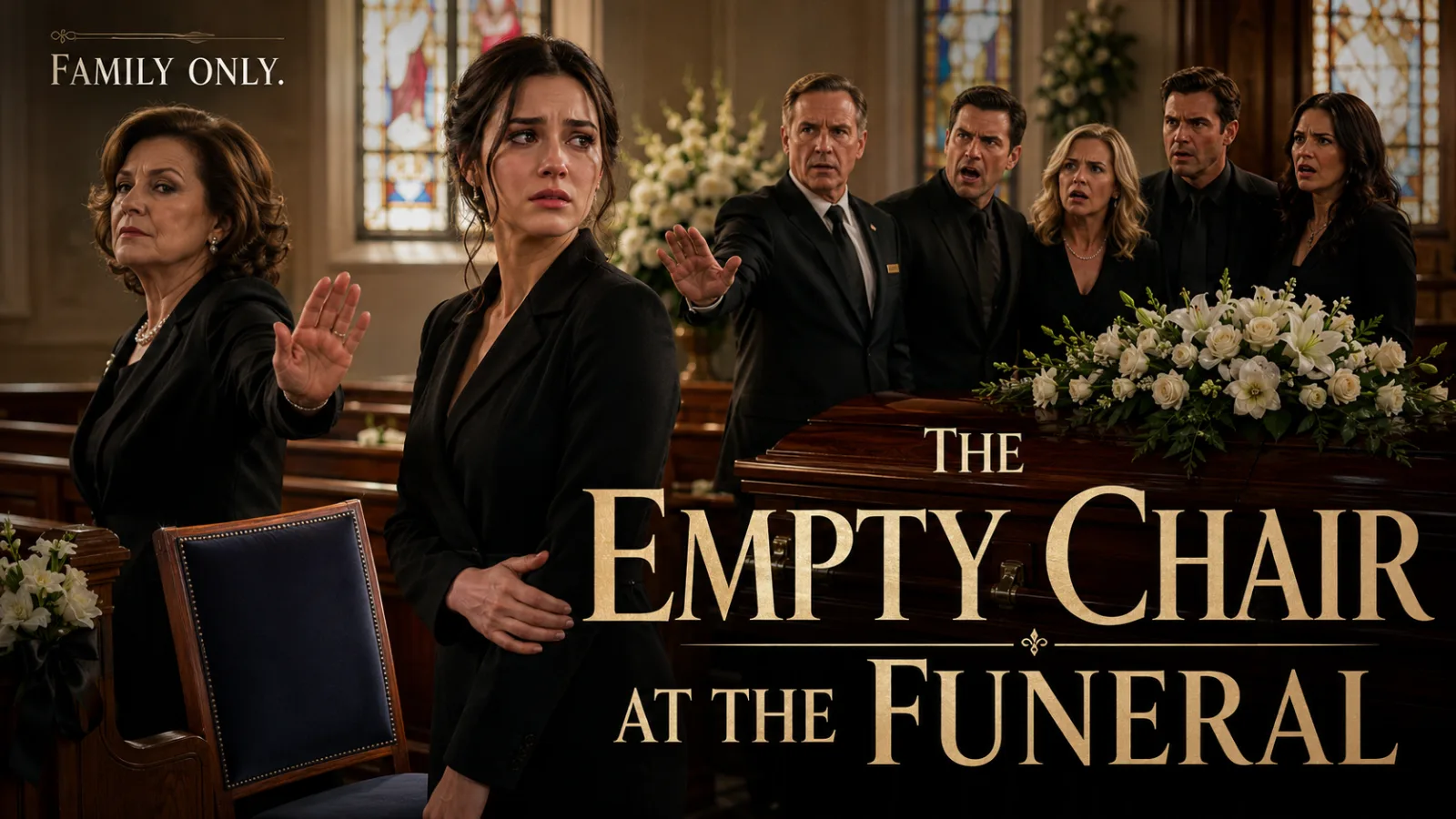
There are moments when a person’s entire childhood rearranges itself in less than an hour.
Clara stayed in the study until twilight came gray through the high windows and the house shifted into evening noises around her. She read Thomas’s notebooks from the year Daniel died. She read the file marked H. Grayson. She read old correspondence between Thomas and the bank, internal memoranda, and a thin packet of handwritten pages titled simply What I Should Have Asked Sooner.
By the time she looked up, the grandfather clock in the hall had struck seven.
The story that emerged was uglier and more ordinary than Clara had expected. Not murder. Not some operatic revelation involving affairs or secret heirs. Worse, in a way. Greed dressed as prudence. Sibling rivalry dressed as protection. A wife’s ambition disguised as concern for the family name.
Nineteen years earlier, Thomas had been preparing to expand Vale Mercantile into a new agricultural distribution wing. Daniel, younger but gifted with numbers and field relationships Thomas lacked, had been placed in charge of the expansion accounts. He believed in the project, in the county, and in Thomas with a devotion that seemed almost naive in hindsight.
At the same time, Grant had begun a real-estate venture that drained money faster than expected. Vanessa had taken out private loans to cover losses from a boutique investment scheme she was too vain to abandon. Evelyn, determined that Thomas’s resources should flow first and last through her children, quietly moved reserve funds to cover both disasters, using access Harriet Grayson had allowed for “temporary household management.”
Temporary turned permanent.
When the books no longer balanced, Harriet was pressured—by Evelyn first, Grant second—to reclassify the missing money as expansion-related movement awaiting documentation. That might have remained an internal problem except Daniel noticed discrepancies and refused to sign off on them.
From there the scheme changed purpose.
What had begun as concealment became accusation.
If the missing funds could be pinned on Daniel’s expansion accounts, then Evelyn’s children would be protected and Thomas—busy, overworked, and already stretched between business and marriage—might accept the easiest explanation. Harriet documented her concerns, then allowed herself to be talked out of delivering them. Daniel insisted the numbers were wrong. Grant insisted Daniel was panicking because he’d gambled on a bad project. Vanessa, who had never forgiven Daniel for once telling Thomas she lacked “the discipline to govern a lemonade stand,” backed the lie with strategic tears. Evelyn spoke of shame, betrayal, and the need to “protect the family” from public embarrassment.
Thomas hesitated.
That was the wound running through every page in his notebooks: hesitation.
He did not immediately condemn Daniel. But he did not immediately defend him either. He asked for time, for more documents, for quiet until matters could be reviewed. Quiet was exactly what Evelyn and the children needed. During that quiet, word reached the bank. A construction lender froze Daniel’s line of credit. A local paper hinted at accounting irregularities without naming names but with enough detail for anyone in Bellchester to guess.
Daniel came to Vale House in the middle of a storm carrying his own records in a leather bag.
Thomas wrote about that night three separate times in three separate notebooks, each version angrier at himself than the last.
Daniel had stood in the study—this same study—with rainwater running from his coat and said, “Look at the withdrawals. They don’t lead to me.” Thomas had asked him to calm down. Daniel had slapped the papers onto the desk and said, “You think I stole from you and I’m the one who should calm down?” Evelyn had entered uninvited, followed by Grant, and the conversation had become a spectacle. Daniel accused them directly. Evelyn called it grief from overwork. Grant called it desperation. Thomas asked Daniel for one night to review everything alone.
One night.
Daniel never got it.
He left the house in the storm. On County Route 8 his truck crossed the shoulder, struck the ditch, and rolled. He died before sunrise.
The official record called it weather and driver error. Thomas’s notes called it something else in private:
I did not kill my brother. I only failed to stop the lie that sent him onto that road thinking I doubted him.
Clara closed that notebook and pressed the heels of her hands into her eyes until the burn subsided.
She remembered her father dimly—his laugh more than his face, his hands lifting her onto a feed-store counter, his habit of tapping the dashboard to whatever music happened to be playing. For years those memories had floated free of context, as if his death existed in a sealed emotional chamber untouched by other people’s choices.
Now it was all connected.
He had gone out into that storm disgraced because his own family—Thomas’s wife, Thomas’s children—had needed him to be the thief so they would not be seen.
A knock sounded at the study door.
Clara stiffened.
“Who is it?”
“Amelia.”
Of all of them, that surprised her enough to unlock the room.
Amelia stood in the doorway with her coat still on and her mascara smudged by real tears rather than strategic ones. At thirty, she remained the softest of Evelyn’s children and the weakest where her mother was concerned—a dangerous combination in any family.
“I knocked twice before,” she said. “You didn’t answer.”
“I was reading.”
Amelia’s gaze moved to the red ledger on the desk, then quickly away. “Mother says you’ve locked everyone out of the study.”
“Your father told me to.”
Amelia twisted her gloves together. “Did he tell you why?”
“Yes.”
The single syllable landed between them.
For a moment Amelia looked almost childlike, caught between wanting comfort and fearing truth.
“What did he leave you?” she asked. “Besides the house, I mean.”
“Evidence.”
Amelia’s face changed.
Not with blank confusion. With dread.
Clara saw it instantly and felt something cold pass through her. “You knew there was something to know.”
Amelia’s eyes filled. “Not all of it.”
“How much?”
“I was twelve,” Amelia whispered. “I didn’t understand everything.”
“But you understood enough.”
Silence.
Clara took one step toward her. “How much, Amelia?”
Amelia covered her mouth with one trembling hand. “I knew there were problems with Uncle Daniel’s accounts. I heard Mother and Grant talking. Vanessa said if Dad believed Daniel over us, we’d all lose everything. I thought it meant money. I thought grown-ups were handling some ugly business thing.” Her voice broke. “After he died, Mother told us never to repeat any of the arguments from that night because it would only hurt Dad more.”
Clara stared at her.
“Your father died believing this family had doubted him,” she said. “And you kept quiet for nineteen years.”
Amelia shook her head violently. “I was a child.”
“You’re thirty now.”
“I know.” It came out almost as a sob. “I know.”
From the hall came footsteps—heavier, faster. Grant’s voice followed.
“Amelia?”
She flinched like a witness hearing the approach of the person she was never brave enough to oppose.
Clara understood then why Thomas had stripped all four children of the right to carry him. Not because guilt was equal. It was not. But because silence had linked them like chain.
Grant entered without waiting for permission. He took in Amelia’s tear-streaked face, Clara standing between him and the desk, the open ledger, and his own expression shuttered instantly.
“Out,” he said to Amelia.
She moved automatically.
Clara hated that almost as much as the rest of it.
When they were alone, Grant closed the door. “What exactly do you think you’re doing?”
Clara laughed once, without humor. “Learning family history.”
“You found old business records and now you’re inventing drama.”
“No,” she said. “You did that nineteen years ago.”
For the first time since the funeral, real anger flashed nakedly across his face. “Be careful.”
“With what? Facts?”
“With your understanding of how complex things were.”
Clara pointed at the ledger. “Was it complex when your mother moved reserve funds into your failed development? Was it complex when Vanessa’s debts were hidden inside Daniel’s accounts? Was it complex when Harriet Grayson was pressured to falsify entries? Or only when Daniel tried to defend himself?”
Grant’s silence was answer enough.
Then, astonishingly, he smiled.
Not kindly. Not apologetically. The smile of a man who had just realized the other person knew too much and therefore no longer deserved pretense.
“You really think Dad was innocent in all of this?” he asked.
Clara blinked. “What?”
“Thomas knew more than you’re reading in those pages.”
“You’re lying.”
“Am I?” He stepped closer. “Our father enjoyed thinking of himself as the noble late convert. It made his guilt more dignified. But if he was innocent, why did he stay with my mother? Why did he let Daniel’s name rot for years? Why did he keep the business? Why did he use the foundation to wash the family’s conscience?”
Each question landed because Clara had already asked some version of them alone.
Grant saw that and pressed harder.
“Because he chose survival,” he said. “Just like everyone else.”
Clara’s hands curled. “Get out.”
He tilted his head. “Here’s the only advice I’ll give you. Take the house. Keep the sentimental paperwork. Let sleeping things stay buried. If you try to drag this into daylight, you’ll lose a war you do not understand.”
“Maybe,” Clara said. “But at least I’ll understand why I lost it.”
Something cold entered his eyes then. “You think the town will rally around you because you fed Dad soup and changed his bandages? Bellchester protects names, Clara. Not truth.”
She held his gaze. “Then let’s test that.”
Grant stood motionless for one long second. Then he gave a tiny shrug, almost admiring in its contempt.
“All right,” he said. “Test it.”
After he left, Clara locked the study again and sat down very slowly.
Grant’s cruelty had contained a truth he didn’t mean as mercy. Thomas had indeed stayed. He had kept the marriage, the house, the business, the family name. He had not gone to the police with Harriet’s late statement. He had not publicly exonerated Daniel while alive.
Why?
The answer arrived not in the notebooks, but in a thin folder at the back of the H. Grayson file. Inside were recent documents: a forensic review commissioned quietly six months earlier, correspondence with a private investigator, and notes from Miles Coley. The money trails Harriet had once described did not end in the past. They connected forward into present holdings, shell companies, and trust distributions still tied to Grant and Vanessa. Thomas had apparently discovered, late in life, that the old theft had never merely been theft. It had been the foundation of other concealments, other transfers, other reputations built on the original lie.
If he had gone public while alive, the scandal would have detonated around his own illness, perhaps before the evidence chain was complete. If he waited and placed the papers with Clara—now legal controller of the memorial fund and family residence—he created a cleaner handoff.
Not absolution. Strategy.
Thomas had chosen the funeral as his opening move because it was the first point after death at which he could strike them publicly without interference.
The will was the second.
The evidence in Clara’s hands would be the third.
At nine that night she called Miles Coley.
“I need to know what authority comes with the Daniel Vale Memorial Fund,” she said when he answered.
There was a short pause. “Significant authority. Why?”
“Because I’m not keeping this quiet.”
Another pause, longer this time.
“I thought you might say that,” he replied. “Then tomorrow morning we begin properly.”
Clara slept three hours.
When dawn came, she knew two things with total certainty.
Thomas had not chosen her only because she stayed.
He had chosen her because, unlike the rest of them, he believed she still knew the difference between inheritance and justice.