THE LAST WISH OF THOMAS VALE
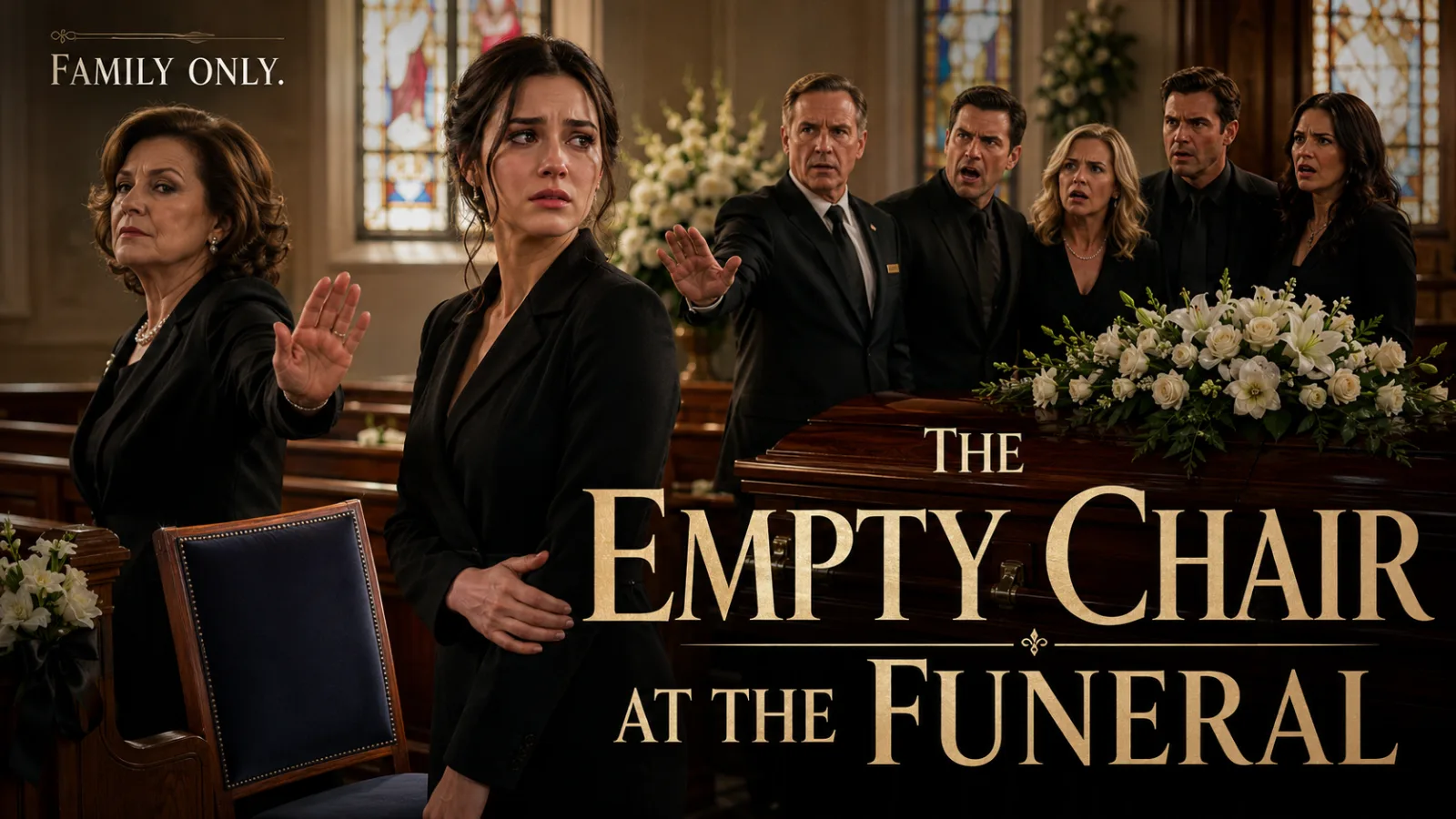
By noon the next day, Vale House had divided into camps.
The household staff moved like people trying not to get caught in crossfire. Amelia shut herself in the old music room and cried through two phone calls from her mother. Luke disappeared into town and did not return until late afternoon, already drunk enough to be useless. Vanessa spent hours on speakerphone with attorneys in New York, using the phrase reputational damage so many times it lost all meaning. Grant took over the breakfast room as a command center and began demanding access to corporate files Clara legally controlled now.
Evelyn, meanwhile, became almost serene.
That frightened Clara more than shouting would have.
Women like Evelyn rarely raised their voices when they believed the deeper architecture of power still favored them. Bellchester had taken her dinner invitations for twenty-five years. Church committees still called her first for gala tables. She knew which judges played golf with which board members, which columnists owed her social favors, and exactly how many people preferred comfortable scandal to destabilizing truth.
Grant was right about one thing: names were protected in Bellchester.
Clara decided not to ask the town for courage it did not possess.
She would borrow Thomas’s instead.
At one o’clock Miles Coley arrived with a forensic accountant named Renee Pollard, a notary, and two sealed bankers’ boxes. They set up in the study while rain tapped at the windows again, soft and persistent, as if the weather had decided to reenact the year everything first broke.
Renee was brisk, practical, and unimpressed by wealthy families. Clara liked her immediately.
“Good news,” Renee said, slipping on her glasses. “People who think they’re too important to be caught are usually too arrogant to be tidy.”
For four hours they worked through the old and new records. Harriet Grayson’s late affidavit matched surviving transaction trails. Grant and Vanessa’s present holdings connected through layered transfers to accounts that should never have existed. There were signed disbursement approvals bearing Evelyn’s initials from years when she had insisted she knew nothing about operating accounts. There were recent efforts to unwind some of the older paper routes—evidence, Renee said, that Thomas’s quiet inquiries in the last year had frightened someone.
“Could we prove fraud?” Clara asked.
Renee looked up. “Civilly? Strong chance. Criminally? Depends how aggressive the county and state want to be, and whether the old records are enough. But if your question is whether this can destroy their position, the answer is yes.”
Miles added, “Especially if combined with the governance rights your father left you over the memorial fund.”
Thomas had structured the Daniel Vale Memorial Fund as a philanthropic trust with public charitable functions and private family oversight. Control of it meant the power to commission audits, freeze certain related distributions, and require disclosures from entities that had long treated the fund as a decorative moral halo.
In other words, Clara now controlled the one mechanism respectable society could not dismiss as mere family drama.
At five o’clock she sent invitations.
Not social ones. Formal notices.
An emergency trustees’ meeting of the Daniel Vale Memorial Fund would be held the following morning in the ballroom annex at the Bellchester Historical Hall. Required attendees: current trustees, counsel, auditors, and any interested family members. On the agenda: governance transition, financial review, and statement regarding the fund’s founding circumstances.
Grant stormed into the study ten minutes later with the notice in his hand.
“You cannot be serious.”
Clara signed the last page of an authorization and handed it to Miles before turning to him. “I’m extremely serious.”
“This is a charitable board, not a family therapy session.”
“No,” she said. “It’s the part of this town your father used to cover the wound you made.”
Grant’s face darkened. “You’re staging an ambush.”
“Thomas staged it. I’m continuing it.”
He looked at Miles. “You’re allowing this?”
Miles did not even blink. “I am representing the expressed legal wishes of my client.”
“My father is dead.”
“Exactly,” Miles said. “And still remarkably difficult.”
Grant threw the notice onto the desk. “Do you think parading old papers into public will make anyone forget what you are?”
Clara felt the old reflex rise—the impulse to defend herself, to insist she was not a gold digger, not an opportunist, not an outsider clawing at what belonged to others. Then she heard Thomas’s late dry voice in memory: Don’t negotiate with bad faith. It likes the exercise.
So she simply said, “The daughter he trusted.”
Grant laughed sharply. “He trusted you because you were convenient. You were there.”
“Yes,” Clara replied. “I was.”
The answer hit harder than denial might have.
Grant stared at her for a moment, then left with enough force to rattle the doorknob but not, true to form, enough to look uncontrolled.
That night Clara walked through the house alone.
She passed the terrace where Thomas used to drink coffee in October wrapped in old blankets. The library tower where she had once hidden from Christmas parties. The breakfast room where Evelyn had perfected the art of serving warmth with disdain. The upstairs corridor where, after her adoption papers were finalized, Thomas had stood outside her half-open bedroom and said, with typical awkwardness, “You can stop lining up the shoes now. This is yours.”
She stopped outside his bedroom door.
The room still smelled faintly of cedar drawers, old books, and the medicinal trace illness leaves behind even after the machines are gone. His reading glasses rested on the nightstand exactly where she had forgotten to move them. A cardigan hung over the arm of the chair by the window. Everything looked as if the owner had only stepped away briefly.
For the first time since the funeral, Clara let herself speak to him out loud.
“You should have told me sooner,” she said.
The silence that followed was not comforting.
“No,” she said after a moment. “That isn’t fair. You should have told everyone sooner. There’s a difference.”
Still silence.
She sat on the edge of the bed and thought about Daniel driving through rain with his leather bag on the seat beside him. About Thomas in the study asking for one night. About Evelyn’s pearls in the church. About the empty chair.
When she rose again, the grief remained, but it had found firmer ground beneath it.
The trustees’ meeting the next morning drew more people than anyone admitted to expecting. Respectable towns love nothing more than the chance to tell themselves they are attending governance when they are in fact attending judgment. The ballroom annex filled with board members, attorneys, local reporters who had somehow heard only that “there may be a statement,” and several prominent citizens who had once benefited handsomely from being photographed beside Thomas Vale’s philanthropy.
Evelyn arrived in navy rather than black, signaling transition from mourning to control. Grant came armored in legal language. Vanessa appeared twenty minutes late and looked as if she wanted the building to collapse. Luke sat in the back row and refused to meet anyone’s eyes. Amelia came alone and took a seat near the aisle, pale but present.
Clara stood at the front with Miles on one side and Renee Pollard on the other. On the table before her were the red ledger, copies of Harriet Grayson’s affidavit, a summary audit, and Thomas’s final statement in a sealed envelope.
Murmurs moved through the room.
Clara let them.
Then she began.
“Thank you for coming on short notice. Most of you knew Thomas Vale as a businessman, donor, trustee, or friend. Some of you also knew him as my father.” She paused very slightly. “Yesterday I learned that not all of you knew the same version of his family.”
She did not overexplain. That was the power Thomas had taught her inadvertently during years of sitting in on difficult meetings. People trusted calm more than passion, right up until calm revealed something they wished it hadn’t.
She explained the transition of authority under the will. She explained that a financial and historical review had uncovered evidence requiring disclosure. Then she read Harriet Grayson’s statement aloud.
By the second paragraph, the room had gone still.
By the third, Evelyn was on her feet. “This is slander.”
Renee Pollard spoke without looking up from her notes. “It is corroborated.”
Grant stepped forward. “My counsel has not reviewed any of this.”
Miles replied, “That does not prevent disclosure by the current authority overseeing the fund.”
Vanessa turned white when Clara displayed the summary flow chart linking old diverted reserves to later account structures. It was not complicated enough for laypeople to miss the point. Boxes, arrows, dates, names. Respectable theft always hates diagrams.
Then Clara opened Thomas’s final envelope.
His statement was short.
If this is being read, then I lacked the courage to make this room necessary while alive.
Years ago, my brother Daniel was accused under circumstances I should have challenged more fiercely and more quickly than I did. I failed him. Whatever else is said, let the record show this plainly: he did not steal from me.
Evidence now in the possession of my daughter Clara and my counsel indicates that members of my immediate family benefited from the false picture that ruined him. The charitable fund bearing his name was created in remorse, but remorse without truth curdles into vanity.
I leave authority to Clara not because blood is meaningless, but because blood proved insufficient protection against greed.
My final wish is not punishment for its own sake. It is correction.
No one moved when she finished reading.
The silence lasted so long Clara became aware of a clock ticking at the back of the room.
Then Amelia stood.
All heads turned.
She was crying, but unlike at the funeral, there was no softness in it now—only shame. “It’s true,” she said. Her voice shook. “Not every detail, I don’t know every detail, but enough. There were arguments. There were lies about Uncle Daniel. We were told to keep quiet. We did.”
Evelyn’s head whipped around. “Sit down.”
Amelia did not.
Grant hissed, “Amelia.”
She flinched, then kept speaking. “Dad knew before he died. He asked me once if there was anything I wanted to tell him. I lied. I said no.”
The room seemed to contract.
Clara watched Evelyn in that moment and saw something she had never seen before: not just anger, but the beginning of defeat. Public settings had always been Evelyn’s strongest ground. She knew how to charm them, manage them, shame them. But public settings are merciless when family loyalty fractures in the open.
Vanessa took one step backward as if distance might save her from association.
Luke lowered his face into his hands.
Grant alone kept trying to hold the shape of resistance. “This is emotional theater built on incomplete records and a senile man’s guilt.”
Renee slid another packet across the table to the trustees. “Here are the records tying historical misappropriations to ongoing structures benefiting Mr. Grant Vale and Ms. Vanessa Vale. Here also are the documents indicating attempts at concealment within the last year. If anyone would like to discuss senility, I recommend doing so after reading the dates.”
Murmurs became voices. Voices became questions. Trustees wanted independent review. Counsel for the fund demanded immediate asset holds. A reporter asked whether the district attorney had been notified yet. Miles replied that appropriate authorities would receive copies by end of day.
Evelyn stood very still.
Then she turned to Clara.
“You think this makes you righteous,” she said, her voice low and poisonous even in a room full of witnesses. “All it makes you is useful. Thomas used you to say what he lacked the strength to say himself.”
The old Clara might have been devastated by that.
This Clara understood too much already to be easily wounded by truth wrapped in insult.
“Yes,” she said. “He did. Because I was the only one left who could.”
It landed harder than Clara expected. Evelyn’s composure actually faltered; her lips parted, then pressed shut again.
For the first time, the widow looked old.
By the end of the hour the trustees had voted to authorize a full independent investigation, suspend discretionary distributions connected to the challenged structures, and issue a public statement that the fund’s founder, Daniel Vale, was being formally cleared of wrongdoing pending final review. Grant left before the vote finished. Vanessa followed with one hand at her throat. Luke slipped out through a side door. Amelia remained seated, openly crying. Evelyn departed last, refusing assistance, refusing eye contact, pearls hard at her ears like relics from a battlefield she had finally failed to control.
When the room emptied, Clara sat down because her knees had begun to shake.
Miles set a paper cup of water in front of her.
“You did well,” he said.
She laughed weakly. “I feel sick.”
“That’s often how justice feels to people who still have a conscience.”
Renee capped her pen. “Your father may have been late, but he wasn’t sloppy. That helped.”
Clara nodded. Her eyes stung unexpectedly.
She had imagined revenge, if she ever imagined it at all, as heat. Satisfaction. Some bright clean sensation of scales balancing.
What she felt instead was sorrow with structure.
Daniel’s name had been spoken aloud without shame. Thomas’s last wish had entered daylight. The machinery that protected the family’s lie had finally begun to break.
But nothing about that restored the dead.
As she gathered Thomas’s papers to leave, Amelia approached hesitantly. Her face was blotched and raw.
“I’m sorry,” she said.
Clara looked at her for a long moment.
“For what part?”
Amelia lowered her eyes. “For all of it.”
It was not enough. It might never be enough. But it was more than anyone else in that family had yet offered.
Clara nodded once.
“Then live differently,” she said.
Outside the historical hall, reporters clustered under gray skies. Cameras angled. Questions rose. Clara did not answer them immediately. She stood on the stone steps with Thomas’s papers in her arms and felt the autumn wind move across her face.
For the first time since the funeral, she thought of the empty chair again.
Not as the place Evelyn forced her to leave.
But as the place truth had been waiting to sit.