THE LOCKED FLOOR
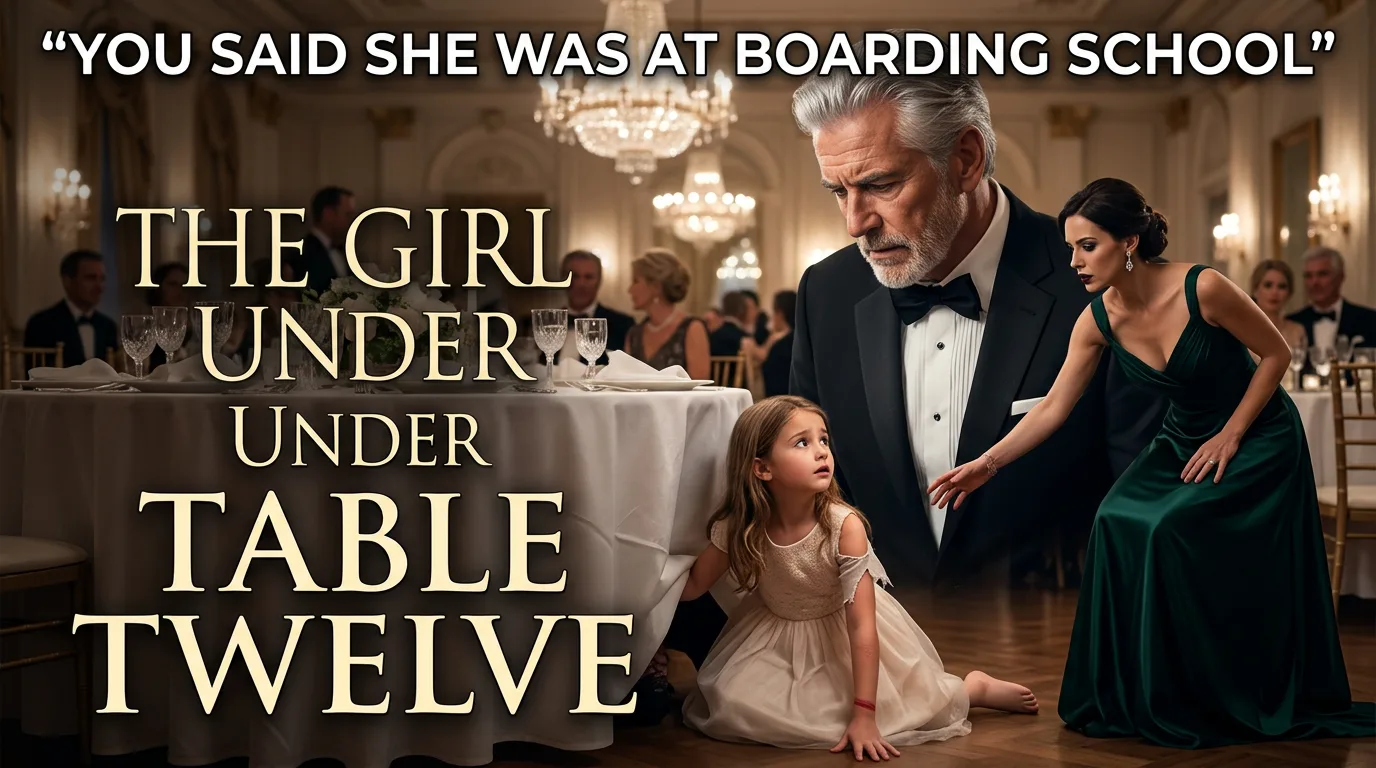
The next morning Harrison returned to the Vale estate before sunrise with Ivy, Ana Moreno, Owen Hart, and a private physician who had been instructed, in terms so cold they needed no repetition, to document everything carefully and say nothing carelessly. Celeste traveled separately in the second car with Martin and one of her own lawyers, which told Harrison she had not spent the night collapsing under guilt. She had spent it preparing.
The estate rose above the river like a lesson in inherited certainty—limestone façade, slate roof, sweeping lawns, and enough windows to suggest transparency while concealing whole lives behind curtains. Harrison had designed the central wing thirty-five years earlier with an architect who believed big houses could redeem lonely people. They could not, of course. They merely gave loneliness more hallways.
Ivy went quiet the moment the car turned through the gates.
Harrison noticed her small hand clench in her lap.
“Do you want to go back to the hotel?” he asked.
Her chin lifted instantly. “No.”
“Good,” he said. “Neither do I.”
That earned him another flicker of almost-amusement, gone as quickly as it came.
He had arranged rooms for her in the east wing beside a sunroom his late wife had once filled with orchids and books. Celeste objected before they even crossed the threshold.
“Ivy’s things are upstairs.”
“Then Mrs. Moreno can retrieve them,” Harrison said.
“She is used to her own room.”
“We’ll discuss what she’s used to after a physician explains why my granddaughter had bruises and no shoes at a formal event.”
Celeste’s mouth hardened. “You are making this theatrical.”
“No. You made it impossible to do quietly.”
The doctor examined Ivy in the morning room with Ana present and the door slightly ajar. Harrison remained outside because he understood enough not to turn concern into another kind of pressure. While he waited, he asked Owen for a list of all domestic staff currently living on the estate. Four names had changed in the past year, including a governess, a tutor, and a night nurse. The turnover irritated him before it alarmed him, which made him angrier with himself than he already was.
Dr. Singh emerged twenty minutes later with that careful medical neutrality professionals wore when they knew their findings would have consequences.
“The marks on the wrist are consistent with forceful gripping within the last twelve hours,” she said. “There are older bruises in various stages of healing on the upper arms and one on the left shoulder. No fractures. Nutritionally, she appears underweight for age. Not dangerously, but noticeably. There are also signs of chronic sleep disruption.”
“Neglect?” Harrison asked.
Dr. Singh chose her words precisely. “At minimum, I would describe the pattern as concerning. And I would strongly recommend that the child not be left alone with any adult implicated in those injuries until the situation is investigated.”
Celeste had come into the corridor in time to hear the last sentence.
“This is absurd,” she said. “Children bruise. She startles, she hides, she climbs things—”
“Not today,” Harrison said.
He sent Martin to begin emergency guardianship proceedings before breakfast.
Then he asked Ivy a question that changed the shape of the house.
“Can you show me where you sleep?”
She looked toward the staircase that led to the upper floors and hesitated. Not because she did not know, Harrison realized. Because she was calculating what the cost of showing him might be.
“You are not in trouble,” he said.
Her answer came so quietly he nearly missed it. “That doesn’t usually matter.”
Harrison held still.
Then he rose and said, “Take me anyway.”
The fourth floor of the west wing had once contained guest rooms rarely used except during Christmas. Three corridors met there beneath a skylight. One hallway ended in a locked door Harrison did not recognize.
He looked at Celeste.
“It’s a storage area,” she said smoothly.
Ivy shook her head once.
“She sleeps there?” Harrison asked.
Celeste’s expression did not change, but her silence finally did.
Ana made a sound low in her throat, the kind women made when outrage had not yet found language.
“Owen,” Harrison said.
His security chief stepped forward with the small iron key ring used for maintenance access.
Celeste moved to block the door. “This is humiliating.”
“For whom?”
“Harrison, don’t perform righteousness at me. Daniel trusted me with Ivy.”
At Daniel’s name, something flashed across Ivy’s face. It was not grief exactly. It was something tighter, older, mixed with listening.
Owen unlocked the door.
The room beyond had once been two bedrooms and a sitting room. Now it had been rearranged into something that tried to look educational and somehow looked more like confinement because of the effort. A child-sized desk sat beneath a window that had been painted shut. Shelves held schoolbooks, most of them too advanced or too young for Ivy’s age, as though someone had curated them by color rather than use. There was a narrow bed, a wardrobe, a toy chest with no toys visible from the top, and a tray table stacked with dried-out markers and worksheets.
The smell in the room was stale.
Harrison walked farther in and saw the inside latch.
Not a child-safety lock. Not a privacy hook.
A latch positioned outside the bedroom doorframe.
He turned slowly.
Celeste said, “She would wander at night. After Daniel died she became impossible to settle. The latch was for her safety.”
Ivy was standing in the doorway, pressed half behind Ana’s skirt. “She put it on after I tried to go to the kitchen.”
“How often?” Harrison asked.
Ivy’s gaze moved to the floor. “A lot.”
“How long were you here?”
Celeste spoke first. “This is being twisted.”
“No,” Harrison said. “Not by me.”
On the wardrobe door, carved faintly into the paint in short vertical groups, were marks.
Days.
Not all of them. Some had been rubbed away. But enough remained to tell the truth even before Ivy did.
Harrison crossed to the toy chest. Inside he found folded clothes, a flashlight without batteries, six books, and under them a cloth rabbit worn nearly flat along the ears. Beneath the bed sat a paper cup holding pebbles and three dead leaves. On the desk lay a stack of letters in a child’s hand, each beginning the same way:
Dear Daddy—
None had been mailed.
Harrison felt something change inside him then, something larger than rage and uglier than guilt. He had permitted distance to be explained to him by a woman now calling imprisonment structure.
“When was the last time my granddaughter played outside?” he asked.
Celeste gave no answer.
Ivy did.
“Last spring.”
Ana closed her eyes.
Harrison picked up one of the letters. The child’s handwriting wandered crookedly across the page.
Dear Daddy, today she said I couldn’t come downstairs because people lie. I don’t know what that means. I hid the blue ribbon because it smells like your car.
He set the page down carefully.
“Martin,” he said, “I want photographs of every room, every latch, every document, every invoice tied to tutors, nurses, and schools. I want Dr. Singh’s report transmitted to family court within the hour. And I want a forensic accountant to begin reviewing every child-care expenditure charged to the trust since Daniel’s death.”
Celeste laughed once, a bright ugly sound. “So this is what you’ve been waiting for. A legal excuse to take my daughter.”
Harrison turned to her.
“I was not waiting for anything,” he said. “That is the unforgivable part.”
Later, after the photographers came and the staff had been interviewed separately, Harrison found Ivy sitting cross-legged on the carpet in the east wing sunroom. Someone had opened the tall windows. Autumn light lay across the floor in warm rectangles. She was eating half a peach as if uncertain she was allowed to like it.
He sat at a polite distance.
“Why didn’t you tell anyone before last night?” he asked.
Ivy swallowed first. “There wasn’t anyone.”
“What about the staff?”
“She said they worked for her.”
“And me?”
She looked at him then, really looked.
“She said you believed her.”
Harrison did not defend himself because nothing useful existed to say.
After a moment Ivy added, “And she said if I made trouble, they’d send me away for real.”
“Send you where?”
“She never said. Somewhere bad, I think.”
He nodded once.
Children understood threat even when adults wrapped it in abstraction.
“Why did you come out last night?”
Ivy’s fingers tightened slightly around the peach pit. “I heard you laughing before dinner.”
“That’s an unusual reason.”
“You sounded real.”
He sat with that.
Then she said, “And Mrs. Moreno left the service door open.”
So there had been an accomplice of conscience after all. Not in planning, perhaps, but in refusal. Harrison suspected Ana had known something was wrong for months without possessing proof strong enough to survive Celeste’s denials.
“Did your mother know you were under the table?”
“She knew I was downstairs. She didn’t know I stayed.”
“Why stay?”
Ivy glanced toward the bright windows. “I wanted to see what a party looked like.”
The simplicity of it hurt more than almost anything else had.
By noon, the false tuition invoices were only the beginning. The Vermont school did not know Ivy. Neither did the supposed therapeutic academy in Connecticut listed on earlier expense reports. A private tutor billed for forty-three sessions had moved to Madrid the previous year. A pediatric sleep consultant had no medical license in any state Martin’s office could locate.
The trust, it seemed, had not simply funded Ivy’s isolation. It had furnished it.
That afternoon Harrison made two more discoveries.
The first came from Ana Moreno, who admitted through tears that she had been barred from the fourth floor for nearly a year unless directly summoned. She had suspected emotional cruelty, perhaps excessive discipline, but Celeste had always claimed Ivy was “fragile,” prone to panic, recovering from grief, overwhelmed by strangers. Any visible fear in the child had been explained as proof of her condition rather than evidence against the explanation.
The second discovery came from an old envelope tucked inside one of Daniel’s books in the library, a habit Harrison recognized instantly because he had once done the same thing with contracts he meant to revisit. Inside was a draft letter never mailed.
Dad, if I don’t bring this to you myself, it means I lost my nerve again. Celeste’s version of “what’s best for Ivy” gets uglier when no one is looking. I should have made you see it sooner.
The date on the letter was three weeks before Daniel died.
Harrison sat alone in the library after reading it, the house around him thick with quiet wealth and moral failure.
By evening, emergency papers had been filed, the physician’s report appended, photographs logged, trust records frozen, and two separate investigators set to work.
And for the first time since his son’s death, Harrison understood that whatever happened to Daniel had not ended one tragedy.
It had made the next one possible.