THE SECRET IVY KEPT
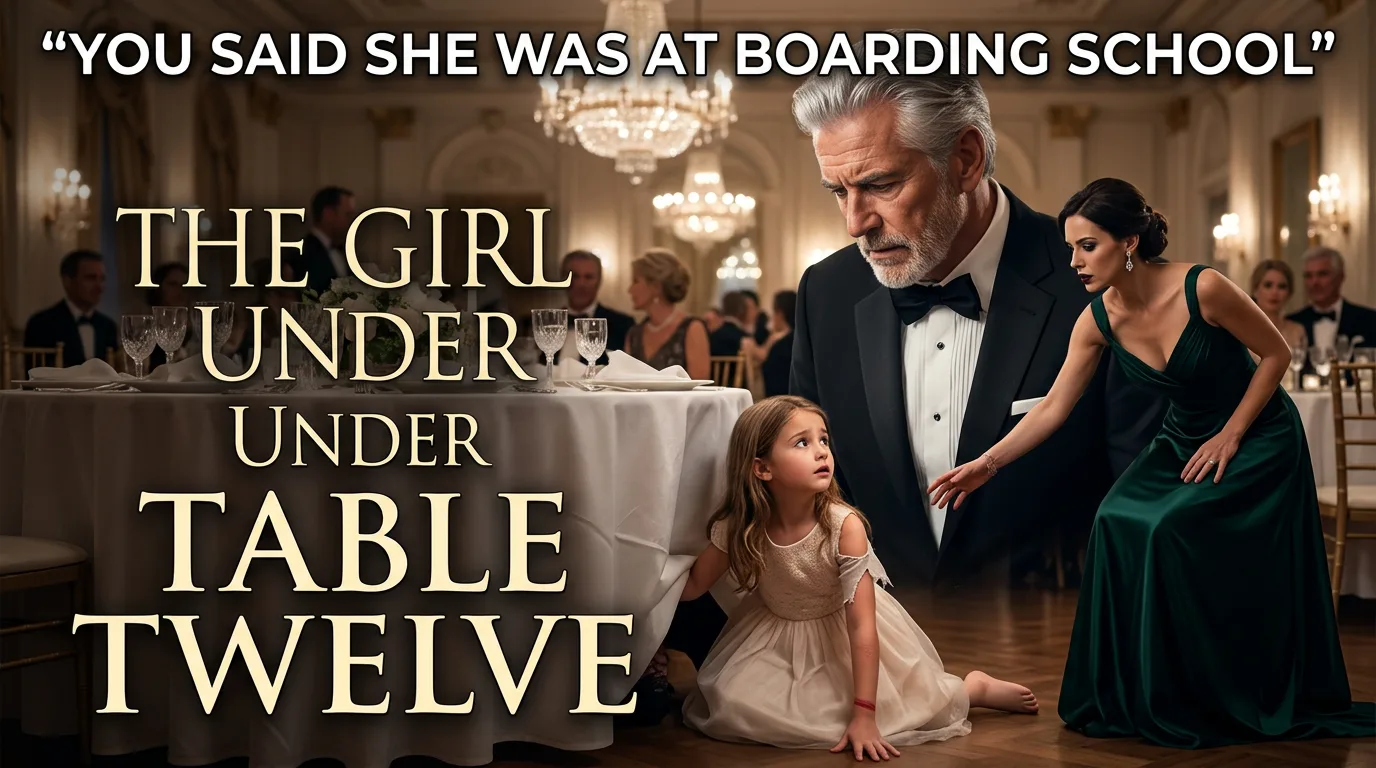
The next morning Harrison canceled every board meeting, donor lunch, and quarterly review on his calendar and devoted the whole day to one task: creating conditions under which a frightened nine-year-old might speak without believing she was being punished for it.
This turned out to require less strategy than humility.
He and Ivy ate breakfast in the sunroom rather than the formal dining room. She liked pancakes but cut them into severe little squares before eating them, as though disorder on a plate might trigger consequences. He discovered she preferred orange marmalade to jam when she felt brave and jam when she felt tired. She had read half the books in the locked room and two thirds of them bored her. She liked geography because maps felt like places no one could take away by relabeling them.
By noon they had moved to the greenhouse behind the east lawn, where Ana had once grown herbs with Daniel when he was a boy. Harrison found that Ivy talked easiest when both of them were looking at something besides each other.
“She would get angry if I used the wrong cup,” Ivy said, gently touching a rosemary sprig. “Not always. But sometimes.”
“Your mother?”
Ivy nodded.
“What made it the wrong cup?”
“Whatever she said that day.”
The answer was so precise that Harrison almost closed his eyes.
Dr. Elinor Shaw, a child psychologist Martin recommended and whom Harrison had insisted on vetting personally, arrived that afternoon. Harrison feared Ivy would refuse her. Instead the child surprised him by asking bluntly, “Are you here because people think I’m lying?”
Dr. Shaw sat in the low chair opposite her and said, “No. I’m here because adults failed to ask the right questions sooner.”
Ivy considered that, then allowed the session to continue.
By evening Dr. Shaw met privately with Harrison.
“She is hypervigilant, highly controlled, and far too practiced at monitoring adult moods,” the psychologist said. “But she is also very observant and not dissociating from factual memory. That matters.”
“She says she knows something about Daniel’s death.”
Dr. Shaw nodded. “She does. I don’t think she understands every implication, which is developmentally appropriate. But she has a stable memory around a specific object and a specific argument. She will tell you if she feels you can tolerate it.”
Harrison almost laughed at the phrasing. Tolerate it. As if the truth were a solvent one had to prove strong enough to touch.
After dinner, Ivy asked if she could sit in Daniel’s old boathouse office.
The request caught him off guard.
The boathouse sat at the edge of the estate lake two hundred yards below the main terrace. Daniel had loved the water from childhood—sailing first, then racing, then simply taking the small outboard alone on nights when he said the house had too many walls. It was also the place where, according to official reports, he had left alone during a storm and never returned.
Harrison had avoided the building since the funeral.
He took a flashlight and went with her anyway.
The office above the slips still smelled faintly of varnish, rope, and old paper. Dust had settled on the desk. One life ring hung on the wall. Ivy climbed onto the window bench with her knees tucked beneath her and stared out at the black water.
“Mom said he was drunk,” she said.
Harrison remained standing because sitting felt too final. “The coroner’s report said his blood alcohol was elevated.”
“She poured out his drink.”
He turned his head sharply.
Ivy kept looking at the water.
“When?”
“That night.”
“Did you see that?”
She nodded. “He made one in the kitchen. She said they needed to talk in private, so I followed them. Daddy told me to go upstairs, but I hid.”
“Where?”
“In here first. Then in the loft.”
Her voice had begun to flatten into the careful rhythm children used when recalling something they had replayed too many times alone.
“They were fighting about me,” she said. “Daddy said he was taking me to Boston in the morning and that he was done letting her scare me. She said he couldn’t do that because he didn’t understand paperwork. He said he already fixed the paperwork. Then she slapped him.”
Harrison’s hand tightened around the flashlight.
“What happened next?”
“He left. She cried. Then she stopped crying.”
The last sentence chilled him more than the slap.
“She came in here after him,” Ivy continued. “She had scissors. Little gold ones from her room. She was mad. She took the red string from the boat.”
“What red string?”
“The one Daddy always clipped to his wrist.” Ivy frowned, searching for the word. “The curly one. The safety one.”
The kill-switch lanyard.
Harrison felt the air in the room shift.
“What did she do with it?”
“She cut it.”
“Are you sure?”
Ivy turned and looked at him then, offended by the question in the quiet reasonable way only children could be.
“I heard it snip.”
He crossed slowly to the desk and sat because his knees had ceased being entirely reliable. “Then what?”
“She said, ‘If you take her, you get nothing.’” Ivy picked at the seam of the window cushion. “I thought she meant me. I didn’t know she meant money too.”
God.
“She put the red string in her pocket. Daddy came back because he forgot his phone. They yelled again. Then he left from the dock. She went out after him but I couldn’t see. Later she came in wet. Not all wet. Just the bottom of her dress.”
Harrison spoke with great care. “Did you tell anyone this before?”
“I tried to tell Lydia about the red string. Mom heard me and said I was confused.”
“Did the police ever ask you questions?”
“I was upstairs.” The child’s mouth tightened. “Mom said I was too upset to be useful.”
There it was. Not just silence. Management.
Harrison sat with the full shape of it pressing in around him: the cut lanyard, the planned custody move, the trust amendment, the financial motive, the child kept hidden, the governess pushed out, the fabricated schooling, the household sealed around a narrative convenient to the widow.
When he spoke again, his voice sounded older than it had that morning.
“Ivy, this is important. Very important. And you did the right thing telling me.”
She looked anxious instead of relieved. “Will that make her come back?”
“No.”
“People say no a lot.”
He set the flashlight down and leaned forward.
“Then listen carefully,” he said. “What you told me will make it harder for her to lie. It will not make you go back upstairs. It will not make you disappear. I won’t allow either of those things.”
The child studied him for several seconds.
“Okay,” she said at last, and because she was nine and exhausted, that tiny word carried more trust than any declaration.
Before midnight Harrison had Owen at the boathouse with a marine mechanic, Martin on speaker with a former federal prosecutor named Mara Whitfield, and orders issued to preserve every file related to Daniel’s accident.
The original police report had concluded that Daniel, alone on the lake in worsening weather, had gone overboard after his motorboat struck wake and spun. The engine apparently continued running until the boat hit a mooring post. A missing kill-switch lanyard had been noted but dismissed; the responding deputy assumed Daniel hadn’t clipped it on.
Mara Whitfield arrived from Manhattan by ten the next morning and began turning assumptions into questions.
She was in her forties, sharp without being theatrical, and had the unnerving habit of becoming more polite as she became more dangerous. Within six hours she had identified three lines of attack: financial misconduct within the trust, coercive confinement and abuse of a minor, and potential obstruction surrounding Daniel’s death.
“We don’t need to prove homicide on day one to destroy her stability,” Mara said in Harrison’s study. “But the homicide angle changes how everyone behaves around the other two.”
Celeste behaved exactly as Mara predicted.
When served notice that Daniel’s death was being formally re-examined, she lost composure for the first time in front of outsiders.
“This is insanity,” she snapped. “A child said something and suddenly the whole estate is staging a coup?”
Mara smiled faintly. “No, Mrs. Vale. A child said something after months of being isolated. That made us compare her account to records, witness statements, trust disbursements, and your own prior representations. Your difficulty is that the records do not love you as much as you expected.”
Celeste turned to Harrison. “You’re doing this because Daniel chose me over your approval.”
“No,” Harrison said. “I am doing this because Daniel is dead, Ivy is alive, and you appear to have regarded both facts as opportunities.”
That afternoon family court granted Harrison emergency temporary guardianship pending a full hearing.
Celeste responded by attempting something stupid enough to reveal how frightened she had become.
At four o’clock, while Ana took Ivy to the estate chapel garden and Harrison was in conference with Mara, Celeste entered the east wing through the side veranda using a housekeeping key card she had not surrendered. She made it as far as Ivy’s room before one of the female security officers intercepted her.
“She’s my daughter,” Celeste shouted loud enough for half the hallway to hear. “You can’t keep me away from my own child.”
Harrison arrived in time to see Ivy frozen at the far end of the corridor, face gone blank with terror.
That blankness told him more than screams would have.
“Take Mrs. Vale back to the guest house,” he said.
Celeste twisted toward him. “She belongs with me.”
Ivy’s voice cut through the corridor before Harrison could answer.
“No, I don’t.”
Everyone turned.
The child was shaking so hard that Ana put a steadying hand behind her shoulders, but Ivy did not stop.
“You keep saying I’m confused,” she whispered. “But you’re the one who lies.”
Celeste’s whole face changed.
That was the moment Harrison stopped thinking of her as a mother gone monstrously wrong and began thinking of her as something simpler.
A person protecting herself from the truth at a child’s expense.
When security led her away, Mara said quietly, “That will help in court.”
Harrison looked at his granddaughter standing barefoot on the carpet because she had kicked off her slippers without noticing.
“God help me,” he said, “I would trade every useful legal moment in my life for one year of not needing them here.”
Mara, to her credit, did not offer comfort.
Instead she said, “Then let’s make sure the next year costs the right person.”