THE NIGHT ON THE LAKE
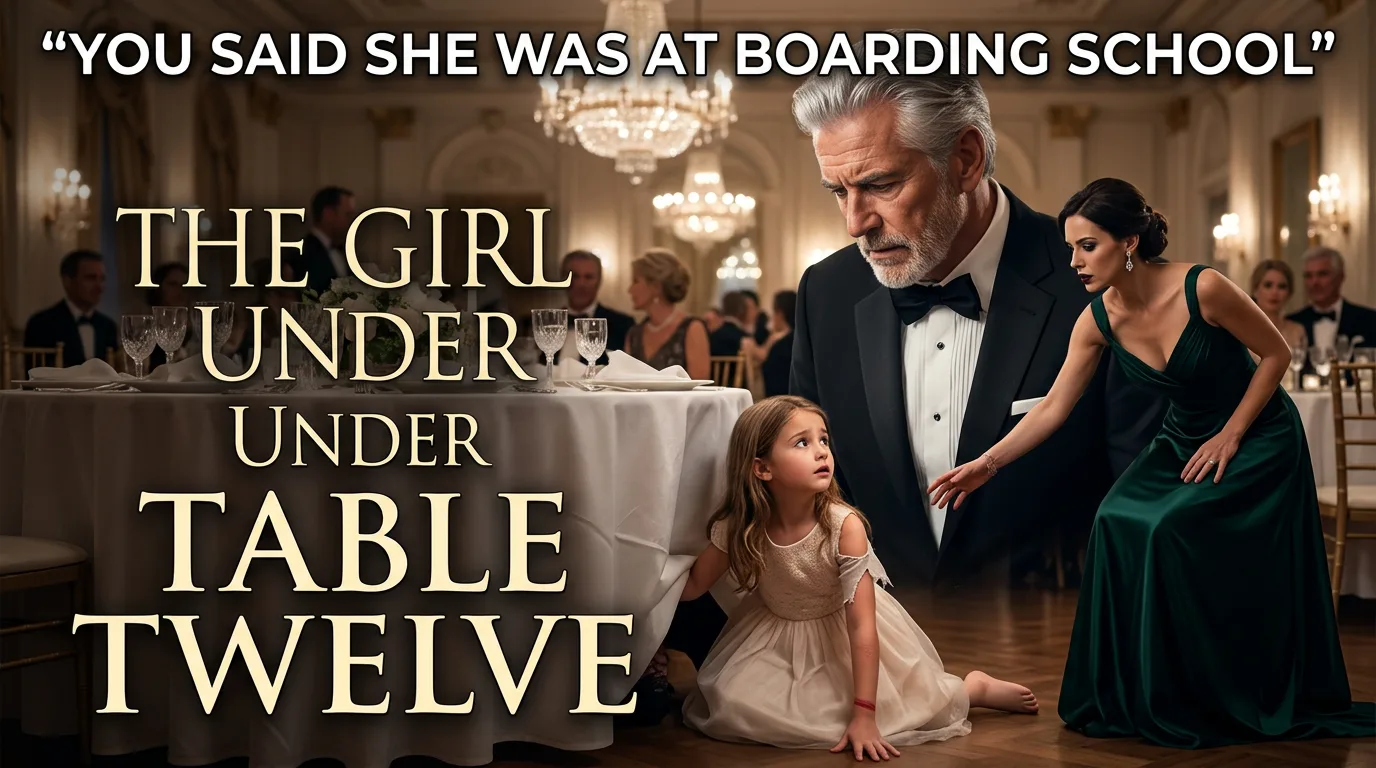
Once Mara Whitfield took control of the investigation, the Vale estate stopped feeling like a house and began feeling like a pressure chamber. Staff interviews were recorded. Digital backups were seized. Expense accounts were frozen. The local sheriff, politely but unmistakably nudged by both the district attorney’s office and Harrison’s name, reopened Daniel’s case file and transferred review authority to a state-level major investigations unit to avoid the appearance of family influence tainting procedure.
Influence still mattered, of course. Harrison knew that better than anyone. Power rarely disappeared; it merely changed costume. But for once he intended to spend it in the right direction.
The first break came from maintenance records.
Daniel had owned two boats at the estate: a larger launch used for guests and a smaller dark-blue outboard he preferred when he wanted to be alone. According to the family mechanic, every kill-switch lanyard on Daniel’s outboard was custom-ordered in bright red because Daniel hated losing them on dark decks. After the accident, the responding deputy wrote that no lanyard had been found clipped to Daniel’s body or attached to the ignition console. He assumed operator error. The mechanic, however, produced emails showing that Daniel had specifically requested a new red coiled lanyard three weeks before his death after misplacing the previous one.
“He never took the boat out without it,” the mechanic told Mara. “Shoulder got bad after the regatta injury. He liked the engine dead if he went over.”
The second break came from technology, though not in the melodramatic form television favored. No miracle secret video emerged. No cinematic confession materialized from the cloud. What surfaced instead was something more believable and therefore more damning: fragments.
A calendar note in Daniel’s account reading M — TRUST AMENDMENT FINAL / BOSTON PLAN.
A deleted email draft to Harrison that had synced to an old tablet in the library, stating: If anything happens tonight, look at what Celeste stands to keep.
A message from Lydia asking Daniel if he still wanted contact information for the Boston child psychologist “in case you leave sooner than planned.”
None of it proved murder alone. Together it proved movement. Daniel had been preparing for rupture.
The third break came from the boathouse itself.
Owen and a state investigator found, in a storage drawer at the back of Daniel’s workbench, an evidence envelope the original deputy had inexplicably never logged with the rest of the accident file. It contained fragments collected from the deck of the outboard after the crash—miscellaneous hardware, a broken whistle clip, and a short section of red coiled cord cut cleanly at one end.
Mara held the fragment with gloved fingers and looked at Harrison over the evidence table.
“Well,” she said, “your granddaughter is not confused.”
The phrase moved through him like heat and sickness both.
When the state forensic team compared the cut end of the cord to damage notes from the outboard’s ignition housing, the conclusion was not subtle: the kill-switch lanyard had likely been severed before the accident. That did not by itself prove Celeste cut it. But it destroyed the official version of Daniel simply neglecting to use it.
Meanwhile, family court moved faster than criminal court because children could not wait for elegant burdens of proof. At the emergency guardianship hearing, Dr. Shaw testified about Ivy’s trauma response. Dr. Singh testified about the injuries. Lydia Mercer testified about confinement, fear, and repeated interference whenever Ivy mentioned Daniel’s final night. Ana Moreno, voice shaking, admitted she had long suspected something terrible and hated herself for not forcing the matter sooner.
Celeste’s attorney tried every predictable angle. The child was grieving. Harrison was overcompensating for prior emotional distance. Wealth complicated domestic choices. Private education could be unconventional. The locked door had been a safety measure. Daniel’s death had destabilized everyone.
Then Mara introduced photographs of the outside latch.
And copies of tuition payments to schools that had never enrolled Ivy.
And the draft trust amendment Daniel had been preparing.
And Ivy’s own letters beginning Dear Daddy.
By then Celeste had stopped looking offended and started looking hunted.
Ivy did not testify live at the first hearing. Mara advised against it. Instead the judge reviewed a recorded forensic interview in chambers. Harrison was not permitted to watch until afterward, but when he finally did, he needed to pause halfway through because hearing a child calmly explain how she learned to tell time by the pattern of light under a locked door was more unbearable than hearing any accusation against Celeste.
The court granted Harrison temporary sole guardianship pending a full custody determination.
Two days later Celeste made her final move.
It began with absence.
At nine in the morning the guest cottage was empty. Her wardrobe there remained mostly intact, suggesting she had not run impulsively in the night. She had chosen selectively: passport, a jewelry case, one carry-on, a laptop, and a leather folio containing copies of older trust summaries. One of Harrison’s drivers was also missing.
By ten-thirty Owen had traced the driver’s phone ping to Vale Air, the private terminal outside the city where the family jet was hangared.
“She’s not leaving without cash,” Mara said. “And if she thinks the homicide review is about to go public, she may also try to create leverage.”
“What kind of leverage?”
Mara’s face was grim. “The child kind.”
Harrison was already moving.
Ivy had been in the east garden with Ana when a groundskeeper mistakenly answered a request from Celeste’s longtime driver, believing family restrictions had softened after court. By the time Ana realized Ivy had not returned from the conservatory path, the child had been guided toward the service lane behind the guest house with the promise that her mother “wanted one goodbye before the grown-up meetings got worse.”
Owen intercepted them at the outer gate.
Later he described the scene with unusual anger. Ivy had gone rigid the moment she saw the black SUV. Celeste had stepped out in sunglasses and a camel coat, smiling as if retrieving a child after ballet.
“Get in the car, darling,” she had said. “Grandpa’s confused and making everything very ugly.”
Then Harrison’s convoy arrived.
He exited his car before it fully stopped.
Ivy was standing between Owen and Celeste, not crying, not speaking, simply locked in that same terrible stillness she had worn in the ballroom. Harrison went to her first.
“Come here.”
She moved to him instantly.
That should have ended everything for anyone still pretending this was a custody misunderstanding.
Celeste folded her arms. “I wanted to say goodbye privately.”
“At an air terminal?” Mara asked from behind Harrison.
Celeste ignored her. “She’s my daughter.”
“No,” Harrison said. “She is your witness.”
The sentence landed.
For once Celeste did not try to deny it at once. She only stared.
Mara stepped forward. “State investigators have recovered physical evidence consistent with tampering of Daniel Vale’s kill-switch lanyard. We have corroborating witness statements, financial motive, and a documented pattern of coercive control over the child who described the tampering before any of us found the fragment. If you would like to continue speaking, I strongly recommend counsel.”
The private terminal seemed to empty of sound. Even the driver who had assisted Celeste went pale.
Celeste’s gaze shifted to Ivy over Harrison’s shoulder. Something raw and furious passed through her face.
“You ruined everything,” she said.
Ivy flinched.
That flinch decided the rest of Harrison’s life.
He turned, shielding the child with his body, and said to the state investigator standing by the tarmac gate, “Take her.”
They did not arrest Celeste for murder that morning; the district attorney preferred the cleaner sequence of financial fraud, unlawful imprisonment of a minor, child endangerment, falsification of trust disbursements, obstruction, and witness intimidation while the homicide charge matured. To Harrison, the distinction mattered less than the handcuffs.
Still, what stayed with him was not the sight of Celeste being led away.
It was Ivy’s voice in the back seat of his car on the drive home.
“She said that to Daddy too.”
Harrison turned from the front passenger seat.
“What?”
“She said, ‘You ruined everything.’” Ivy twisted the edge of his handkerchief in her lap. “That was before he took the boat.”
He reached back and covered her small fist with his hand.
For the first time since Daniel’s death, grief became less abstract and more useful. No cleaner. No lighter. Just useful.
Because now it had direction.
The criminal case deepened quickly after that.
Under pressure, the missing driver admitted Celeste had asked him to “get the child someplace quiet” before the second custody hearing. A junior accountant at the family office, once shown enough forged reimbursement documents, confessed that Celeste had ordered duplicate invoices created for schools and therapists who never treated Ivy. State investigators recovered traces of cut nylon fibers consistent with the lanyard material from an old sewing box taken from Celeste’s dressing room. Most importantly, a former marina employee came forward after seeing local coverage of the case. He remembered Celeste arriving alone at the boathouse late on the night Daniel died, asking for a dry towel and saying she had “slipped near the dock.”
Wet at the hem.
Just as Ivy had said.
By the time the grand jury convened, the narrative that had governed the Vale family for nineteen months was gone.
What remained was truth—fragmented, imperfect, but finally stronger than reputation.